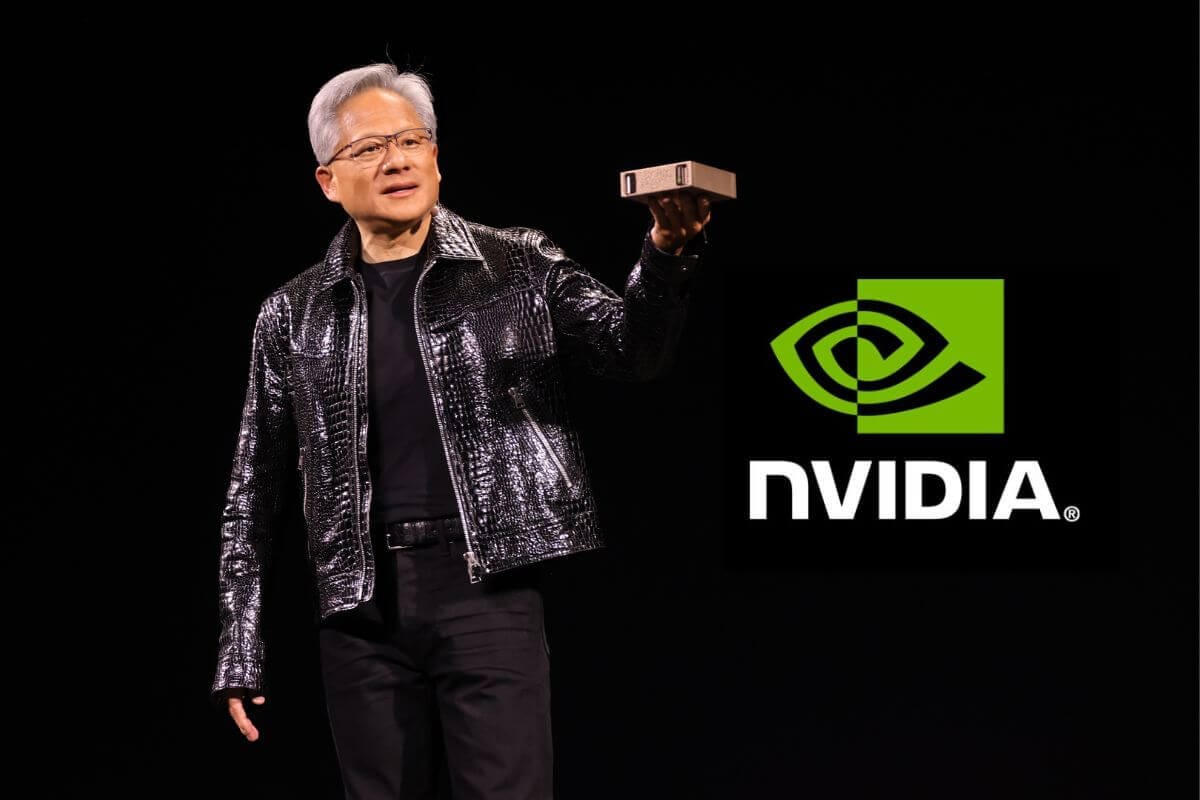
Jensen Huang has offered a perspective on the global technology race. The Nvidia CEO believes manufacturing strength is becoming just as important as software expertise.
He identified Germany, Japan, and China as three leading technology and manufacturing powers. He made the comments during a discussion with German Chancellor Friedrich Merz. He also warned that US restrictions have accelerated China’s semiconductor ambitions.
Separately, Huang pushed back against fears of an oversupply of memory chips. Together, his remarks highlight how AI is reshaping the global technology industry.
Nvidia CEO Jensen Huang named Germany, Japan, and China as three countries leading in technology and manufacturing.
He said it is important to mix strength with computing knowledge. His comments come as AI investment reshapes the global semiconductor business.
This is creating demand for high-level computing systems.
Speaking during a discussion with German Chancellor Friedrich Merz in Berlin, Huang said the United States spent decades shifting parts of its manufacturing base overseas.
He argued that China developed its capabilities during the rise of the computer industry, allowing manufacturing and digital technology to advance together.
According to a report by The Times of India, Huang said China is well positioned because it has deep capabilities in both manufacturing and computer science.
His comments do not mean the United States has lost its position in technology: Huang has separately described technology, computing infrastructure and leading AI laboratories as highly competitive.
China’s role in global technology is growing stronger. Governments worldwide are pushing to protect their semiconductor supply chains and boost their intelligence capabilities.
The country has invested heavily in building its chip manufacturing industry, developing AI models, and creating the infrastructure needed to support massive computing operations.
Huang also said US export restrictions had accelerated China’s efforts to develop its semiconductor manufacturing capabilities.
Also Read: IMC 2026: BSNL Gears Up for Indigenous 5G Rollout as 4G Network Is Delivering Results, Says Official
The restrictions were intended to limit China’s access to processors, including high-end AI chips. Still, Huang’s assessment suggests they have also strengthened Beijing’s motivation to reduce reliance on foreign technology.
The comments highlight a balance for policymakers. Export controls can restrict access to key technology, but they may also push affected countries to invest more heavily in domestic alternatives.
Germany meanwhile is looking to combine its established expertise with AI. During his discussion with Merz, Huang encouraged manufacturers to adopt AI tools that could improve production, engineering and industrial operations.
Germany’s manufacturing base, including its machinery industries, could provide valuable data and practical applications for industrial AI systems.
Huang’s comments also connect with another concern facing the semiconductor industry: whether the current surge in AI investment will continue to support demand for memory chips.
Also Read: COAI, British High Commission Sign MoU on AI and Digital Trust
Jensen Huang Shares About Memory Chip Crisis Concerns
In an interview during Nvidia’s GTC Berlin conference, Huang pushed back against predictions of a memory-chip glut by 2029.
He argued that AI infrastructure would continue to require quantities of memory, including high-bandwidth memory (HBM) used in AI accelerators and low-power DRAM used in data centers.
Huang also said Nvidia would keep using memory as AI computing expands. These remarks come amid concerns about rising memory production capacity and the possibility that supply could eventually outpace demand.
Huang believes continued investment in AI infrastructure will sustain demand, though Huang does not rule out oversupply or price declines.
For the technology industry, the broader message is that AI leadership depends on more than designing chips or developing powerful software. Manufacturing capacity, skilled workers, energy, data-center infrastructure, and reliable semiconductor supply chains are also becoming increasingly important.
Huang’s assessment offers a snapshot of the global technology race, but it does not definitively rank every country’s capabilities.
The United States remains a force in AI research and computing, while Germany, Japan and China bring different strengths in industrial engineering, manufacturing and technology development.
Also Read: iQOO Neo 12 Sustains 185 FPS Gaming
As AI investment expands, the ability to combine software innovation with scaled physical production could become an increasingly important competitive advantage.
Although India isn’t among the top 3 nations for manufacturing, Nvidia’s CEO hasn’t commented on India’s potential in tech manufacturing.
If this article saved you time or helped you decide better, consider supporting our work.
FAQs
Which three countries did Jensen Huang identify as technology and manufacturing leaders?
He named Germany, Japan and China during a discussion with German Chancellor Friedrich Merz.
Why does Huang believe China has an advantage?
He said China’s industrial transformation coincided with the rise of computing, allowing manufacturing and computer science capabilities to develop together.
Did Huang say the United States is no longer a technology leader?
No. He has separately praised US technology, AI laboratories and computing infrastructure. His comments focused on the combination of manufacturing and technology capabilities.
How have US export restrictions affected China’s semiconductor industry?
Huang said the restrictions accelerated China’s efforts to strengthen domestic semiconductor manufacturing and reduce dependence on foreign technology.
Why does Huang expect memory-chip demand to remain strong?
He believes expanding AI infrastructure will require more memory, including HBM and LPDDR. However, future demand and supply conditions remain uncertain.
 Support Telecomtalk