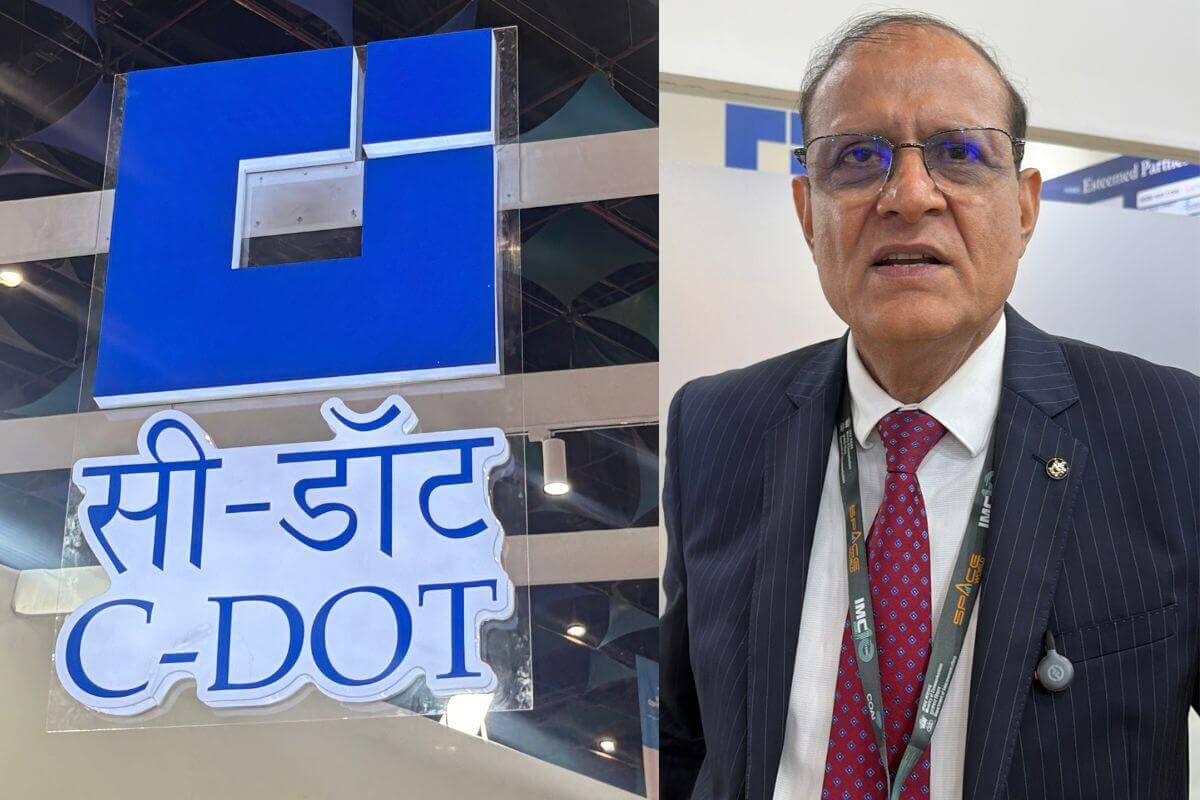
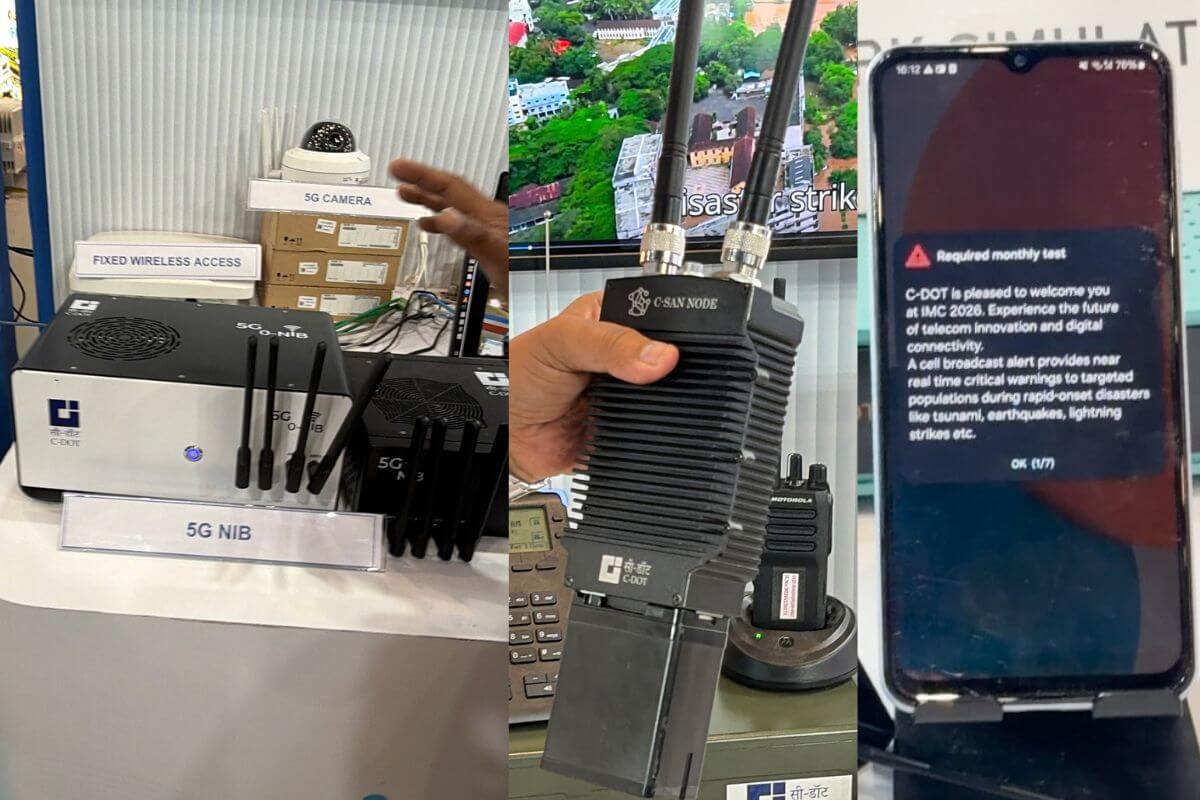
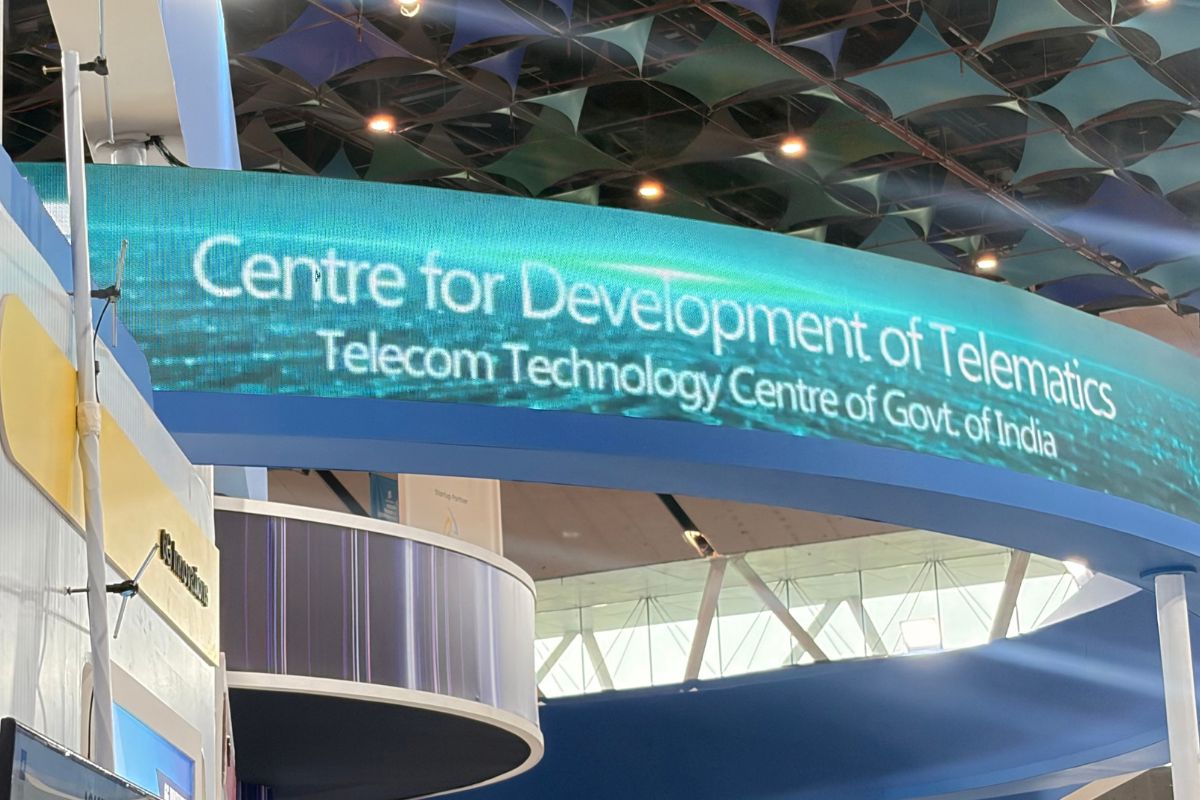
India is growing year by year and building indigenous tech, as seen at IMC India Mobile Congress 2026. C-DOT, the Centre for Development of Telematics, a premier autonomous telecom research and development centre under the Department of Telecommunications, Government of India, showcased five new technologies and solutions. We spoke with C-DOT CEO Dr. Rajkumar Upadhayay, who explained C-DOT’s five verticals. These include wireless communication, where C-DOT is upgrading from 4G to 5G. C-DOT is also working on CG technology, including CG Radio, CG Sensing, and CG reflectors, showing readiness to bring 6G to India. The next vertical is quantum communication, with 16 products designed to meet customer needs. Cybersecurity is another vertical that uses Cyber Probes to detect threat sources. Then there is Trinetra-Shakti, an enterprise-grade, AI-powered security operations solution. Disaster management is another focus area, in which C-DOT developed a cell-broadcast alerting system to help save millions of lives among India’s citizens. The fifth vertical is AI, which C-DOT is integrating into wireless communication, quantum communication, disaster management, and enterprise solutions. It is also integrating AI into existing products like Sanchar Saathi.
While developing new technologies and solutions for India, Dr. Rajkumar Upadhyay also emphasized pushing these technologies to other countries.
Also Read: IMC 2026: India Has Already Built Its Own 4G Stack and Deployed It Across the Country: Scindia
C-DOT Highlights Five Major Technologies at IMC 2026, Says CEO Rajkumar Upadhyay

In our conversation with the CEO of C-DOT, Dr. Rajkumar Upadhyay, we got insights on five major focus areas for C-DOT, which include:
1. Wireless Communication 4G, 5G and 6G – Upgrading from 4G to 5G Infrastructure
C-DOT has already deployed 4G infrastructure across India in partnership with BSNL, serving 1,75,000 base stations at 1 lakh sites and generating 7 petabytes of traffic, equivalent to serving 2.4 to 3 crore BSNL customers, Dr Upadhyay strongly emphasized.
To upgrade BSNL to 5G, C-DOT and BSNL have started 5G trials in Ambala.
In wireless communications, C-DOT has also developed and showcased CG technology, demonstrating readiness to transition to 6G in India.
“In addition to wireless communication, we are working on CG; we have showcased it for IMC 2026, where we displayed our innovations, which include CG Radio, CG Sensing, CG reflecting surfaces, and CG reflectors”, Dr Upadhyay said.
This reflects C-DOT and Dr. Upadhyay’s vision to keep C-DOT ready for future technology trends.
Also Read: IMC 2026: MeitY Pavilion Showcases India’s Digital Innovation and Emerging Technology Capabilities
2. Quantum Communication
On quantum communication, Dr. Rajkumar Upadhyay said C-DOT has developed indigenous QKD- and PQC-based communication methods, already deployed at a few universities and agencies in India.
C-DOT offers 16 products customers can use to meet their requirements. This also marks C-DOT’s readiness to help India adapt to quantum technology in the future.
3. Cyber Security
The next focus is cybersecurity, where C-DOT provides intelligence using Cyber probes to help systems detect sources of threats.
C-DOT has also developed an enterprise-grade security solution called AI Trinetra-Sakti that helps mitigate cyber threats.
Also Read: IMC 2026: India Targets 10 Percent of Global 6G Patents and Standards: MoS Communications
4. Disaster Management – Cell Broadcasting Solution
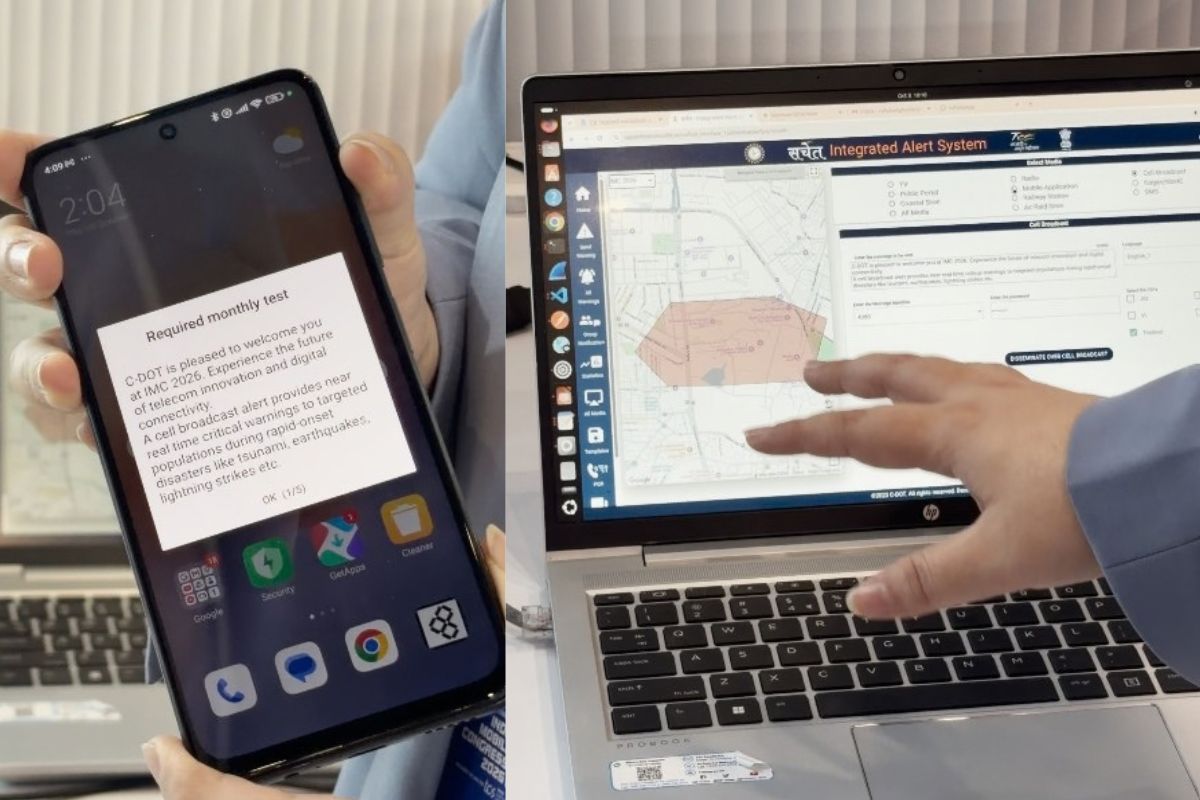
C-DOT’s fourth focus area is disaster management, where C-DOT has developed a cell-broadcasting environment that can save thousands of lives in affected areas in India.
A disaster management system can send alerts to millions of citizens on their smartphones within seconds.
C-DOT has already deployed its disaster management solution in India and is currently testing it in four countries, with plans to expand further.
It focuses on enhancing the workflows and operations of its existing applications and solutions and integrating AI with wireless communication technologies, such as 5G, for disaster management, quantum communication, and more.
C-DOT has also deployed AI in fraud management by developing a portal called Sachar Saathi and is integrating AI into products such as the Financial Risk Indicator (FRI) to help banks and customers detect fraud.
C-DOT’s focus on AI is to integrate it into its existing products, Dr Upadhyay said.
Also Read: Elon Musk Directly Attacks Ambanis On X
C-DOT’s Biggest Achievement in India’s Indigenous Telecom Journey
C-DOT’s current products, which are already deployed, and C-DOT’s major achievements include deploying 4G across India for BSNL, which is serving 1,75,000 base stations and generating seven petabytes of traffic, serving 2.5 crores of BSNL customers in India, which is a significant achievement for C-DOT’s journey in the telecom industry, making India the fifth nation in the world to have this technology deployed.
The next major achievement is the development of Cyber Probes in cybersecurity, which can help detect malicious traffic entering a network and identify the origin of attacks.
Third is the disaster management solution, launched in 2023, which uses cell broadcasting technology to send SMS alerts during disasters, including lightning strikes, tsunamis, and even missile attacks, when we have only seconds to alert citizens in affected areas.
Dr Rajkumar Upadhyay also shared AI-related achievements, including the development of C-DOT’s Sanchar Saathi portal, which has surpassed 30 crore hits across the website and app and supports 20 languages.
On the quantum side, C-DOT’s QKD and PQC communication methods will help address communication challenges through encryption and are currently deployed at some universities and agencies.
Lessons From Developing and Deploying Indigenous 4G Technology and Shaping CDOT’s Next Steps in 5G
Dr. Rajkumar Upadhyay strongly emphasized building around customer requirements and keeping users in the development process; another key lesson is to keep investing in technology.
Technology is a life cycle: if it’s 4G, it will evolve to 5G; if it is 5G, it will evolve to 6G. The same applies to cybersecurity; daily changes are happening. Hence, the product lifecycle has to be maintained throughout, and the third is to keep your people happy by ensuring their problems are solved, said Upadhyay.
Also Read: Reliance Jio 6G NR MIMO Unit Showcased
Dr. Rajkumar Upadhyay’s Vision for C-DOT’s Future in the Next Few Years
Dr. Rajkumar Upadhyay’s ambition at C-DOT International is to introduce indigenous Indian products to international markets.
Dr. Upadhyay said they are targeting revenue growth to 6,000 crore, while C-DOT has jumped from 80 crore to 621 crore in five years.
C-DOT’s current mission is to take all five major technologies abroad, which should boost C-DOT’s overall revenue.
“Our 4G, 5G, cyber, and what we have developed for India, we will move it abroad ” says Dr Upadhyay
The cell broadcasting solution for disaster management is already undergoing trials in four other countries.
Dr Upadhyay also emphasized key watch-out points for C-DOT’s future, including adapting to 6G, keeping pace with new cybersecurity technology, maintaining a strong base in AI, and using Made-in-India technology for foreign markets.
Some people read for free. A few choose to support. If you found TelecomTalk useful, you can help keep us running.
FAQs
What are the five major technology areas showcased by C-DOT at IMC 2026?
C-DOT highlighted five major technology areas: wireless communication, quantum communication, cybersecurity, disaster management, and artificial intelligence (AI).
Who is Dr. Rajkumar Upadhyay?
Dr. Rajkumar Upadhyay is the CEO of the Centre for Development of Telematics (C-DOT), an autonomous telecommunications research and development centre under the Department of Telecommunications, Government of India.
What has C-DOT achieved in India's indigenous telecom journey?
One of C-DOT's major achievements is developing and deploying India's indigenous 4G telecom stack with BSNL. The network covers about 175,000 base stations across 100,000 sites.
What is C-DOT doing to advance India's 5G and 6G capabilities?
C-DOT is working with BSNL on 5G trials in Ambala and has showcased technologies for future 6G networks, including CG Radio, CG Sensing, and CG reflecting surfaces.
What is C-DOT's future vision under Dr. Rajkumar Upadhyay?
C-DOT aims to continue developing indigenous telecom technologies, prepare for 6G, strengthen its cybersecurity and AI capabilities, and expand the international reach of its Indian-developed solutions.
 Support Telecomtalk