Invenia-STL Networks CEO on Why AI and Data Centres Are Changing India’s Connectivity Needs
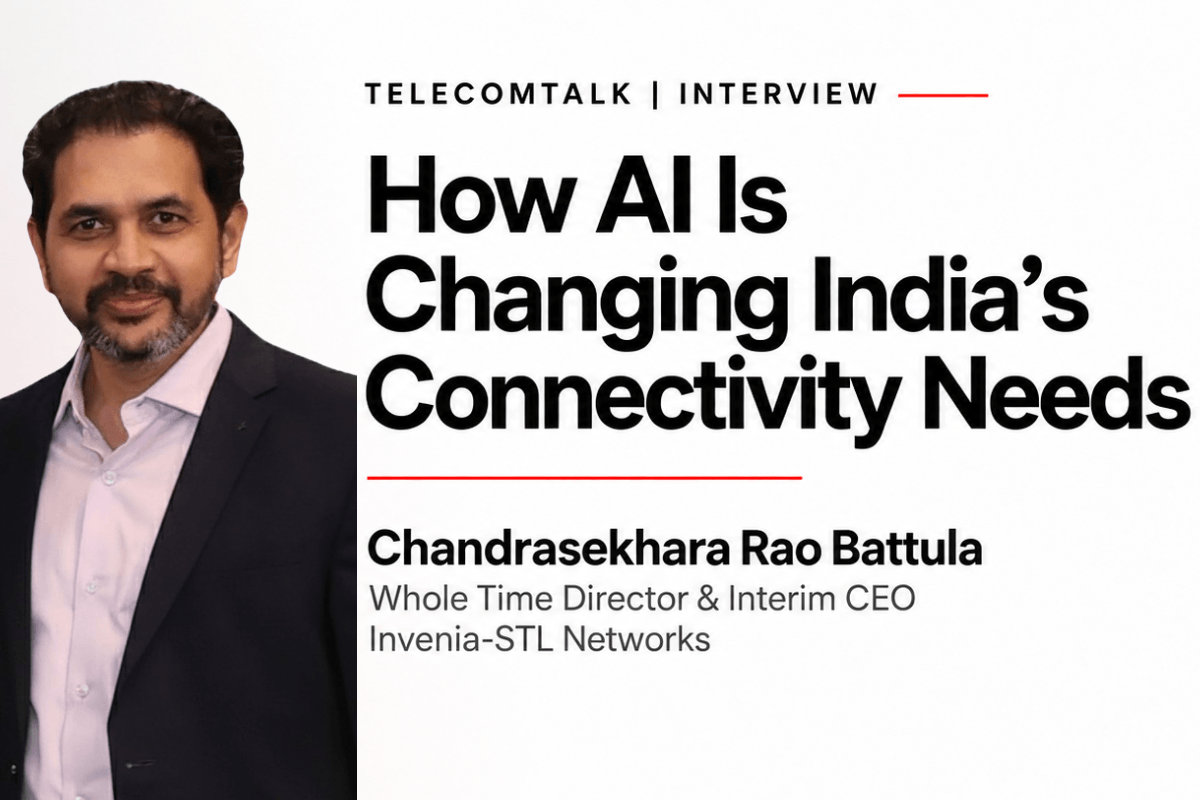
Invenia-STL Networks sees rising demand for data centre connectivity as AI workloads require greater network capacity and reliability. In an email interview with TelecomTalk, Interim CEO Chandrasekhara Rao Battula discussed the company’s data centre strategy, its move towards managed services and the challenges of operating infrastructure over the long term.
India’s growing data centre market is creating different demands for infrastructure providers. Hyperscalers want speed, scale and AI-ready capacity. Enterprises need to modernise existing systems without disrupting operations. Public-sector customers place greater weight on sovereignty, compliance and long-term reliability.
Make Telecom Talk My Trusted Source
Key Highlights
AI workloads are increasing demand for reliable, high-capacity links between data centres, cloud platforms and enterprises.
Invenia is expanding its role from building infrastructure to operating and maintaining it.
Hyperscalers, enterprises and public-sector customers have different data centre requirements.
Delivery performance and service availability will be measures of the company’s progress.
Invenia-STL Networks is positioning itself to serve these requirements through a combination of connectivity, data centre services, system integration and managed operations. In an email interview with TelecomTalk, Chandrasekhara Rao Battula, Whole Time Director and Interim Chief Executive Officer, said the company adapts that combination to each customer’s operating needs.
He described the common objective as “single-accountability execution” that reduces coordination gaps when several partners are involved in a project.
AI Is Changing Connectivity Requirements
As AI workloads grow, Battula said, networks must carry much larger volumes of data with low latency, high availability and predictable performance. The links between data centres, cloud environments and enterprise networks are becoming as critical as the facilities that house computing infrastructure.
Invenia sees the greatest pressure around high-capacity data centre interconnects, enterprise network modernisation and fibre deployment in locations where infrastructure has not kept pace with demand.
“In many cases, the constraint is not only bandwidth – it is the reliability, route diversity and operational visibility needed to support always-on workloads,” Battula said.
The company is responding by bringing its connectivity, data centre, cloud and cybersecurity capabilities closer together. It is also applying its fibre deployment experience to more complex network roll-outs, where speed of construction must be matched by long-term reliability.
Different Customers Need Different Data Centre Solutions
According to Battula, hyperscalers are focused on delivering large-scale, high-density infrastructure quickly. An enterprise may instead need to modernise a live environment while improving its network, cloud and security readiness. Government and public-sector organisations need resilient infrastructure, strong governance and sustained support.
That range of requirements is shaping the scope Invenia wants to take on. Battula pointed to its engagement for a greenfield Tier III data centre at Manesar, together with a disaster recovery facility, as an example. The mandate covers IT and cloud infrastructure, Infrastructure-as-a-Service, disaster-recovery services and long-term operations.
He said the project matters because customers increasingly want assurance that a facility will remain resilient and well managed after it goes live. While individual requirements vary, he believes a single partner taking responsibility across multiple infrastructure layers can improve operational accountability.
Why Invenia Is Expanding Managed Services
Invenia distinguishes between system integration, which involves designing, deploying or upgrading infrastructure, and managed services, which involve supporting and optimising it on an ongoing basis. Some customers want to operate the finished environment themselves; others want a partner to stay involved.
“The fundamental shift is from completing a project to standing behind how the infrastructure performs over time,” Battula said.
For customers, that means the team familiar with a system’s design and deployment can continue supporting its uptime, maintenance and future expansion. For Invenia, long-term operations and managed-services contracts can provide greater revenue visibility alongside project work.
Battula said cost predictability is one reason enterprises choose managed services, but the complexity of running cloud platforms, distributed networks, cybersecurity systems and AI workloads is a larger driver. Customers are also seeking specialist expertise, faster incident response and more consistent performance.
BharatNet Puts Long-Term Reliability to the Test
On Invenia’s BharatNet Phase III work across Jammu & Kashmir and Ladakh, Battula said the scale, terrain and geographic spread make the project demanding. Deploying more than 13,000 kilometres of optical fibre is only one part of the task; the network must continue serving thousands of Gram Panchayats reliably over many years.
He identified route surveys, design discipline, construction quality and asset documentation as essential during deployment. Once the network is operational, monitoring, preventive maintenance, clear fault-response processes and trained field teams will be critical.
“The O&M component is therefore central to the project,” he said. Maintaining service availability in remote locations is a particular priority because restoring connectivity there can be more difficult.
Data Centres and Long-Term Services Lead Invenia’s Next Phase
Battula said Invenia’s capital allocation has become more focused on data centres and system integration. Its data centre priorities include design, build, IT integration, managed operations and capabilities for high-density AI compute environments. In system integration, the focus includes high-capacity interconnects and network modernisation.
Over the next 12 to 24 months, he said stakeholders should watch delivery on major programmes, the growth and duration of data centre and hyperscaler relationships, service availability, incident-resolution performance and adoption of real-time monitoring. These measures will indicate how effectively Invenia is turning its strategy into long-term infrastructure operations.
Every article you read here is the result of time, research, and effort. If you feel it adds value, you can support TelecomTalk.
FAQs
How is AI changing connectivity needs?
AI workloads require networks capable of moving large volumes of data between data centres, cloud platforms and enterprises with low latency and reliable performance.
What is Invenia-STL Networks’ managed services strategy?
The company aims to remain involved after infrastructure is built, providing ongoing operations, maintenance, performance management and optimisation where customers need them.
What are Invenia’s near-term priorities?
Battula identified consistent delivery of major projects, deeper data centre and hyperscaler relationships, and a stronger base of long-term customer engagements.
How do data centre requirements differ across customers?
Hyperscalers prioritise speed, scale and AI-ready capacity. Enterprises focus on modernising existing systems, while public-sector customers emphasise sovereignty, compliance and reliable long-term operations.
What is the difference between system integration and managed services?
System integration involves designing, deploying or upgrading infrastructure. Managed services provide ongoing operational support, maintenance and performance optimisation after deployment. Invenia offers both depending on the customer’s requirements.
 Support Telecomtalk