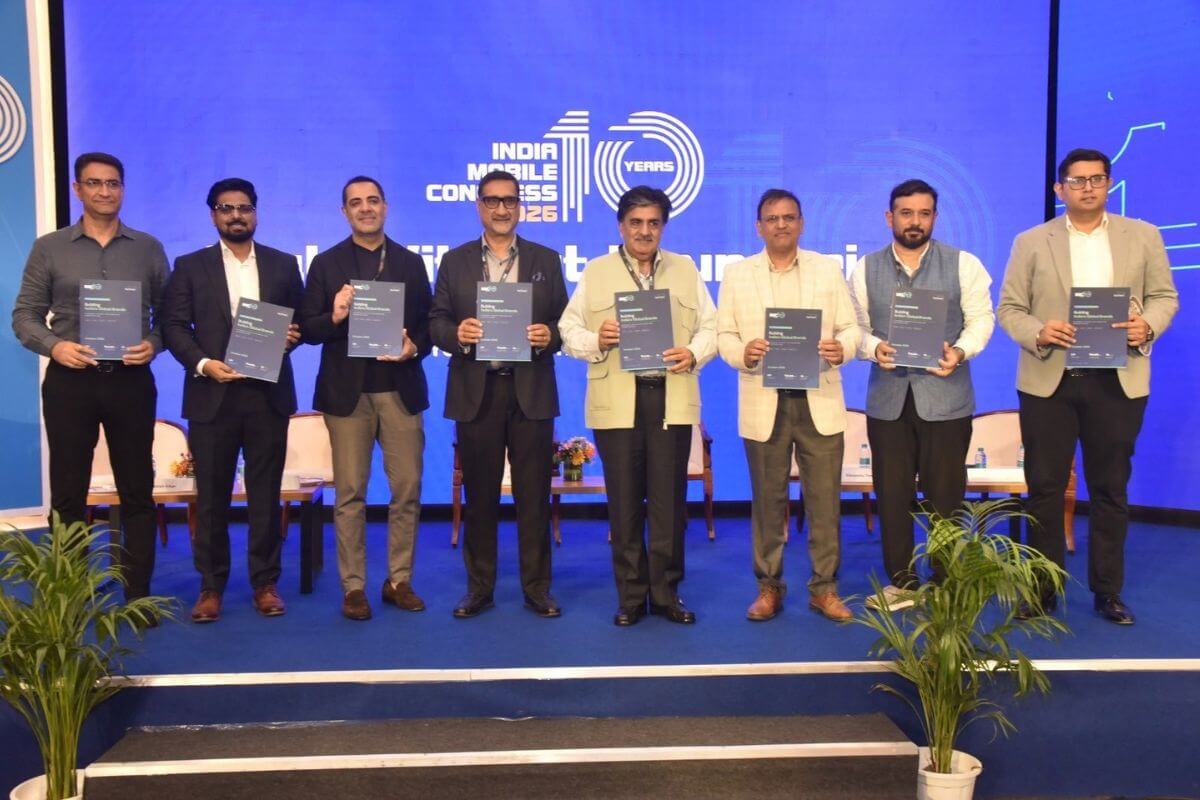
According to the report, India has 129 homegrown brands across gadgets, devices, appliances and connected cars, with combined annual revenues exceeding Rs 60,000 crore. However, the average revenue per brand stands at just about Rs 465 crore. Only 14 brands have reported revenues above Rs 500 crore, while just two have crossed the Rs 2,000-crore mark.
The findings highlight a significant gap between India’s electronics manufacturing capabilities and the scale of its domestic brands. Electronics production reached Rs 13.11 lakh crore in FY2025-26, but a substantial share of the value continues to accrue to global brands and contract manufacturers.
Strong Growth Ahead
The report estimates that homegrown brands could collectively generate Rs 1.11 lakh crore in annual revenue by FY2031 and Rs 2.04 lakh crore by FY2036, assuming annual growth of around 13 per cent. If Indian brands expand their presence in smart and connected product segments at a growth rate of 16 per cent annually, their combined revenues could rise to Rs 1.26 lakh crore by FY2031 and Rs 2.65 lakh crore by FY2036.
The TAME Model
A key element of the report is the TAME framework developed by Techarc, which maps the evolution of technology brands through four stages: Trade, Assemble, Manufacture and Engineer. According to the framework, brands typically face revenue ceilings of around Rs 500 crore at the trading stage, Rs 5,000 crore at the assembly stage and Rs 50,000 crore at the manufacturing stage. Achieving revenues in the lakh-crore range requires progression to the engineering stage, where companies own their designs, software and intellectual property.
Gaps that Remain
The report identifies several structural challenges facing Indian brands, including domestic value addition of only around 17 per cent in electronics, a low single-digit share for Indian brands in the domestic smartphone market, limited investment in design and research and development, and a shortage of patient capital for hardware businesses.
The 2047 Ambition
Setting out an ambitious target for 2047, the report calls on India to aim for 50 homegrown technology brands, each generating annual revenues of more than Rs 1 lakh crore. Achieving this goal would require the current combined revenue base to expand nearly 83-fold, implying annual growth of approximately 25 per cent over two decades.
“India should aim for 50 brands each earning more than Rs 1 lakh crore by 2047. That is about 83 times today’s base and requires growth of about 25 per cent a year for two decades,” the report said.
Two Imperatives
The report identifies two priorities for achieving this ambition: developing new brands built on Indian design capabilities and intellectual property through stronger collaboration between startups and academia, and identifying and nurturing promising existing brands at every stage of the TAME framework to help them overcome growth barriers.
The report also includes industry perspectives from Sumit Singh of Lava International, Akshay Aggarwal of MediaTek India, Himanshu Tandon of Mivi and Nikhil Rajpal of Qubo.
P Ramakrishna, Chief Executive Officer, India Mobile Congress, said: “A nation that aspires to be Viksit by 2047 must do more than make products for others. It must create, own and scale its own brands, and see them succeed in India and around the world. The ambition this report sets, 50 Indian brands each earning more than Rs 1 lakh crore by 2047, is bold. It is also the kind of ambition this moment calls for.”
Faisal Kawoosa, Chief Analyst and Co-founder, Techarc, said: “Our research identifies 129 homegrown brands that meet a strict test of Indian ownership and consumer electronics focus. Together they earn more than Rs 60,000 crore a year, an average of only about Rs 465 crore per brand. Most of these brands are still at the early stages of their evolution, trading or assembling products rather than engineering them. India’s opportunity, and the purpose of Viksit Tech 47, is to help many more brands make that journey.”
Viksit Tech 47 Index
Prepared by Techarc, the knowledge partner to India Mobile Congress, the report introduces the Viksit Tech 47 Index, comprising 129 Indian-owned brands across four categories: 55 in gadgets, 55 in devices, 16 in appliances and three in connected cars.
The research draws on government data, regulatory reports, company annual reports, draft red herring prospectus filings and Techarc’s knowledge base, with findings cross-verified through primary interactions with more than 20 industry leaders and experts. The combined revenue figures and growth projections are Techarc estimates. The index will be updated annually.
Viksit Tech 47
Viksit Tech 47 is the flagship initiative of India Mobile Congress (IMC), dedicated to identifying, recognising and celebrating India’s rising global stature in hardware technology, including gadgets, smart devices, appliances and connected vehicles.
Through industry recognition, collaboration and thought leadership, the initiative seeks to strengthen India’s technology ecosystem and support the vision of a self-reliant, developed India by 2047.
Also in the IMC 2026 Series:
Reference 1: Union Minister of Communications Jyotiraditya Scindia Reviews Final Preparations for IMC 2026
Reference 2: IMC 2026: PM Modi Discusses Digital Inclusion, 6G, AI With GSMA Board
Reference 3: IMC 2026: Bharti Airtel Announces Free International Roaming With All Its Postpaid Plans
Reference 4: IMC 2026: Vi to Showcase AI-Powered Innovations and Intelligent Connectivity Solutions
Reference 5: IMC 2026: Reliance Jio Showcases India-Built AI and Connectivity Innovations
Reference 6: IMC 2026: Ericsson Showcases 5G, AI and 6G Innovations
Reference 7: IMC 2026: Ericsson Scales Up AI-Ready Antenna Manufacturing in India
Reference 8: IMC 2026: Starlink Has Set Up Over 20 Gateway Sites in India, Says VP Lauren Dreyer
Reference 9: IMC 2026: Scindia Reviews Airtel’s Future-Ready Digital Infrastructure at Airtel Booth
Reference 10: IMC 2026: Jio Developing Indigenous Satellite Stack, Files Pre-6G Patents, Says Akash Ambani
Reference 11: IMC 2026: Jio Plans Satellite Network to Connect Over 600,000 Villages, Maritime and Border Areas
Reference 12: IMC 2026: Vi Business, Hindalco Partner to Deploy Private Network at Odisha Bauxite Mine
Reference Out of IMC: Average Revenue per GB of Wireless Data Drops 10.59 Percent to Rs 8.02 in FY26: TRAI
Reference 13: IMC 2026: Cost of 1 GB of Data Has Fallen from Rs 268 in 2014 to Rs 8 Now, Says Scindia
Reference 14: IMC 2026: India Moving Towards End-to-End Telecom Value Chain, Shaping the Rules, Equipment and Innovation: Scindia
Some people read for free. A few choose to support. If you found TelecomTalk useful, you can help keep us running.
 Support Telecomtalk