Support Telecomtalk






Highlights
- The company has proposed a constellation of around 1,600 Low Earth Orbit satellites.
- Jio plans to establish 23 ground stations across India.
- The company aims to integrate satellite connectivity with its existing terrestrial network.

Andrew Bonwick
Vice President of Product Development at Relm Insurance

Madhav Sheth
CEO of Ai+ Smartphone

Stephen Rose
CEO Render Networks



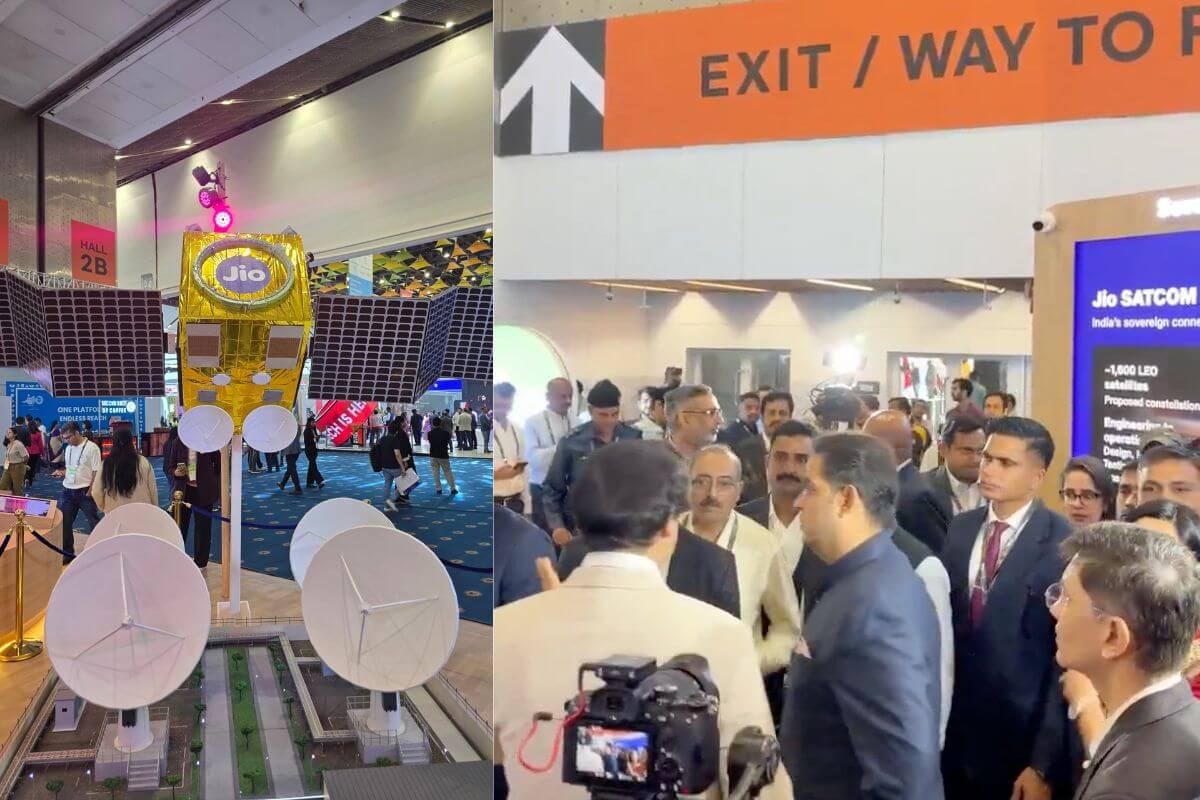
Reliance Jio on Thursday said that, after building extensive mobile and fibre networks on the ground, it is now turning its focus to space with a proposed constellation of around 1,600 satellites and 23 ground stations across India. The initiative aims to extend connectivity to remote areas where conventional terrestrial networks are difficult to deploy. Jio’s vision is to connect more than 600,000 villages, including remote maritime and border areas.
- Make Telecom Talk My Trusted Source



Jio Unveils Sovereign Satellite Connectivity Vision
Jio showcased its satellite connectivity vision at the ongoing India Mobile Congress (IMC) 2026 in New Delhi under the banner of ‘Sovereign Satellite Connectivity’. The proposed constellation comprises approximately 1,600 Low Earth Orbit (LEO) satellites, with the company seeking to keep the entire value chain within India, covering design, engineering, integration, testing, launch, deployment and operations.



According to Jio, the proposed 23 ground stations will form a critical link between the satellite network and terrestrial infrastructure. Jio also plans to integrate satellite connectivity with its existing ground-based network, creating a combined terrestrial and satellite communications infrastructure.
Focus on Remote and Underserved Areas
“Jio’s display outlines a vision of 100 percent coverage across land and maritime areas, with connectivity reaching more than 600,000 villages. Remote villages, islands and border outposts are among the key focus areas,” the company said.
The company has also highlighted potential applications across enterprises, remote sites, aviation, maritime operations, government, defence and disaster response. Direct-to-device calling for rural areas is also part of the vision.