Redmi 17 5G vs OnePlus N6 5G: Which Budget Phone is Better?
Here is a detailed comparison between the latest Redmi 17 5G phone and the recently launched OnePlus N6 5G phone in terms of design, display, processor, RAM, storage, camera, battery, software, and price.
The Redmi 17 was just launched in India, offering the power of the Qualcomm Snapdragon 4 Gen 5 and competing with the recently launched OnePlus N6 5G, which packs the MediaTek Dimensity 6360 Apex chipset.
Redmi 17 comes with eMMC 5.1 storage and offers storage upgrade via microSD card up to 2TB. The OnePlus N6 has faster UFS 2.2 storage but is limited to 128GB.
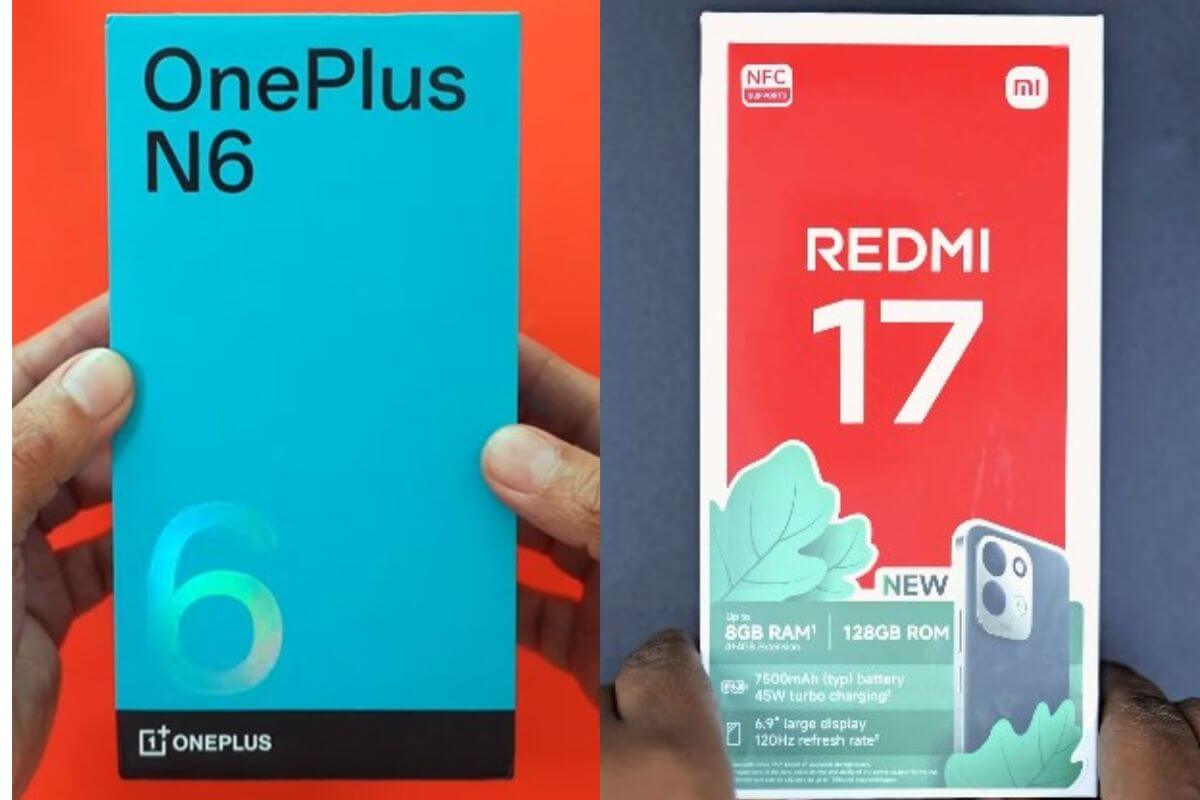
The Redmi 17 5G starts at 23,999, while the OnePlus N6 5G starts at 24,999. The OnePlus N6 5G comes with only 4 GB of RAM, whereas the Redmi 17 has 6GB of RAM in the base variant.
Highlights
The Redmi 17 was just launched in India, offering the power of the Qualcomm Snapdragon 4 Gen 5 and competing with the recently launched OnePlus N6 5G, which packs the MediaTek Dimensity 6360 Apex chipset.
Redmi 17 comes with eMMC 5.1 storage and offers storage upgrade via microSD card up to 2TB. The OnePlus N6 has faster UFS 2.2 storage but is limited to 128GB.
The Redmi 17 5G starts at 23,999, while the OnePlus N6 5G starts at 24,999. The OnePlus N6 5G comes with only 4 GB of RAM, whereas the Redmi 17 has 6GB of RAM in the base variant.
Xiaomi’s smartphone sub-brand, Redmi, has just launched the new Redmi 17 5G in India. It brings a solid midrange spec sheet, powered by the Qualcomm Snapdragon 4 Gen 5, with up to 6GB of RAM and 256GB of storage. Priced starting at Rs 23,999, it targets budget buyers. It goes up against the recently launched OnePlus N6 5G, which uses the MediaTek Dimensity 6360 Apex chipset with up to 6GB of RAM and up to 128GB of storage. Here is a detailed comparison of the two budget phones.
Make Telecom Talk My Trusted Source
Key Highlights
Here is a detailed comparison between the latest Redmi 17 5G and the previously launched OnePlus N6 5G.
Redmi 17 5G was launched on September 3, 2026, while the OnePlus N6 5G was launched on June 30, 2026.
Redmi 17 packs the Qualcomm Snapdragon 4 Gen 5 chipset, while the OnePlus N6 packs the MediaTek Dimensity 6360 Apex chipset.
Redmi 17 5G VS OnePlus N6 5G – Ultimate Comparison
The Redmi 17 was launched on September 3, 2026, while the OnePlus N6 5G was launched on June 30, 2026. Both are among the latest phones in the under Rs 25,000 price range.
We cover the design, display, processor, RAM, storage, camera, battery, software, and price.
Design
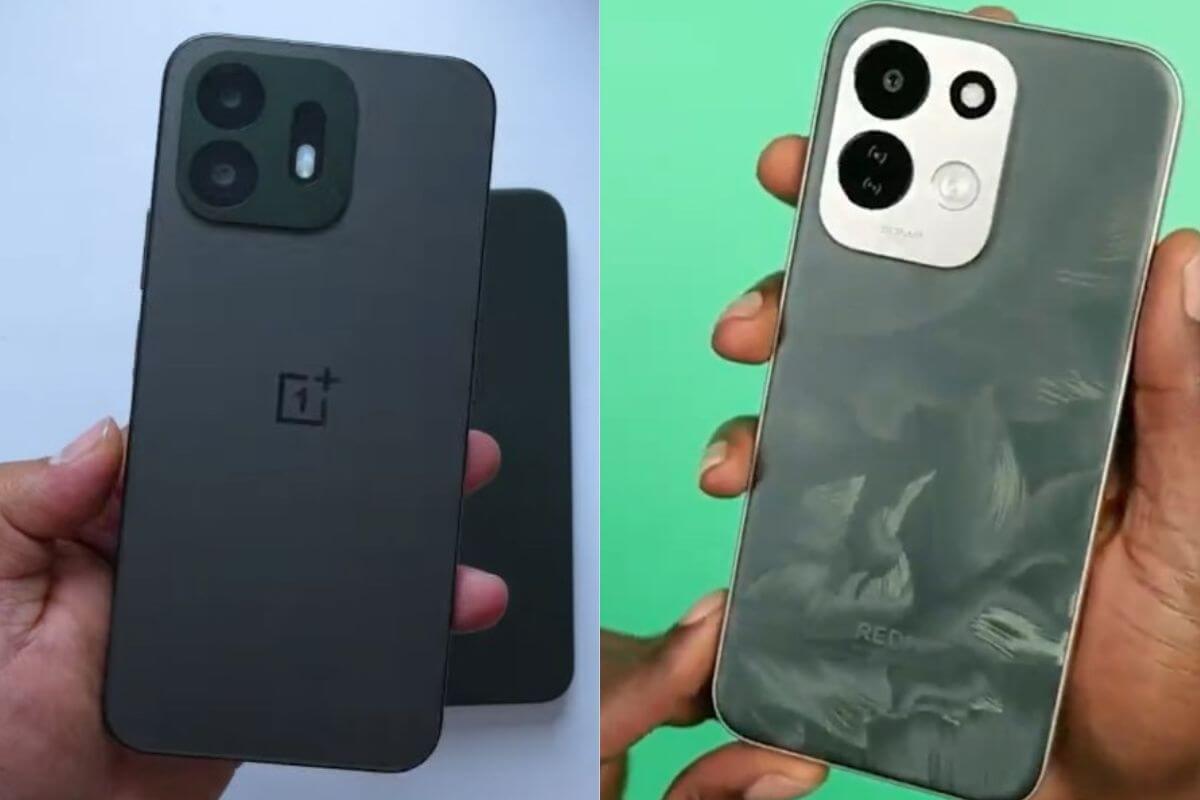
On the design side, the Redmi 17 5G has a different build. The orange colour variants feature an eco-leather silicone polymer finish on the back, with a plastic rail surrounding the phone. On the front, the phones have Gorilla Glass 7i protection.
The other colour options, including Absolute Black and Deep Blue, have a plain plastic back with the same Gorilla Glass 7i front display.
On the rear, the camera sensor is mounted on a square module with a gold finish for the orange variant. At the same time, the other variant’s camera module colour matches the smartphone’s colour.
You also get an RGB Light on the rear, located below the flash.
On the front, the smartphone has a single punch-hole selfie shooter and a slight bottom-centered notch. This reduces the overall screen-to-body ratio to 86.2%.
The OnePlus N6 5G, the first-ever N-series smartphone, has a design inspired by the recently launched OnePlus Nord CE 6 5G.
It features a plastic frame, a plastic back, and a flat glass display on the front. On the rear, there are dual vertically housed cameras, and on the front, a center punch-hole camera. The screen-to-body ratio for the N6 OnePlus phone is 90.4%.
Redmi 17 is IP64-rated for water and dust resistance, and even Xiaomi’s Redmi has retained the 3.5mm headphone jack. At the same time, the OnePlus N6 offers IP65 water and dust resistance and MIL-STD-810H certification, ensuring durability, though it lacks a 3.5 mm jack.
On the display front, the Redmi 17 5G features the industry’s largest-ever 6.9-inch IPS LCD HD+ panel with a 120Hz refresh rate and a 240Hz touch sampling rate, and is also TÜV Rheinland-certified for low-blue-light, flicker-free operation with DC dimming.
The display is Corning Gorilla Glass 7i on the front and supports 825 nits of HBM brightness, while the OnePlus N6 5G features a 6.8-inch HD+ display with a 120Hz refresh rate and 1200 nits of HBM brightness.
OnePlus offers features such as Eye Protection mode, sleep mode, and screen refresh rate switching.
Processor, RAM and Storage
Under the hood, the Redmi 17 5G packs the latest Qualcomm Snapdragon 4 Gen 5 chipset, a 4nm chipset launched in May 2026. It has 2 Cortex-A78 cores at 2400 MHz and 6 Cortex-A55 cores at 2000 MHz.
The chipset offers decent performance, with AnTuTu 11 benchmark tests showing 624021 points, while Geekbench 6 reports 976 points for single-core and 2250 points for multi-core processing.
The Redmi 17 comes with up to 6GB of LPDDR4X RAM and 256GB of eMMC 5.1 storage. You can extend RAM up to 12GB using Memory Extensions, which uses storage space.
You can expand storage up to 2TB with a microSD card.
The MediaTek Dimensity 6360 Apex chipset powers the OnePlus N6 5G, which is available in two RAM variants: 4GB and 6GB. The chipset was launched in April 2026.
The chipset is built with 2 Cortex-A76 cores at 2400 MHz and 6 Cortex-A55 cores at 2000 MHz.
The Dimensity 6360 Apex chipset achieves a total score of 567623 points on AnTuTu 11 and is built on a 6nm architecture. Geekbench reports 7834 points for single-core and 1966 for multi-core.
With the OnePlus N6, you get up to 6GB of RAM and up to 128GB of UFS 2.0 storage.
Comparing storage, Redmi 17’s eMMC 5.1 offers read speeds of 280-400 MB/s and write speeds of 75.125 MB/s, while OnePlus N6’s UFS 2.2 is faster, with read speeds near 390 MB/s and write speeds of 334 MB/s.
Redmi 17 gets a dual-AI camera on the rear, featuring a 50MP main sensor with an f/1.8 aperture, supported by an auxiliary lens, and on the front, an 8MP selfie shooter with an f/2.05 aperture.
OnePlus N6 5G comes with a CMOS 4-in-1 50MP main sensor with an f/1.8 aperture lens and supports 10X digital zoom. It also has a single rear camera and a front camera with an f/2.0 aperture lens.
Redmi 17 comes with a larger 7,900mAh silicon-carbon battery, 45W wired charging, and support for 22.5W wired reverse charging. The charger brick is not included and must be purchased separately, even though the official Xiaomi 45W charger costs Rs 1,399.
The OnePlus N6 5G comes with a larger 8,000mAh silicon-carbon battery and 45W SUPERVOOC Fast charging support. The charger is included in the box, and it supports 5W reverse wired charging.
OnePlus N6 also has dedicated “Bypass Charging Support” that bypasses battery charging and delivers power directly to the motherboard.
Software
Redmi 17’s software is based on Xiaomi’s HyperOS 3, which is based on Android 17, and Redmi and Xiaomi promise 4 years of Android OS upgrades and 6 years of security patch updates.
The OnePlus N6’s software is based on OxygenOS 16.0, built on Android 16, and OnePlus promises 4 years of Android OS upgrades and 6 years of security patch updates.
On the pricing side, the Redmi 17 5G is sold in two variants: the 6GB RAM with 128GB of storage is priced at Rs 23,999, and the top-end model with 8GB RAM and 128GB storage is priced at Rs 26,999.
There are three colour variants: Eternal Orange, Endless Blue, and Absolute Black. Eternal Orange comes with a vegan leather finish, a golden-coloured railing, and a gold finish on the camera module.
Even the OnePlus N6 5G is sold in two memory configurations: the base model with 4GB RAM and 128GB storage is priced at Rs 24,999, while the top-end model with 6GB RAM and 128GB storage is priced at Rs 26,999.
OnePlus N6 5G is available in two colour options: Fresh Mint and Midnight Green.
Verdict: Redmi 17 5G VS OnePlus N6 5G: Which is a Better Phone?
In the comparison, the Redmi 17 5G gets a larger display with Corning Gorilla Glass 7i. In terms of design, the orange colour variant gets a vegan leather finish, while the OnePlus N6 5G comes with a plain plastic finish on the rear.
Under the hood, the Realme 17 5G’s processor is, on paper, more efficient, with a 4nm Qualcomm Snapdragon 4 Gen 5 chipset, compared with the OnePlus N6’s 6nm MediaTek Dimensity 6360 processor.
The OnePlus N6 offers faster UFS 2.2 storage than the Redmi 17’s eMMC 5.1 storage, but the N6 5G lacks a 3.5mm jack.
Redmi 17 lacks the 45W charger in the box, so you will have to pay an extra Rs 1,399 for the official charger, which adds to the total price, while the OnePlus N6 5G’s box includes the 45W wired charger.
If you are looking for a phone with great performance and need extra storage with the option to expand it, then the Redmi 17 is the right choice for you. At the same time, the OnePlus N6 is a good phone for readers who need solid performance and a good software experience with OxygenOS 16.
Some people read for free. A few choose to support. If you found TelecomTalk useful, you can help keep us running.
FAQs
What is the price of the Redmi 17 5G in India?
The Redmi 17 5G starts at Rs 23,999 in India, where you get 6GB RAM with 128GB storage
What is the price of the OnePlus N6 5G in India?
The OnePlus N6 5G starts at Rs 24,999 for the 4GB RAM and 128GB storage variant, while the 6GB RAM model costs Rs 26,999.
Which phone has a better processor, Redmi 17 5G or OnePlus N6 5G?
The Redmi 17 5G is powered by the 4nm Snapdragon 4 Gen 5, while the OnePlus N6 5G uses the 6nm Dimensity 6360 Apex. The newer 4nm Snapdragon chipset offers an efficiency advantage on paper.
Which phone has faster storage, Redmi 17 5G or OnePlus N6 5G?
The OnePlus N6 5G uses UFS storage, faster than the eMMC 5.1 storage in the Redmi 17 5G. This leads to faster app loading and file transfers.
Which budget phone is better, Redmi 17 5G or OnePlus N6 5G?
The Redmi 17 5G is the better choice if you want a larger display, a newer 4nm chipset, expandable storage and a headphone jack. The OnePlus N6 5G is the better choice if you prioritise faster UFS storage, a slightly larger battery and an included 45W charger.
 Support Telecomtalk