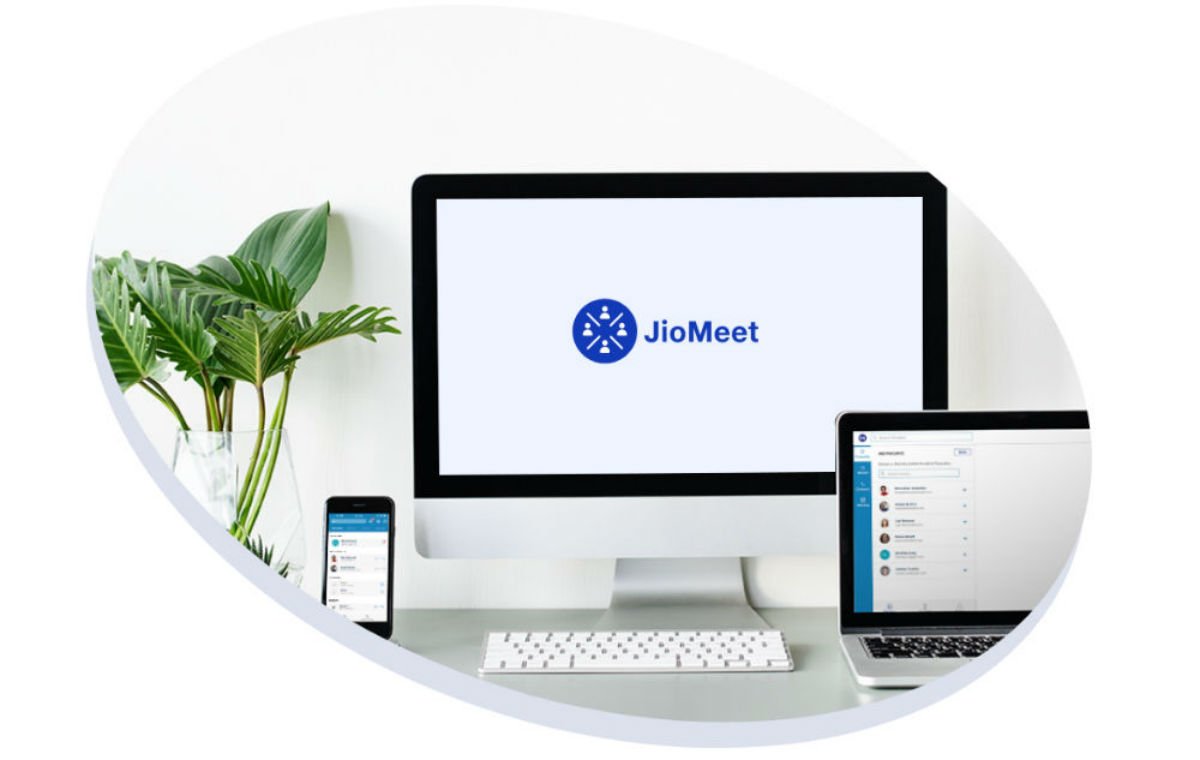
The app features “easy sign up” through the user’s mobile number or email id. The app promises that users can create “instant meeting” in High Definition (HD) video and audio quality. The hosts can also schedule meetings in advance and share the link with participants. The JioMeet also enables users to host meetings that can go “uninterrupted” up to 24 hours. The Share Screen features enables users to collaborate with other participants during a meeting. Additionally, JioMeet also features “Safe Driving Mode” and multi-device login support up to five devices.
Following the launch of JioMeet, Twitter user Shrinivas highlighted that JioMeet had an identical user interface with the Zoom video conferencing app. The similarities include identical landing screen and identical design of the Meeting pages along with Contacts, About page and My Profile section.
Several other users on Twitter shared that the JioMeet and Zoom app had numerous similarities throughout the app.
It has to be noted that the key rival of Reliance Jio, Bharti Airtel has an Unified Conferencing solution for those enterprise users seeking video conferencing solution. However, Airtel offers the solution through its tie up with Zoom app. The partnership between Zoom and Airtel also enables users to opt for “customized plans” with the billing in Indian currency. The solution from Airtel also carries all the benefits of Zoom with the operator bundling its own built-in audio conferencing solution for free. Crucially, the solution from Airtel does not offer a free tier with users required to sign up for plans with a base price of Rs 699 per month.
Meanwhile, the JioMeet solution is currently offered only in its free tier with features similar for both personal and enterprise users.
Additionally, JioMeet highlights that the app collects personal information such as “name, age, gender, contact information, products and services you are interested in” from an user. Further, the developers highlighted that the data collected by JioMeet will be shared with “affiliates” along with “external organizations” and “individuals.”
“We may disclose personal information to our affiliates when necessary to perform services on our behalf or on your behalf, to provide display advertising and promotional services, providing search results and links (including paid listings and links), processing credit card payments, providing customer service etc,” JioMeet said in its privacy policy.
Additionally, the developers of JioMeet said that the data collected by JioMeet “shall be retained only for a limited duration.” However, the developers have not highlighted the timeframe of the “limited duration.”
The privacy policy also highlights that the “deletion of certain information or withdrawal of consent” by users may lead to JioMeet cancelling the user access to the app or its features.
In April, the Indian government in its advisory said that the Zoom “is not for use by Government officers/officials for official purposes.” Additionally, the union Ministry of Home Affairs (MHA) issued guidelines to private individuals for using the Zoom app.
“The broad objective of this advisory is to prevent any unauthorized entry into a Zoom Conference Room and prevent the unauthorized participant to carry out malicious attacks on the terminals of other users in the conference,” the ministry said in its advisory.
Found this useful? You can support us.
 Support Telecomtalk