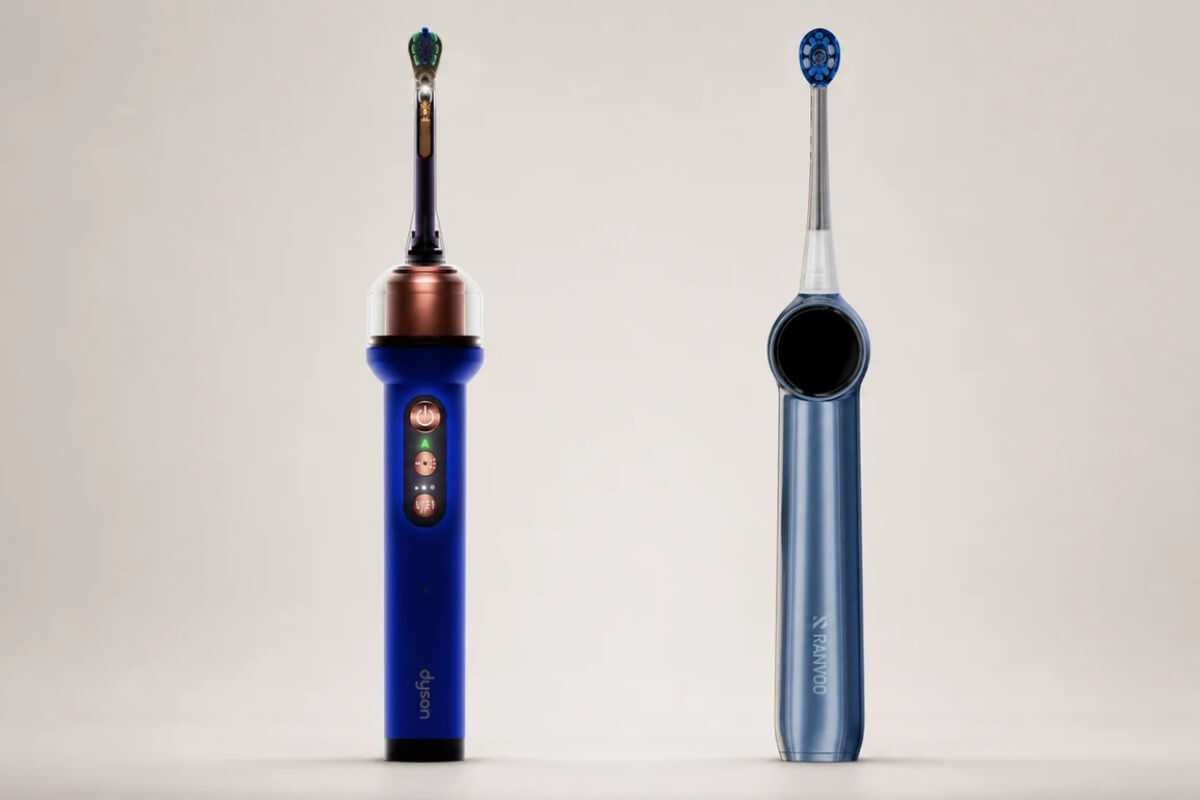
The RANVOO AirJet and Dyson CameraJet represent a new generation of electric toothbrush systems that combine traditional brushing techniques with new technology. While both aim to improve everyday brushing and reach areas that conventional bristles may miss, they use distinctly different technological approaches.
Electric toothbrushes have traditionally relied on automated movements to clean the surface of the teeth.
The emergence of technologies such as AirJet and CameraJet indicates that manufacturers are now looking beyond brush-head movement.
Airflow, fluid dynamics, cameras, software, and mobile applications are becoming part of the oral-care experience.
Dyson officially entered the oral-care category with CameraJet, an electric toothbrush that combines sonic brushing, a camera, and a liquid-jet system.
The device has a 100,000-pixel macro lens camera designed to detect gaps between the user’s teeth. Once the system detects a gap, the toothbrush releases a targeted burst of mouth rinse towards the area. Dyson describes the process as precision flossing.
CameraJet offers three cleaning modes: Auto-jet and Brush, Auto-jet only, and Brush only. Users can also choose from Gentle, Variable and Deep Clean brushing intensities, depending on their requirements and preferences.
The toothbrush connects to the MyDyson app through Wi-Fi and Bluetooth. Users can view live footage from inside their mouth, access guided-cleaning features and examine a coverage map showing the areas they have brushed.
According to Dyson, the camera operates when the user accesses the live-view feature or activates the automatic jet function.
The company says images captured by the toothbrush are not stored on the product or uploaded to the cloud.
The CameraJet package includes a charging and refill dock, two regular brush heads, a travel case, and a charging cable. Dyson introduced the electric toothbrush in Ceramic Ultra Blue and Ceramic Pink colour options.
Also Read: Redmi 17 5G vs OnePlus N6 5G: Which Budget Phone is Better?
RANVOO Uses Airflow and Microbubbles
RANVOO takes a different approach to cleaning areas beyond the direct reach of toothbrush bristles. Its AirJet technology combines airflow, liquid, and sonic movement to create a stream containing microbubbles.
The system uses a built-in air pump to generate microbubbles from the liquid and toothpaste already present around the brush head. A specially engineered brush head then guides the resulting flow along the surface of the teeth, around the gumline, and towards interdental spaces.
Unlike the Dyson CameraJet, RANVOO’s system does not use a camera to locate individual gaps. It also does not require a separate mouth-rinse tank inside the toothbrush handle. Instead, the microbubble flow moves with the brush head during regular brushing.
RANVOO incorporates the technology into electric toothbrushes such as the AirJet X5. The model includes multiple brushing modes, adjustable intensity settings, an on-handle display, and a timer to help users monitor their brushing routine.
Also Read: Xiaomi Smart Band 11 Launched: Price and Specifications
Different Technologies Address a Similar Challenge
Although RANVOO AirJet and Dyson CameraJet are both positioned as next-generation electric toothbrush systems, the technologies work in fundamentally different ways.
Dyson follows a detection-and-targeting approach. The integrated camera detects interdental gaps and directs individual bursts of mouth rinse to the identified areas. Its connected application provides visual guidance and information about brushing coverage.
RANVOO AirJet follows a create-and-guide approach. The system produces microbubbles and guides the resulting flow around the teeth as the user brushes. It does not offer a live camera view or attempt to identify every interdental gap individually.
These differences also affect how the products are used and maintained. CameraJet users must fill the system with a compatible mouth rinse and clean the liquid tank after using the toothbrush.
Since excessive foam can interfere with the camera’s view, Dyson recommends SLS-free, low-foaming oral care products for optimal performance.
RANVOO’s implementation does not depend on a camera or a dedicated liquid reservoir. Users can select a brushing mode, follow the timer, and rinse the brush head after completing their routine, similar to the process followed with a conventional electric toothbrush.
Smart Technology Moves Into Oral Care
The introduction of these products reflects a broader trend in consumer electronics. Features previously associated with smartphones, connected appliances and specialized imaging equipment are increasingly being integrated into everyday personal-care devices.
Dyson’s system may appeal to consumers interested in connected features, real-time visual guidance and app-based insights. RANVOO’s approach may suit users who want to retain a comparatively familiar brushing process while adding an airflow-assisted cleaning mechanism.
The two products also demonstrate that smart oral-care technology lacks a single definition.
For Dyson, it involves using a camera and software to identify specific areas and deliver a targeted jet. For RANVOO, it involves applying airflow and fluid dynamics to influence how a cleaning medium moves around the teeth.
Also Read: Mivi One 5G India Launch Date Announced
A New Phase for Electric Toothbrushes
These technologies do not eliminate the importance of brushing consistently, cleaning between the teeth, or following professional dental advice.
Their significance lies in how they attempt to address limitations of conventional toothbrush designs through engineering.
Dyson CameraJet represents a visibly connected approach by bringing together imaging, software, sonic brushing, and targeted liquid delivery. RANVOO AirJet focuses on incorporating microbubble flow into the normal brushing process without using a camera or separate mouth-rinse tank.
As manufacturers continue investing in the oral-care segment, electric toothbrushes are likely to become more sophisticated.
The category is gradually moving beyond basic vibration and rotation towards products that combine traditional brushing with imaging, intelligent guidance, and fluid engineering technologies.
Every article you read here is the result of time, research, and effort. If you feel it adds value, you can support TelecomTalk.
FAQs
What is RANVOO AirJet?
RANVOO AirJet is an oral-care technology that combines airflow, liquid, and sonic movement to create a microbubble flow. The system guides this flow around the teeth and into hard-to-reach areas during brushing.
How does Dyson CameraJet work?
Dyson CameraJet uses an integrated camera to identify gaps between teeth. It delivers targeted bursts of mouth rinse to these areas while its electric brush head cleans the teeth.
Does RANVOO AirJet have a camera?
No. RANVOO AirJet does not use a camera to detect gaps. It relies on airflow and fluid dynamics to generate and guide microbubbles during brushing.
Does Dyson CameraJet connect to a mobile application?
Yes. Dyson CameraJet connects to the MyDyson app via Wi-Fi and Bluetooth. The app offers live viewing, guided cleaning, and brushing coverage information.
What is the principal difference between RANVOO AirJet and Dyson CameraJet?
Dyson CameraJet uses camera-based gap detection and targeted liquid delivery. RANVOO AirJet generates a microbubble flow that moves around the teeth while the user brushes. It does not require a camera or a separate mouth-rinse tank.
 Support Telecomtalk