Poco X8 5G VS Poco X8 Power 5G: Key Differences Explained
As Poco India prepares to launch its next midrange beasts, the Poco X8 and Poco X8 Power smartphones, here is a detailed comparison highlighting key differences. Here is all we know:
Xiaomi’s Poco just launched the all-new Poco X8 series phones, the X8 5G and the X8 Power 5G, globally ahead of the India launch scheduled for September 4, 2026. The Poco X8 5G features a completely new design with a dual-colour finish on the back and is powered by the Qualcomm Snapdragon 6S Gen 4. The X8 Power 5G packs the Qualcomm Snapdragon 6 Gen 5 and a 10,000mAh battery, compared to the X8’s 9,000mAh battery. Here is a detailed comparison of the Poco X8 and Poco X8 Power to help you understand their differences.
Make Telecom Talk My Trusted Source
Key Highlights
Xiaomi’s subsidiary smartphone brand, Poc, just launched its new X series for 202: the X8 and the X8 Power.
Poco India will launch the new X8 Power and X8 phone in India on September 4, 2026. Before the India launch, the phone was launched globally, revealing key specifications.
Here is a detailed comparison of the key differences between the latest Poco X8 5G and the Poco X8 Power 5G smartphone.
Poco X8 5G VS Poco X8 Power 5G – Ultimate Comparison
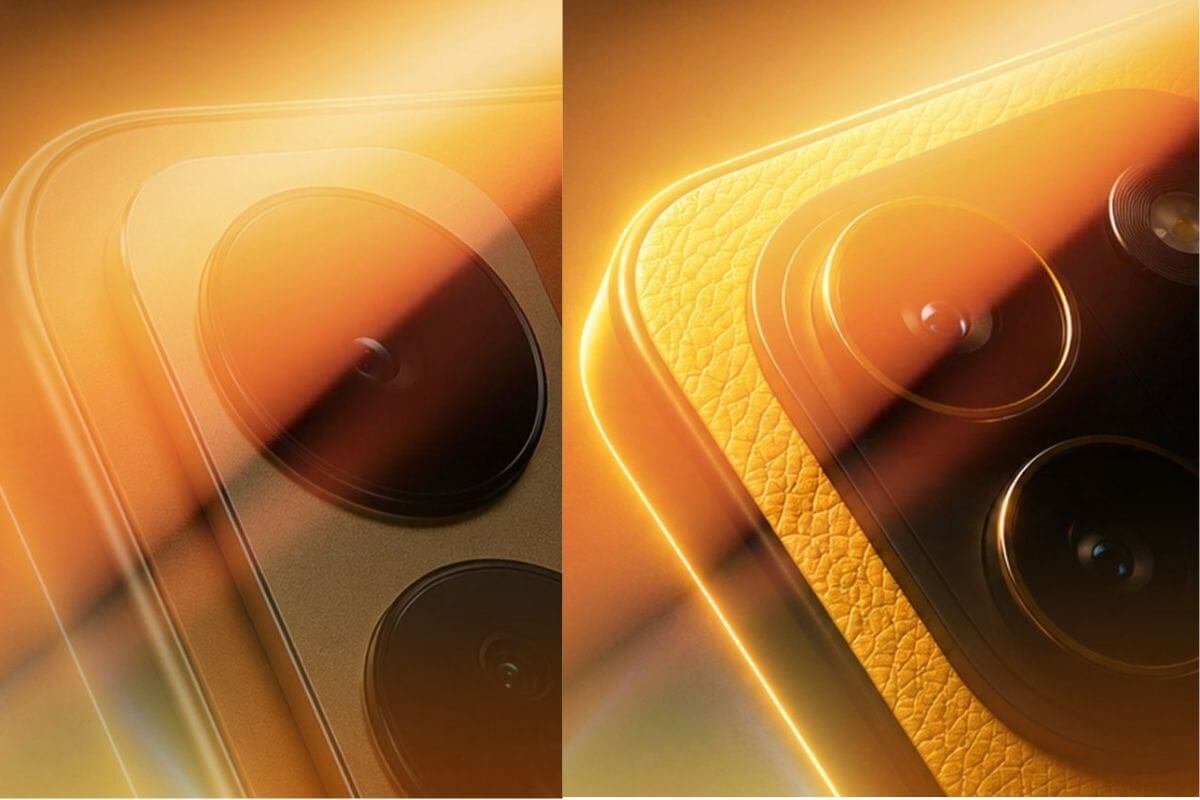
Both the Poco X8 and the Poco X8 Power feature a premium back design. After teasing the Poco X8 and X8 Power smartphones, Xiaomi’s Poco has finally launched its next X-series phones for 2026 globally, ahead of their India launch scheduled for September 4, 2026.
Let’s now take a look at the differences in specifications between the two phones.
Design
Both the Poco X8 and the Poco X8 Power feature plastic bodies and Gorilla Glass Victus 2 protection on the front, just like the flagship Samsung Galaxy S26 FE models.
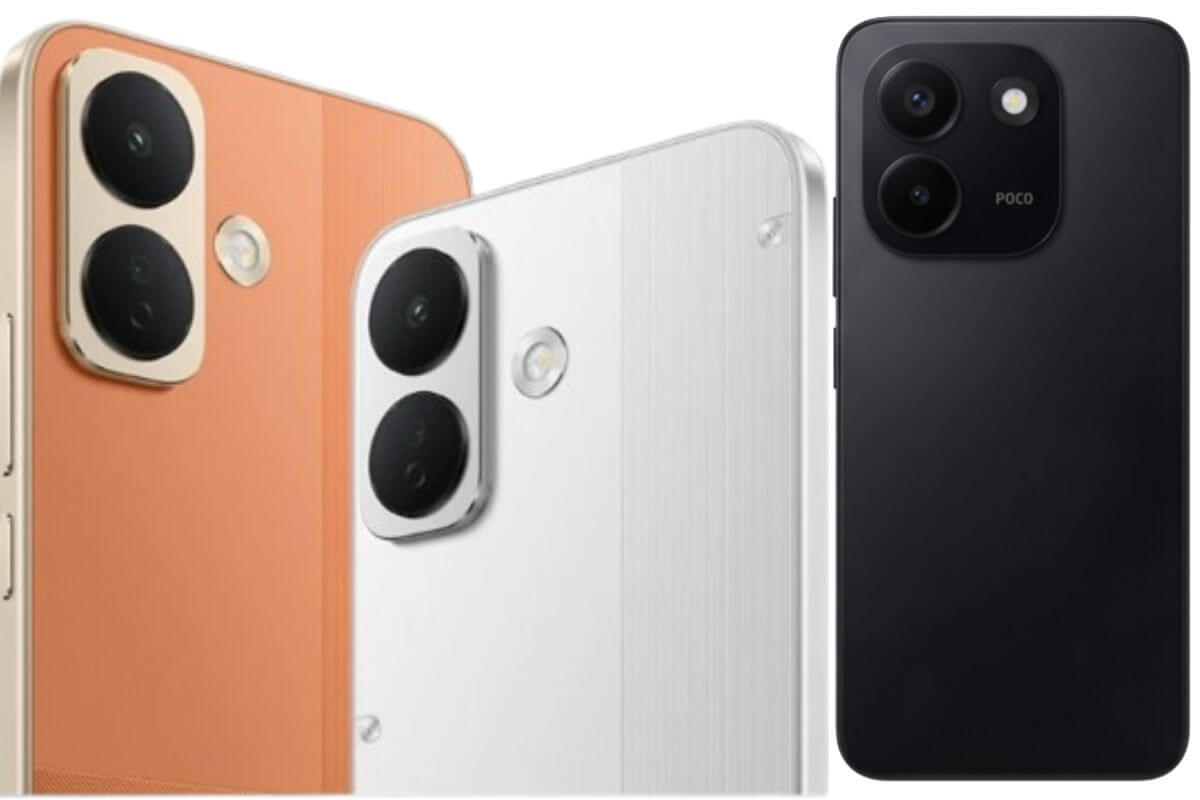
Poco X8 is the standard X series model, which gets a unique “cloudy” like finish.
It has dual cameras housed vertically on the rear, a circular flash above the square module, and a single punch-hole selfie shooter on the front. It is available in three colours: orange, blue, and black. Feels plasticky all over.
On the front, we get a flat screen with Gorilla Glass Victus 2 protection; on the rear and the side, the X8 Power 5G gets a plastic finish.
The X8 Power gets a more matte finish on the rear, with dual vertically oriented cameras and the “Poco” logo added to the top-left of the phone’s square mode.
The Power variant will be available in Black, Purple, Cloud Blush, and Green colours. Both smartphones will come with the IP66, IP68, IP69, and IP69K ratings for dust, water, and high-pressure/temperature washdowns.
On the display front, the Poco X8 5G will feature one of the largest 6.83-inch AMOLED displays with 1.5K resolution, supporting 68 billion colours, a 120Hz refresh rate, 3500-nit peak brightness, and a 240Hz touch sampling rate.
The Poco X8 Power 5G gets a 6.83-inch LTPS OLED display with 1.5K resolution, a 120Hz refresh rate, a 240Hz touch sampling rate, and 3,500-nit peak brightness, with support for 68B colours.
The Poco X8 Power takes the edge with HDR10+ certification and Dolby Atmos support, making it a great phone for binge-watching.
Processor, RAM and Storage
Xiaomi’s Poco X8 5G phone packs a Qualcomm Snapdragon 6s Gen 4 chipset under the hood, a 4nm-based chip that first launched in June 2025. The chipset is built with 4 Cortex-A78 cores at 2400 MHz and 4 Cortex-A55 cores at 1800 MHz.
The chipset offers solid performance for the price. It scores around 8,29,894 points on AnTuTu 11, while Geekbench 6 reports 1009 points for single-core and 2892 points for multi-core performance.
The GPU has a total score of 1874 points. The chipset also powers other phones, such as the Redmi Note 17 Pro 5G.
With the chipset, you get up to 12GB of LPDDR4X RAM and up to 256GB of UFS 3.1 storage. Also, we have leaks hinting at a base variant with 8GB of RAM and 128GB of UFS 2.2 storage.
The Xiaomi Poco X8 Power 5G comes with an even better Qualcomm Snapdragon 6 Gen 5 chipset, which is built on a 4 nm process.
The Snapdragon 6 Gen 5 chipset launched in May 2026, making it one of Qualcomm’s latest Snapdragon chipsets and offering solid performance on paper.
It comes with 4 Cortex-A78 cores at 2600 MHz and 4 Cortex-A55 cores at 2000 MHz.
The X8 Power offers solid performance according to benchmark aggregators. The chipset has achieved a total score of 1012134 points on AnTuTu 11, while Geekbench 6 reports a total score of 1099 points for single-core performance, 3481 points for multi-core performance, and 4253 points for GPU performance.
The chipset also powered other smartphones, such as Xiaomi’s recently launched Redmi Note 17 Pro Max 5G.
The X8 Power is expected to get up to 12GB of LPDDR5X RAM and up to 512GB of UFS 4.1 storage. The base variant will have 8GB of LPDDR4X RAM with 128GB of UFS 2.2 storage, although Poco has not yet confirmed this.
Xiaomi’s Poco X8 features a dual-camera setup on the rear: a 50MP main sensor with an f/1.8 aperture and an 8MP ultrawide sensor with an f/2.2 aperture. On the front, you will get a 16MP selfie shooter with an f/2.4 aperture lens.
The X8 smartphone uses a combination of both OIS and EIS for video and image stabilization. The higher-end Poco X8 Power gets an improved flagship Sony IMX 882 50MP sensor with OIS support, though it has a slightly smaller f/1.5 aperture lens.
The main camera sensor is paired with an 8MP ultrawide-angle sensor with an f/2.2 aperture lens, and on the front, we get a 32MP selfie shooter with an f/2.2 aperture lens.
Battery
The Poco X8 has an 8,340mAh silicon-carbon battery with 67W fast wired charging and 22.5W reverse wired charging. In contrast, Xiaomi’s Poco X8 Power has a larger 10,000mAh silicon-carbon battery with 100W wired charging and 27W reverse wired charging.
Software
On the software side, both the X8 5G and the X8 Power 5G by Xiaomi’s Poco will run on the latest HyperOS 3, based on Android 16, out of the box. Poco promises 4 years of OS upgrades and 6 years of security patch updates.
Poco just dropped its next X8 smartphone lineup for the global market, and the India launch is set for September 4, 2026. The base Poco X8 5G with 6GB of RAM and 128GB of storage is priced at USD 269, about Rs 25,000.
The mid-variant with 8GB of RAM and 256GB of storage costs USD 299, around Rs 28,000. The top-end variant with 12GB of RAM and 256GB of storage is priced at USD 349, about Rs 33,000.
Although the Poco X8 Power’s price has not yet been revealed, reports based on its specifications and features suggest it will be priced around Rs 35,000. For that price, you get a solid phone, but we will have to wait for Poco to confirm the price.
Some people read for free. A few choose to support. If you found TelecomTalk useful, you can help keep us running.
FAQs
What is the difference between the Poco X8 5G and X8 Power 5G?
The Poco X8 Power 5G is the higher-end model. It offers a more powerful Snapdragon 6 Gen 5 chipset, a larger 10,000mAh battery, 100W charging, up to 512GB of storage, and a 32MP selfie camera. The standard X8 5G has a Snapdragon 6S Gen 4 chipset and a 9,000mAh battery.
Which phone has the better processor, Poco X8 5G and Poco X8 Power 5G?
The Poco X8 Power 5G has the Snapdragon 6 Gen 5 chipset, which is more powerful. The standard X8 5G uses the Snapdragon 6S Gen 4.
Do both Poco X8 phones have the same display?
Both have a 6.83-inch 1.5K display with a 120Hz refresh rate, 240Hz touch sampling, and 3,500-nit peak brightness. The X8 Power also includes HDR10+ certification.
Which phone has the bigger battery, Poco X8 5G and Poco X8 Power 5G?
The Poco X8 Power has a larger 10,000mAh silicon-carbon battery, while the Poco X8 packs a 9,000mAh silicon-carbon battery.
Which Poco X8 phone should you buy?
The Poco X8 Power 5G is the better choice if you want maximum performance, a larger battery, faster charging, better selfie hardware, and more storage. The standard Poco X8 5G offers better value if you want a large battery and an AMOLED display at a lower price.
 Support Telecomtalk