Google Pixel 11 vs Pixel 11 Pro: Difference You Should Know
Here is a detailed comparison between the latest two flagship Pixel phones, Pixel 11 and Pixel 11 Pro, in terms of design, display, processor, RAM, storage, battery, software and price - Here is all we know so far:
Google has launched its all-new Pixel 11 series, including the standard Pixel 11, Pixel 11 Pro, the larger Pixel 11 Pro XL, and the flagship foldable Pixel 11 Pro Fold 5G. All the phones are powered by the latest 2nm-based Tensor G6 chipset and feature a triple-camera setup with the HiLight sensor. On the Pro model, you get a bigger image sensor, although there isn’t much improvement in battery capacity; here, we’ve got you covered with a detailed comparison between the two flagships.
Make Telecom Talk My Trusted Source
Key Highlights
Here is a detailed comparison between the latest flagship phone, the Pixel 11 and the Pixel 11 Pro.
Both phones are running on the latest Tensor G6 chipset based on 3nm architecture.
Right now, the Google Pixel 11 and Pixel 11 Pro are available to pre-order, and customers can avail discounts when pre-ordering the phone.
Google Pixel 11 vs Google Pixel 11 Pro: Ultimate Specification Comparison
Here, we have you covered with a detailed comparison between the latest Pixel 11 standard model and the Pixel 11 Pro to help you decide whether to stick with the standard or upgrade to the Pro.
We have compared both flagships in terms of design, display, processor, RAM, storage, and price.
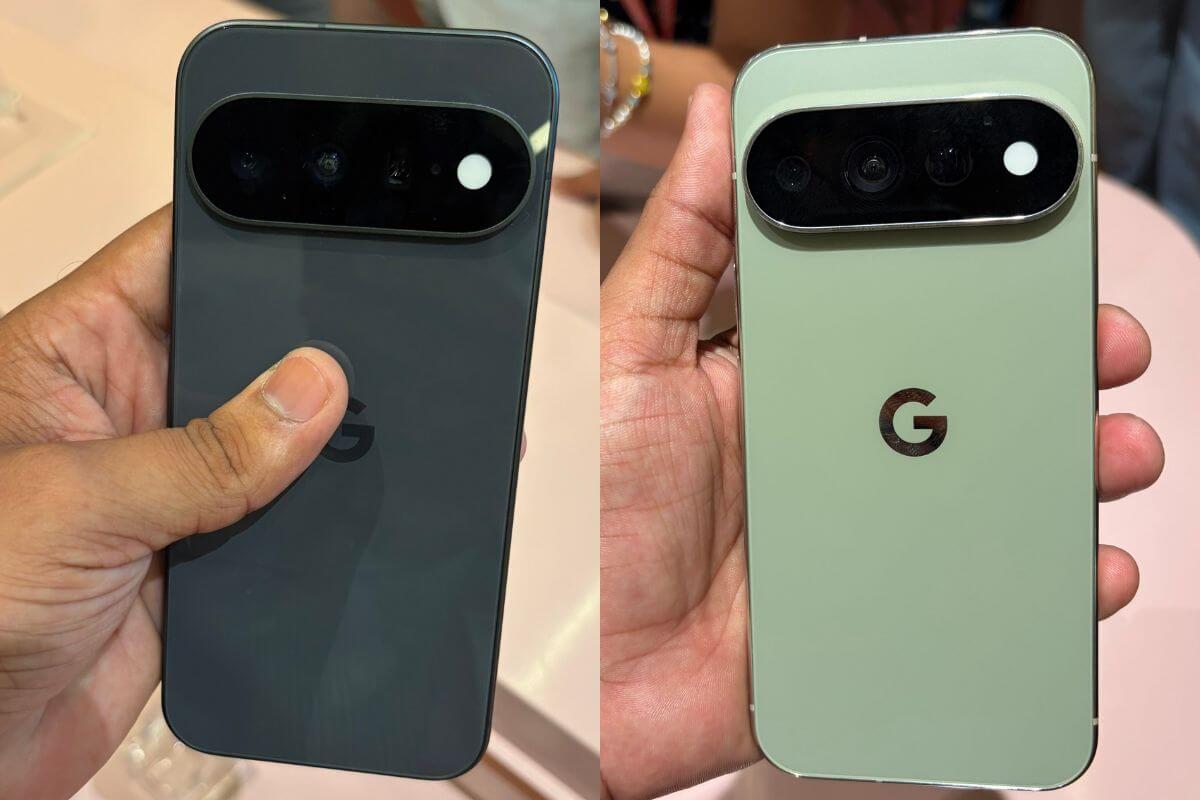
On the design side, the Pixel 11 and Pixel 11 Pro share the same design, built around an aluminium chassis with a slimmer profile and a slimmer camera bump, with a glossy finish on the front and back with Corning Gorilla Glass Victurs 2 protection and an anti-scratch cover added on the front of the display, this gives the Pixel 11 series a completely new premium feel in the hand.
The standard Pixel 11 is available in four colours: Frost, Hibiscus, Pistachio, and Obsidian. The Pixel 11 Pro also comes in four colours: Canyon, Fog, Olive, and a new all-matte Obsidian.
Pixel 11 weighs around 197G while the Pixel 11 Pro weighs around 204g
Display
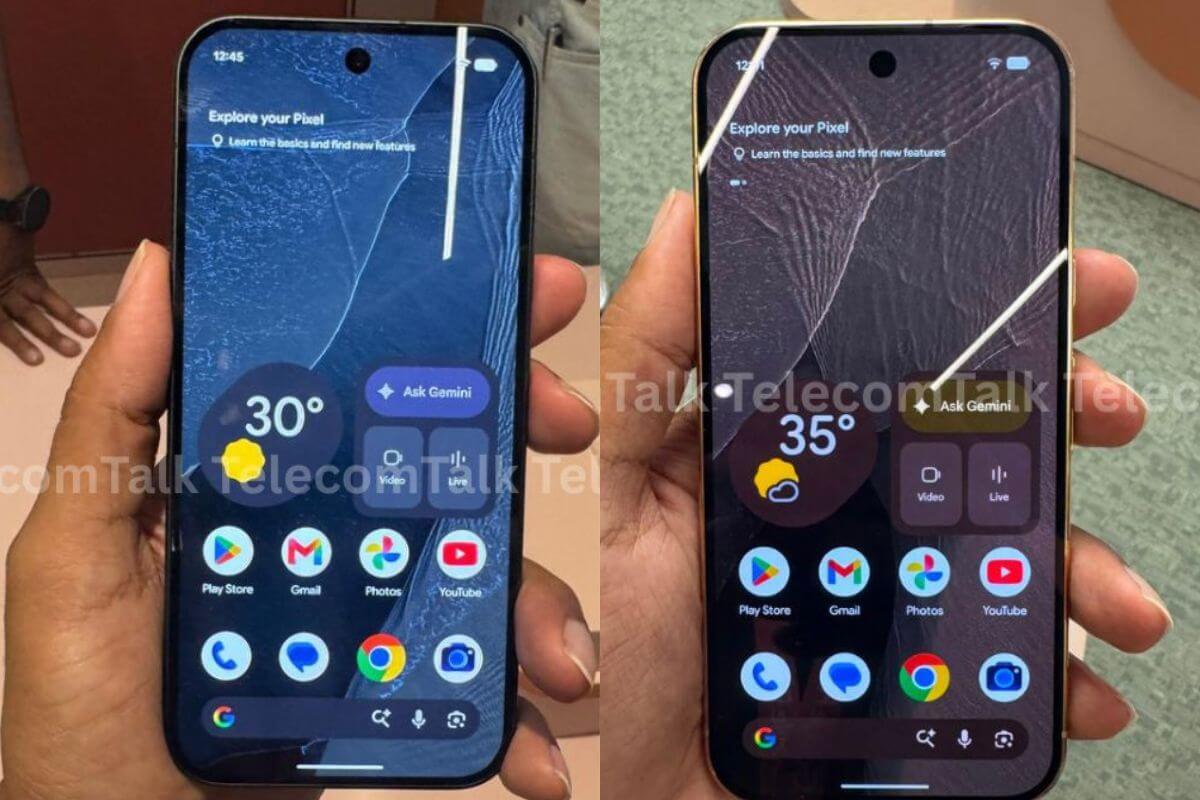
The Google Pixel 11 series uses the same display technology: the standard Pixel 11 comes with a 6.3-inch (160mm) LTPO OLED display with 1080 x 2424 resolution, 120 Hz refresh rate support, and 422 PPI (pixels per inch), which indicates the display’s pixel density.
Pixel 11 supports a feature called “Actua display”, which helps produce vibrant colour and peak brightness of 3,000 nits.
The Google Pixel 11 Pro comes with the same display size: 6.3 inches (161mm). The Pixel 11 Pro phone is a bit wider in dimensions; although it’s not visible in real life, on paper Google has made it wider!
The Pixel 11 Pro display supports a 1280×2856 resolution at 495 PPI, with a peak brightness of up to 3,600 nits, making it a bit wider. It offers slightly higher resolution, pixel density, and brightness within the same-inch display size.
The Google Pixel 11 Pro, in fact, gets the “Super Actua display feature”, which delivers 3,600-nit peak brightness and promises 2x more scratch resistance and durability compared to the previous Pixel models, including the Pixel 10 Pro.
Both Pixel 11 5G and Pixel 11 Pro 5G support HDR and are HDR10+ certified for a better viewing experience.
Under the hood, both the Google Pixel 11 5G and the Pixel 11 Pro 5G are powered by the same Tensor G6 chipset, a new Google-built mobile processor for Pixel phones.
Google calls its new Tensor G6 Processor the most advanced built to date. The chipset uses a 3nm architecture, making it the smallest smartphone processor to date.
On paper, the Tensor G6 scores 1,933,536 points on AnTuTu 11. Other benchmark aggregators, such as Geekbench 6, show 2,677 points for single-core and 7,321 points for multi-core processing.
Although the chipset offers solid specs for the price, many Pixel fans were disappointed that Google did not use a 2 nm chipset and instead kept the same PowerVR CXTP-48-1536 GPU.
On paper, the performance of the Tensor G5 and Tensor G6 is marginal. Would you like us to compare the G6 and Tensor G5 to assess overall performance? Please leave your comment.
According to Google, the latest Tensor G6 chipset runs the Gemini Nano model, unlocking new AI capabilities for performing multiple tasks with Gemini Intelligence.
Both phones come with the latest Titan M3 security chipset, which supports safe and secure boot in hardware
Alongside the Tensor G6 and Titan M3 chipsets, the Pixel 11 gets up to 16GB of LPDDR5X RAM, and despite rumours floating around about Google’s plan to reduce the RAM for the Pro model, Google proves them wrong by offering 16GB of LPDDR5X RAM for the Pixel 11 Pro model.
Alongside faster RAM, you get the latest Zoned UFS, a variant of UFS 4.0 that stores data more efficiently. Zoned UFS stores data in dedicated zones, which helps improve loading times and efficiency. The previous Pixel model, the Pixel 10 Pro, already comes with this feature.
Both phones offer up to 512GB of UFS 4.0 zoned UFS storage.
Camera
The Pixel 11 5G and Pixel 11 Pro 5G feature a triple-camera setup in a horizontal pill module and a single selfie shooter in a punch-hole on the front.
The standard Pixel 11 comes with a new 48MP main wide 1/1.56-inch sensor with Macro focus support and a wider f/1.70 aperture lens; a 13MP ultrawide-angle 1/3.1-inch sensor with an f/2.2 aperture lens and a 120-degree field of view; and, lastly, a 10.8MP Dual PD telephoto camera with OIS Support and an f/3.1 aperture lens.
The phone supports 5X optical zoom and combines all rear cameras to achieve up to 30x Super Zoom. On the front, it has a 10.5MP Dual PD selfie shooter with autofocus and an f/2.2 aperture lens, offering a 95-degree field of view.
The Pixel 11 Pro camera got a slight improvement this year.
The rear triple setup includes a new 50MP main wide-angle 1/1.3-inch sensor with 1x zoom and 2X optical support, a 48MP ultrawide sensor with 0.5X zoom and Macro focus, and a newer 48MP telephoto sensor with 5X zoom and 10X optical quality zoom.
It features the largest 1/1.95-inch sensor, capturing 30% more light and supporting 120X Pro Zoom.
On the front, you get the regular 42MP selfie shooter with an f/2.2 aperture and a 103-degree field of view.
Battery
The Google Pixel 11 comes with a bigger 4985mAh battery, 30W faster wired charging, and 25W wireless charging. The Pixel 11 Pro has a slightly smaller 4850mAh battery. It also supports 30W wired charging and 25W wireless charging with magnetic Qi2.2 support.
HiLight Feature
The Pixel 11 and Pixel 11 Pro introduce the HiLight LED notification light, circling the camera flash to deliver eye-catching alerts.
Users can assign vibrant colours to incoming calls, personalize contact notifications, and enjoy hands-free interaction with Gemini.
Software and AI Features
Both phones launch with the cutting-edge Android 17, making them among the first to offer this experience out of the box.
Thanks to Gemini AI and Google’s new Nano model, users unlock advanced AI features and smarter camera capabilities.
You also get AI-centric features like Rambler, a Gemini-powered voice input that transcribes your voice into text clearly, even with filler words. Next, Magic Capture AI uses the Gemini model to analyze frames and enhance the best photo.
Finally, the Camera Looks feature lets users capture style at the sensor level, and Creator Suite, exclusive to Pro models, uses an integrated teleprompter.
It also includes storyboard editing and creator-focused camera controls, enabling content to be produced directly on Pixel.
Google also promises around seven years of OS Upgrades
Google Pixel 11 vs Google Pixel 11 Pro: Price Comparison
On the pricing side, despite the memory shortage crisis, the Google Pixel 11 series didn’t get any major price hike; the standard Pixel 11’s base variant with 12GB RAM and 256GB storage is priced at Rs 89,999, while the top-end model with 16GB RAM and 512GB storage is priced at Rs 1,04,999.
The Pixel Pro model, the Google Pixel 11 Pro’s base variant with 12GB RAM and 256GB of storage, starts at Rs 1,19,999, and the top-end model starts at Rs 1,34,999 with 6GB RAM and 512GB of storage.
As part of the introductory offer, customers can get up to Rs 10,000 in instant cashback, plus a Rs 9,000 exchange bonus, valid until August 31, 2026.
Customers can also buy the all-new Pixel 11 phone with up to 24 months of no-cost EMI on eligible credit cards.
Verdict: Google Pixel 11 vs Google Pixel 11 Pro: Which is a Better Phone?
Both the Google Pixel 11 and Pixel 11 Pro offer similar specs, including the latest Tensor G6 chipset and a triple-camera setup. On the camera side, the Pixel 11 Pro has a larger sensor and 120X Super Zoom support. On the front, it features a bigger selfie shooter.
If you want a Pixel phone with a good camera, then the Pixel 11 Pro is the right choice. However, competitors like the Samsung Galaxy S26 Ultra offer better specs and cameras at this price.
However, if you have a budget under Rs 90,000 and are upgrading from an older phone, the Pixel 11 is a good choice.
Image Credits: Abhishek Yadav
Every article you read here is the result of time, research, and effort. If you feel it adds value, you can support TelecomTalk.
FAQs
What is the difference between Google Pixel 11 and Pixel 11 Pro?
The Pixel 11 Pro offers a higher-resolution, brighter display, a larger main camera sensor, better telephoto hardware, and up to 120X Pro Zoom. The standard Pixel 11 is more affordable and has a slightly larger battery.
Does the Google Pixel 11 Pro have a better camera than Pixel 11?
Yes, the Pixel 11 Pro has a larger 50MP main sensor, a 48MP ultrawide camera, and a 48MP telephoto camera. It supports up to 120X Pro Zoom.
Which Pixel 11 model has a bigger battery?
The standard Pixel 11 has a larger 4,985mAh battery, while the Pixel 11 Pro has a 4,850mAh battery.
Which software do Pixel 11 and Pixel 11 Pro run?
Both smartphones run Android 17 out of the box and include new Gemini-powered AI features.
Which is better: Google Pixel 11 or Pixel 11 Pro?
The Pixel 11 Pro is better for photography, zoom, and display quality. The Pixel 11 is a good choice if you want a flagship Pixel experience at a lower price.
 Support Telecomtalk