Ericsson Mobility Report: SoftBank Trial Shows Premium 5G Slices Can Coexist With General Users
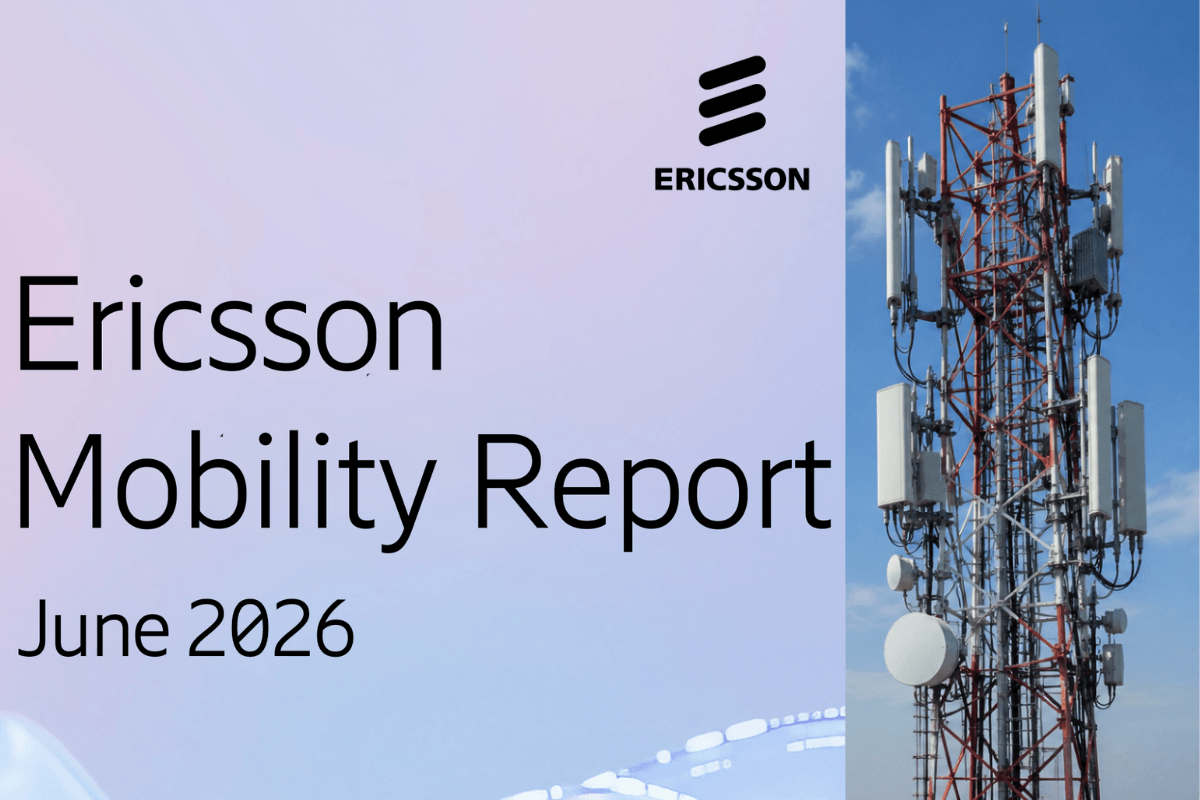
Ericsson's latest Mobility Report highlights a real-world 5G standalone network slicing trial conducted by SoftBank during the 2026 Formula 1 Japanese Grand Prix. The report suggests that differentiated connectivity services and general mobile users can coexist on the same network when operators combine capacity expansion, intelligent control and service-specific performance management.
A real-world 5G standalone (SA) network slicing trial highlighted in the Ericsson Mobility Report June 2026 suggests that premium connectivity services and general mobile users can coexist on the same network when supported by sufficient capacity, intelligent management and service-specific controls.
Make Telecom Talk My Trusted Source
Key Highlights
Ericsson's June 2026 Mobility Report highlighted a real-world SoftBank 5G standalone network slicing trial conducted during the 2026 Formula 1 Japanese Grand Prix.
SoftBank created five network slices on a shared 5G SA network to support multiple services with different performance requirements simultaneously.
Ericsson reported that premium connectivity services and general mobile users were able to coexist on the same infrastructure during the trial.
The deployment combined network slicing with capacity expansion through Massive MIMO and millimeter-wave technology to improve overall network performance.
General 5G SA users saw around 4x improvement in downlink throughput and more than 14x improvement in uplink throughput compared with the previous year.
The findings come from the report section titled “Real-World Slicing That Delivers Performance When It Matters Most” (Pages 20-22), where Ericsson examined a network slicing trial conducted by SoftBank Corp. during the 2026 Formula 1 Japanese Grand Prix at Suzuka Circuit in Japan.
The case study is notable because network slicing is often discussed as a premium 5G capability, but Ericsson presented it as a broader network technology designed to support multiple services with different connectivity requirements on a shared infrastructure.
SoftBank Created Five Network Slices on a Shared Network
According to Ericsson, SoftBank used its 5G standalone network to create five separate network slices during the event. Each slice was configured to support different service requirements while operating on the same physical network infrastructure.
The objective was to validate whether multiple services with varying performance needs could run simultaneously without affecting the overall user experience.
Ericsson said the deployment was designed to support different categories of traffic and applications at the same time. Rather than treating all network traffic identically, network slicing enables operators to create dedicated logical networks with distinct quality characteristics for specific use cases.
The trial was conducted in a live environment with thousands of attendees, making it a practical demonstration rather than a laboratory exercise.
Capacity Expansion Came Before Slicing
One of the key lessons highlighted in Ericsson’s report is that slicing alone was not responsible for the outcome before implementing the slicing framework, SoftBank expanded network capacity across the venue. According to Ericsson, the operator more than doubled the number of Massive MIMO cells compared with the previous year and added millimeter-wave capacity at strategic locations around the circuit.
This additional capacity created the network headroom required to support both specialized services and general mobile traffic.
Ericsson’s report emphasizes that successful network slicing depends on a combination of capacity expansion, monitoring, automation and intelligent control. In other words, slicing is not a replacement for network investment. Instead, it is a mechanism that allows available network resources to be managed according to the needs of different services.
General Users Continued to Use the Network
A common concern raised around network slicing is whether prioritizing certain services could negatively affect ordinary users sharing the same infrastructure.
Ericsson’s findings suggest that this does not necessarily have to be the case.
According to the report, general 5G standalone users continued to use the network while multiple dedicated slices supported event-related services. Ericsson reported that the overall experience for general users improved during the trial.
The report noted that downlink throughput for general 5G SA users improved by around four times compared with the previous year. Uplink throughput improved by more than fourteen times at the same time, services operating on dedicated slices were able to support a range of event applications, including payment systems, cameras and XR-related services.
Ericsson presented the results as evidence that premium connectivity services and general connectivity services can coexist when operators combine adequate capacity with service-aware network management.
Different Services Have Different Connectivity Needs
The SoftBank trial also highlighted a broader challenge facing modern mobile networks not every service requires the same type of connectivity. Some applications place greater demands on uplink performance, while others require lower latency, higher reliability or more predictable throughput.
For example, payment systems require consistent connectivity, cameras generate substantial uplink traffic, and immersive XR applications may depend on stable latency and throughput characteristics a traditional best-effort network model treats all traffic similarly. Network slicing allows operators to tailor connectivity according to the specific requirements of each service while continuing to support conventional mobile broadband users.
Ericsson notes throughout the report that differentiated connectivity services are becoming increasingly important as operators deploy 5G standalone networks and begin exploring new commercial opportunities.
What the Trial Means for Future 5G Networks
While the SoftBank deployment was conducted at a motorsport event, Ericsson says the lessons extend beyond a single venue the report presents the trial as a practical validation of how 5G standalone network slicing can be used in real-world environments where multiple services compete for network resources.
According to Ericsson, the combination of capacity expansion, automation, monitoring and service-specific controls enabled the network to support differentiated connectivity services while maintaining and improving the experience of general users the company added that learnings from such deployments can help operators refine future commercial offerings based on network slicing and differentiated connectivity.
As 5G standalone deployments continue to expand globally, Ericsson’s SoftBank case study suggests that network slicing is more than a theoretical capability. When implemented alongside adequate network capacity and intelligent management, it can provide a framework for supporting multiple service requirements on the same infrastructure without necessarily compromising the experience of ordinary users.
Some people read for free. A few choose to support. If you found TelecomTalk useful, you can help keep us running.
FAQs
What is network slicing in 5G?
Network slicing allows operators to create multiple virtual networks on the same physical 5G infrastructure, with each slice designed to meet specific service requirements such as low latency, high reliability or enhanced uplink performance.
What did SoftBank do in Ericsson's case study?
According to Ericsson's June 2026 Mobility Report, SoftBank created five network slices on a shared 5G standalone network during the 2026 Formula 1 Japanese Grand Prix to support different applications and user groups simultaneously.
Did network slicing affect ordinary users during the trial?
Ericsson reported that general 5G standalone users continued to use the network while dedicated slices supported specialized services. The report also noted improvements in both downlink and uplink performance for general users.
Why is capacity important for network slicing?
Ericsson emphasized that SoftBank expanded network capacity through Massive MIMO and millimeter-wave deployments before implementing slicing. The report suggests that capacity expansion is an important foundation for successful differentiated connectivity.
Why is this trial important for the telecom industry?
The trial provides a real-world example of how 5G standalone network slicing can support multiple services with different performance requirements on a shared infrastructure, helping operators explore future commercial connectivity offerings.
 Support Telecomtalk