Support Telecomtalk






Highlights
- Kerala rain alert appeared on a connected vehicle display
- DoT-NDMA led emergency alerts can support real-time public safety communication
- Telecom networks are becoming important public safety infrastructure

Andrew Bonwick
Vice President of Product Development at Relm Insurance

Madhav Sheth
CEO of Ai+ Smartphone

Stephen Rose
CEO Render Networks



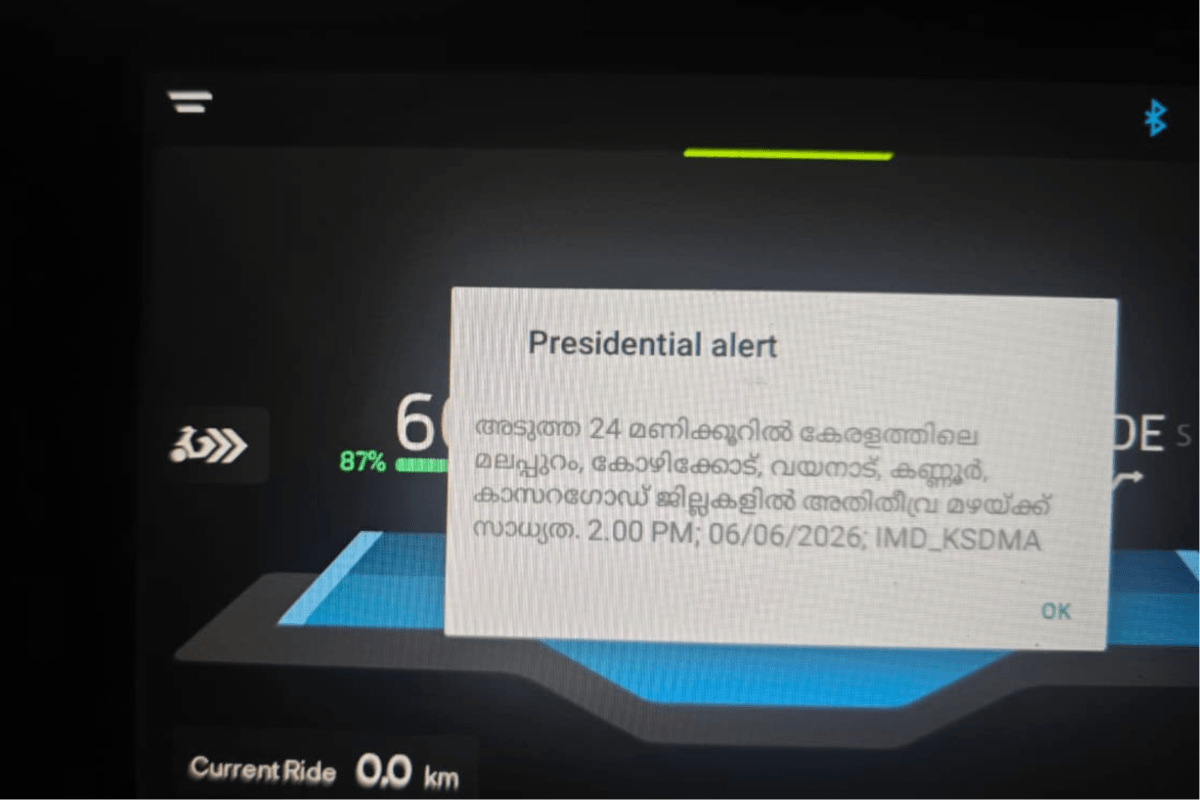
A rain alert appearing on a connected vehicle display in Kerala shows how India’s emergency alert system is becoming more visible in daily life the warning, issued for parts of Kerala including Malappuram, Kozhikode, Wayanad, Kannur, and Kasaragod, highlights how public safety messages can now reach citizens not only on mobile phones but also through connected screens used while travelling.
- Make Telecom Talk My Trusted Source



Key Highlights
- Kerala rain alert appeared on a connected vehicle display.
- The alert warned of possible heavy rainfall in parts of Kerala.
- India’s emergency alert system is becoming more visible across phones and connected screens.
- DoT and NDMA have been working on mobile-enabled emergency alerts for public safety.
- C-DOT’s Cell Broadcast system supports geo-targeted emergency alerts.
- Telecom networks can play a larger role in real-time disaster communication.
- Connected displays can add another safety layer for citizens on the move.


India has been strengthening its public emergency communication system through mobile enabled alerts. The Department of Telecommunications, in collaboration with the National Disaster Management Authority, has been working on systems that can deliver timely warnings to citizens during disasters and other public safety situations.
Also Read: DoT Begins Pan India Testing of Real Time Disaster Alerts on Mobile Networks
C-DOT’s indigenous Cell Broadcast solution is designed to send multilingual and geo-targeted emergency alerts to mobile phones in affected areas. This makes the system useful during events such as heavy rainfall, floods, cyclones, lightning, landslides, and other weather-related risks.
The main value of such a system is speed and reach citizens do not always need to check a news app, television channel, or social media platform to know about an emergency. A warning can directly reach users in the affected region, helping them stay aware and take timely decisions.