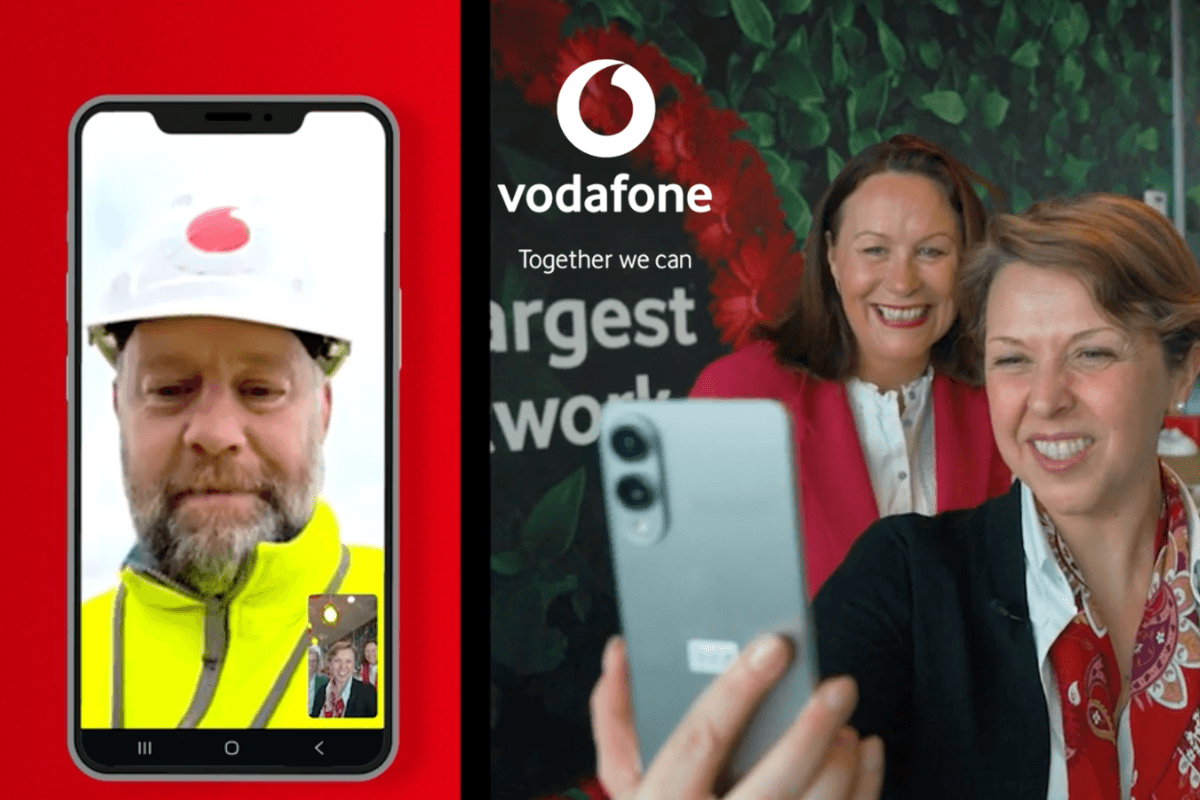
Vodafone Completes Video Call Where No Network Exists Using Satellite Tech

Vodafone has successfully completed a video call using satellite connectivity from a location with no mobile network, marking a major step towards direct-to-smartphone satellite communication. The test, conducted in Ireland, highlights how future telecom networks could eliminate coverage gaps by combining terrestrial and space-based infrastructure. Similar trials by Airtel Africa with Starlink further indicate a growing global push towards satellite-powered connectivity.

Most readers read for free. A small group from the TelecomTalk community keeps this going. Support only if our work adds value for you.

Highlights

  • Vodafone completes video call using satellite in no network area
  • Test conducted from Clare Island to Dublin
  • Call made using a regular smartphone, no special device needed

Follow Us

vodafone video call no network exists using satelliteIn a recent test Vodafone has completed a live video call using satellite connectivity from an area with no mobile network at all. The call was placed from Clare Island in Ireland, a location known for patchy or non-existent coverage, and was received in Dublin by Vodafone Ireland CEO Sabrina Casalta what makes this test important is not just the satellite link, but the device used the call was made using a regular smartphone.

From dead zone to live video

An engineer stationed in a complete network blackspot was able to initiate a video call as if they were connected to a normal mobile network for years, satellite communication has been limited to specialised devices or emergency use. This changes the narrative. Vodafone’s test shows that satellite connectivity can work quietly in the background, without the user needing to think about it.


How Vodafone made it happen

The trial was carried out with the help of Satellite Connect Europe and AST SpaceMobile’s satellite network. These satellites essentially act like mobile towers in space, connecting directly with phones on the ground instead of relying on towers placed every few kilometres, this model allows coverage from above. It becomes especially useful in places where building infrastructure is difficult or not commercially viable.

Not just Vodafone, the industry is moving here

This is not an isolated effort. The telecom industry globally is clearly moving towards satellite-backed connectivity. Airtel Africa has also been testing similar capabilities Airtel recently announced successful trials of data and messaging services in partnership with SpaceX using Starlink Mobile. The focus was again on areas where traditional mobile networks had no signal.

Also Read: Vodafone Idea’s New CEO Congratulates AST SpaceMobile on Its Successful Satellite Launch

Operators are now looking at space not as a backup, but as an extension of their network there are still millions of people who live in areas where network coverage is weak or inconsistent. For them, even basic communication can be a challenge.


The India angle is hard to ignore

India has seen massive progress in network expansion, but coverage gaps still exist remote villages, hilly terrains, and certain rural pockets continue to face connectivity issues Satellite-to-smartphone connectivity could play a big role here.

It can support communication in areas where deploying towers is difficult it can also act as a fallback during floods, landslides, or cyclones when networks go down. Indian operators have already started exploring satellite partnerships with global players moving fast, it is only a matter of time before such services are tested and rolled out locally.

Vodafone’s satellite video call is not just a one-off achievement it is an early signal of how mobile networks are evolving. A few years from now, the idea of “no network” may not exist in the way we understand it today and when that happens, connectivity will no longer depend on where you are, but simply on whether you have a phone in your hand.

Most readers read for free. A small group from the TelecomTalk community keeps this going. Support only if our work adds value for you.

Reported By

Founder, Editor-in-Chief

Tarun PK is the founder of TelecomTalk, delivering trusted telecom news since 2008 with focus on networks, broadband and innovation.

Recent Comments

Faraz :

In M.P Vi has 5 bands for 4G, in Bihar they have only 3, out of which only L1800 and…

Vodafone Idea Expands Network in Bihar and Jharkhand with 5,100…

Faraz :

Travelled on 28 march, even 2G is missing for KMs before Bihar Bengal border. Which was not the case before…

Vodafone Idea Expands Network in Bihar and Jharkhand with 5,100…

Sujata :

Tarangsanchar.But it may take months to get updated.

Vodafone Idea Expands Network in Bihar and Jharkhand with 5,100…

Faraz :

Coz they are selling only 300 Mbps at that price, so they might move 500 Mbps to that price. If…

Tariff Hike 2026: Airtel Quietly Raises Price of Rs 859…

Load More
Subscribe
Notify of
guest
0 Comments
Inline Feedbacks
View all comments