Support Telecomtalk







Andrew Bonwick
Vice President of Product Development at Relm Insurance

Madhav Sheth
CEO of Ai+ Smartphone

Stephen Rose
CEO Render Networks



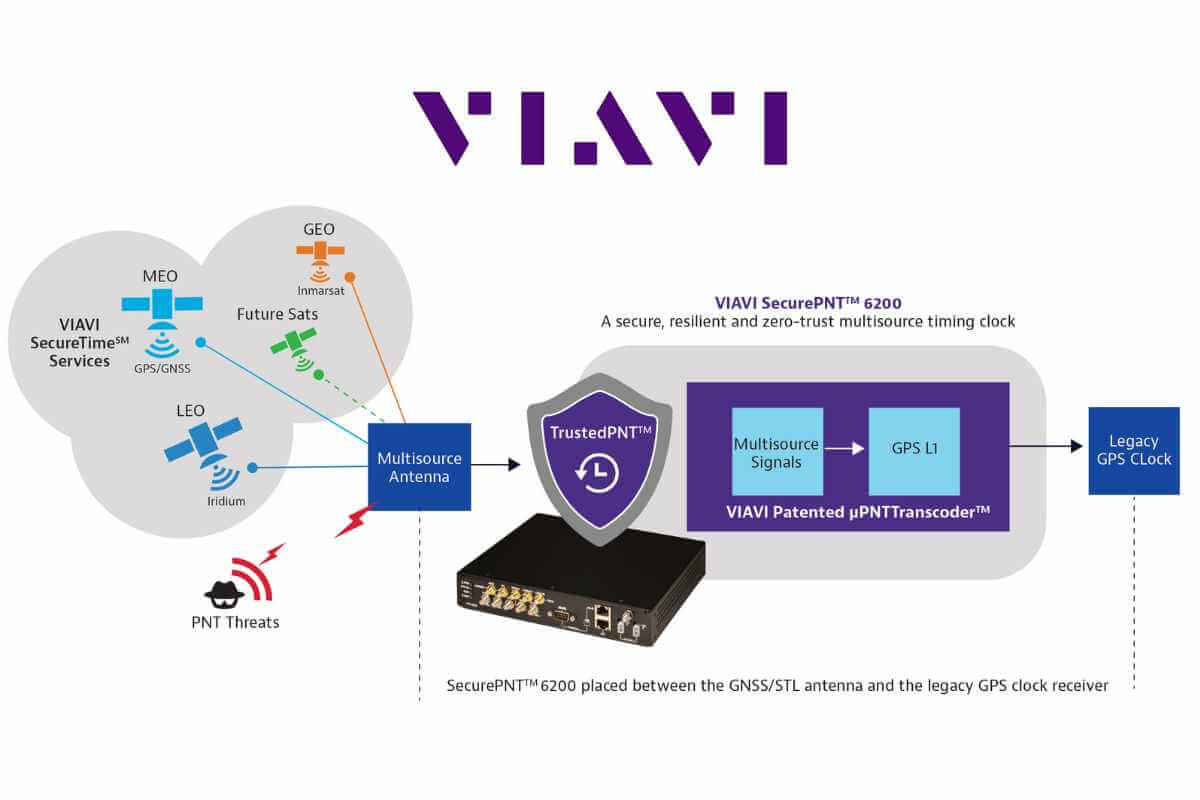
Viavi Solutions has announced the availability of SecurePNT 6200 with SecureTime services, a timing clock designed to ensure the reliability of positioning, navigation, and timing (PNT) services for critical infrastructure operations. Building upon Viavi‘s existing PNT products, SecurePNT and SecureTime integrate the Fugro AtomiChron timing service, enabling intelligent zero-trust multisource assurance by combining signals from Geosynchronous Orbit (GEO), Low Earth Orbit (LEO), and Medium Earth Orbit (MEO) GPS and GNSS constellations, the company announced Wednesday.
- Make Telecom Talk My Trusted Source



Also Read: Viavi Announces Advancements in 6G and AI Research



Importance of Timing Security
Viavi highlighted that essential networks worldwide, including 5G communications, transportation, energy, public safety, finance, defense, and data centers, depend on publicly available GPS and GNSS signals for synchronization based on timing and location. However, these signals are occasionally unavailable or at risk of being jammed or spoofed, posing potentially catastrophic consequences.
Viavi asserts that its portfolio of products has proven to deliver redundant timing and location security in civilian and military applications, thanks to connectivity to the broadest range of timing sources in the market.
The Fugro AtomiChron timing source enables the Viavi SecureTime eGNSSSM GEO service to provide authenticated and encrypted resilience and higher accuracy, previously unsupported by traditional GNSS, the company said.
“Time synchronization is one of the greatest challenges for critical infrastructure,” remarked Roel de Vries, Business Developer AtomiChron at Fugro. “The Fugro AtomiChron service improves the accuracy of timekeeping to the nanosecond and provides protection from GNSS signals being spoofed, using our navigation message authentication.”