Hyderabad Startup Builds Robot With Humanlike Hands
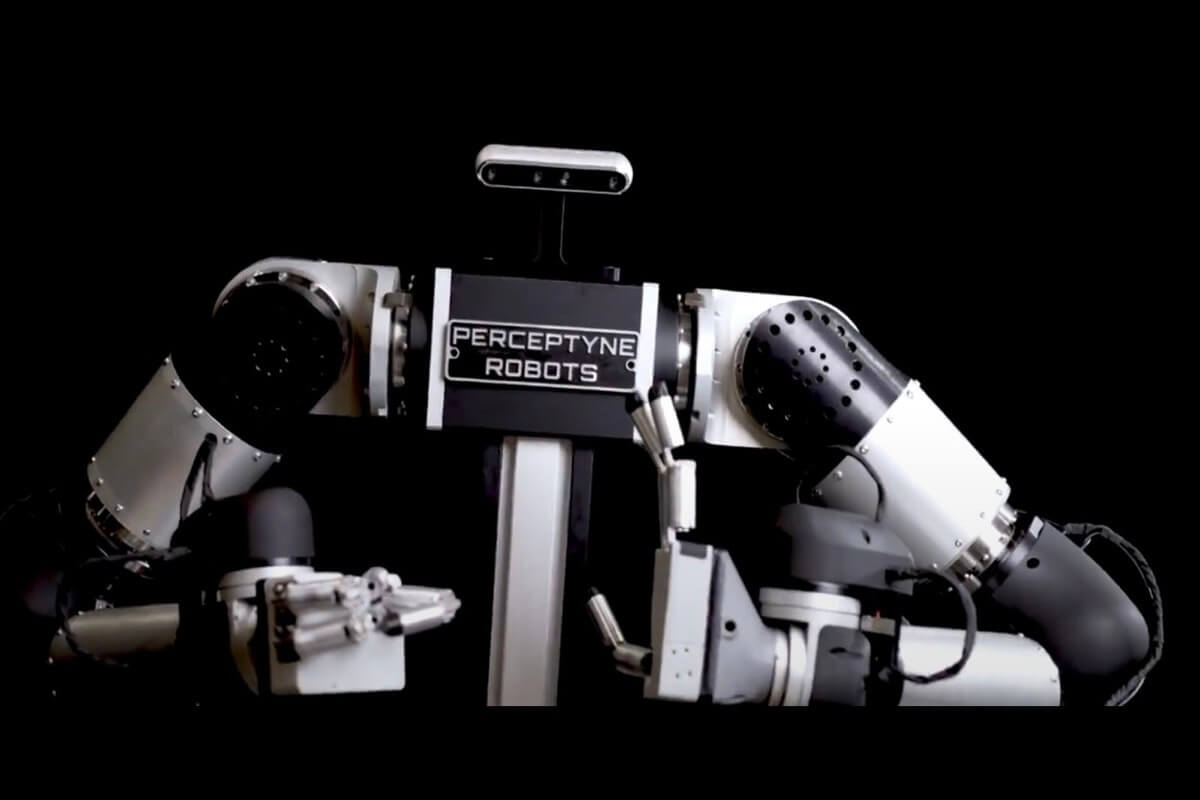
Perceptyne’s PR-OMNI is a Hyderabad-developed industrial robot designed to handle complex factory tasks using two articulated arms, AI and advanced sensing technology.
Hyderabad is becoming a place for India’s deep-tech startups. A local company is creating robots meant to do jobs that still require people. Its newest model has two arms, cameras and a way to feel things. It is designed to adapt and work in different areas. The robot can go around factory floors on four wheels. It can also use technology to move and manage items. The company’s approach focuses on factory automation rather than human-like design.
Make Telecom Talk My Trusted Source
Key Highlights
Hyderabad-based Perceptyne is developing the PR-OMNI semi-humanoid industrial robot.
It features two seven-degree-of-freedom arms, tactile sensing and a mobile four-wheel base.
The company claims up to six hours of runtime with its swappable battery system.
Hyderabad Startup Builds Robot With Humanlike Hands
This Indian robot aims to do factory jobs that machines struggle with.
A robotics startup in Hyderabad, Perceptyne, is creating an industrial robot designed for tasks that require precision, flexibility, and human-like handling. Its PR-OMNI platform has a humanoid shape, smart technology, many sensors, and a mobile base to support complex manufacturing work.
Traditional industrial robots are usually in one place. Do the same actions over and over. PR-OMNI is designed to move around factory floors and perform tasks. The robot has two arms, each with seven ways to move so that it can perform a range of actions.
The robot can reach 800mm with its arms. Has a head that moves in two ways. It is 5 feet 2 inches tall and weighs around 120kg. For walking on legs, it uses a four-wheel system that lets it move any way it wants. Perceptyne says it can go up to 2 metres per second.
Sensors that give robots a sense of touch
One of the interesting parts of PR-OMNI is its sensors. The robot has three cameras that see in three dimensions, along with force and torque sensors at every joint. It also has touch sensors that let it get information by touching things.
These abilities matter for manufacturing jobs where a robot must handle items carefully, feel resistance, and adjust its movements. These jobs include assembling parts, building cars, inspecting items, and moving parts.
The robot also uses two LiDAR sensors to move and map inside buildings. Its computer system uses an NVIDIA Jetson Orin and an Intel NUC. This equipment supports the company’s smart software, PR-PhI.
Perceptyne also lets people use reality to control the robot. This lets a person show the robot how to do a task. The robot can learn from these shows. Do similar jobs on its own.
Built for real factory automation
PR-OMNI runs on a replaceable battery. It has a 3kWh battery. It can work for up to six hours. The platform also has an arm that reaches 800 mm, creating more workspace.
The numbers differ on how much the robot can carry. The page says 5 kg, but the homepage says 10kg. People who want to buy it should check directly with the company.
Perceptyne started in 2021. Works on making robot parts and smart programs for factories. The company has raised money from investors like Endiya Partners, Yali Capital, and Whiteboard Capital. It raised $3 million in 2024.
The bigger chance is for factories that need machines but can’t use robots. Factories often have parts in places that require careful handling and adjustment.
The technology still needs to prove it works well in real-world settings. How many robots there are, how much they cost, and whether they are reliable are still unclear.
If Perceptyne can show its robots work well and aren’t too expensive, it could help Indian factories use flexible machines without changing their entire manufacturing process.
Image Credits: (X-@perceptyne)
If this article saved you time or helped you decide better, consider supporting our work.
FAQs
What is Perceptyne PR-OMNI?
PR-OMNI is a wheeled semi-humanoid industrial robot developed by Hyderabad-based Perceptyne.
What makes PR-OMNI different from traditional robots?
It combines two articulated arms, multimodal sensing, mobile navigation and AI-based task capabilities.
How many arms does the robot have?
It has two arms, each featuring seven degrees of freedom.
How long can PR-OMNI operate?
Perceptyne lists a runtime of up to six hours using its swappable 3kWh battery system.
Where can the robot be used?
Potential applications include electronics assembly, automotive manufacturing, inspection and component handling.
 Support Telecomtalk