Support Telecomtalk







Andrew Bonwick
Vice President of Product Development at Relm Insurance

Madhav Sheth
CEO of Ai+ Smartphone

Stephen Rose
CEO Render Networks



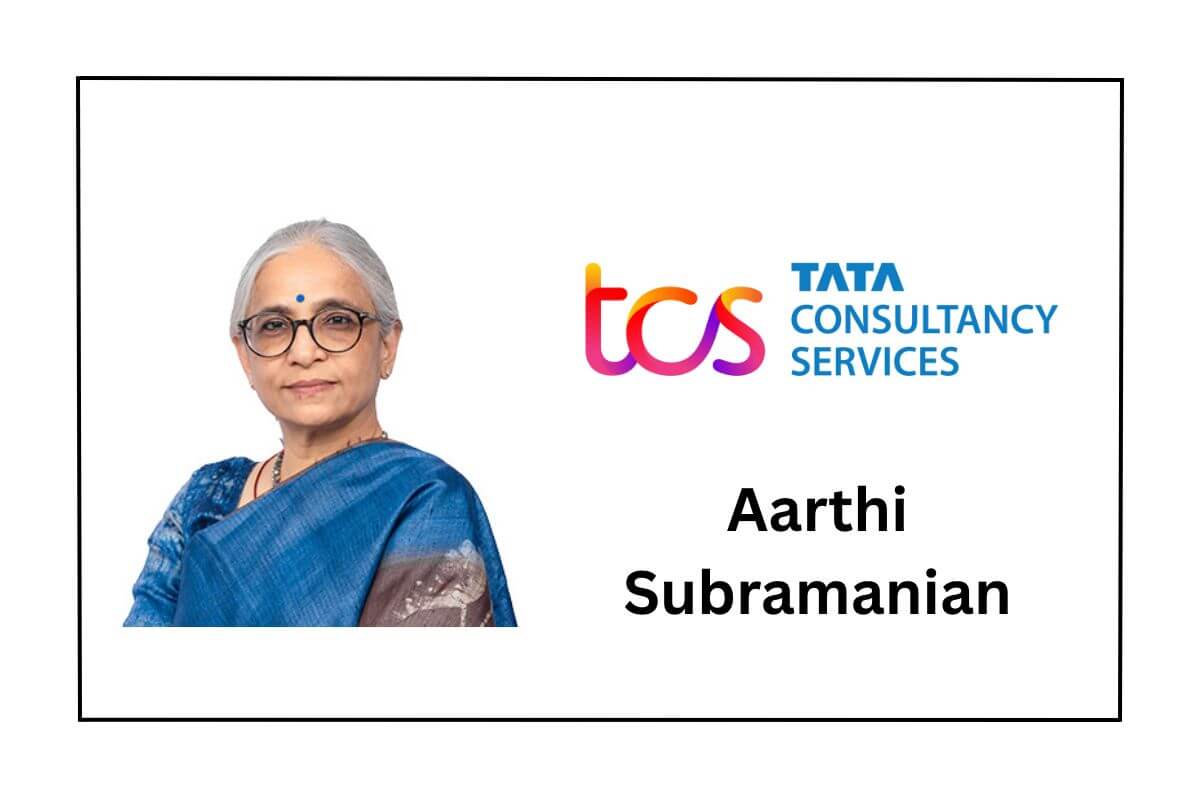
Let’s take a look at what Aarthi Subramanian, Executive Director—President and Chief Operating Officer (COO) of Tata Consultancy Services (TCS), has said about artificial intelligence (AI) and the opportunity the technology creates for the information technology (IT) services industry. According to the company, Subramanian is a director on the boards of HyperVault AI Data Center Limited and Tata Electronics Private Limited. Across multiple interactions and analyst meets, she has shared TCS’s plans for its AI push, investments, and growth opportunities.
- Make Telecom Talk My Trusted Source



Also Read: What They Said: K Krithivasan of Tata Consultancy Services on AI

Edited excerpts from various interviews and interactions
What They Said: Timeline
July 2025:
In the Q1 FY 2025–26 earnings call dated July 10, 2025, Subramanian noted that enterprises are moving beyond small AI pilots to production-grade GenAI rollouts tied to business outcomes. AI spending is clustering around business transformation, IT operations, and data platform modernization, while TCS is expanding its AI platform (such as WisdomNext) and deepening partnerships.
“We are seeing enterprises move beyond small-scale, use-case centric pilots to disciplined, production-grade rollouts that tie GenAI directly to business outcomes,” she said.
“Vendor-consolidation plays, and Sovereign AI Cloud deployments are starting to point to a maturing AI and Data market that now demands security guardrails and observability by default. TCS is leaning into this inflection with new offerings in Agentic AI, and AI infusion in our services. Our investment in WisdomNext, our leading AI platform, is expanding with the addition of agentic AI capabilities. We continue to scale our workforce on AI and deepen AI and Data partnerships across both Hyperscalers and native AI and Data companies.”
“Customers are investing in industry-specific solutions. AI for modernisation is coming across as a strong theme because Gen AI is now becoming the tool to really understand the legacy code,” Subramanian said, according to multiple media reports, including The New Indian Express dated July 11, 2025.
“Customers are looking at building industry-specific solutions with AI, so that’s an area of opportunity where we are seeing increased demand and the second area is modernisation,” she reportedly said, adding that customers are also looking at how they scale AI within their enterprise.
“If you look at Gen AI over the last 3 years, it was new and showed us the promise. Everybody was trying to experiment with it and there were individual use cases and people were wanting to see the power of this technology. But almost three years later now, people see how they can reimagine their businesses, and their ways of working with AI,” she explained at the post-earnings conference, according to the report.
October 2025:
In Q2 FY 2026 earnings commentary for the quarter ended September 30, 2025, Subramanian spoke about TCS’s internal AI transformation initiative, ‘TCS to the Power AI’, which focuses on:
- Democratizing access to AI tools and environments for all employees
- Building an AI-first culture through immersive learning and hackathons
- Growing AI-ready talent, with around 160,000 associates possessing higher-order AI skills
December 2025:
At the TCS Analyst Day in Mumbai on December 17, 2025, TCS COO Aarthi Subramanian said that while TCS has long invested in strong learning infrastructure, it has now introduced a personalized AI learning coach. Powered by generative and agentic AI, the coach understands an employee’s skill level, aspirations, and goals, and provides tailored guidance across technical and soft skills.
As part of TCS’s own internal transformation, the first pillar, codenamed tcs to the power AI, focuses on making every TCSer — senior or junior, in every role — an AI practitioner.
Explaining the initiative, Subramanian said:
“How do we create AI-first mindset, as Krithi alluded to earlier, in every employee in the company? So, that’s the focus of this internal transformation initiative.”
“To achieve this, what we have done is, we have made some big investments. We have been working on this, as Krithi said, since the ChatGPT moment. We have been making AI available to select employees. But in the last 6 to 8 months, today, we have what I believe is one of the largest AI infrastructure available for employees. 600,000 TCSers have access to AI at their fingertips. What this includes is access to all the models, access to all the coding assistants and other tools, and also access to all the hyperscaler AI tooling which is available, with which we actually build solutions for our customers. So, these tools are available in a safe, secure, and on-demand fashion to all the 600,000 employees.”
She added that employees have access to multiple AI models, coding assistants, and hyperscaler AI tools in a safe, secure, and on-demand manner.
The second pillar focuses on building AI-first solutions and positioning TCS as a showcase for AI adoption—both internally and for customers. This includes transforming internal IT, software development, service desks, infrastructure operations, and application management.
“The second part of TCS to the Power AI is building AI-first solutions, which is making TCS the best showcase of AI internally for the industry, and also in front of our customers. We are driving this across two areas: one in IT -TCS’s own internal IT, how do we develop software? How do we disrupt? How we run our Service desk? How we run our IT operations, whether it’s infrastructure operations or application operations? So, we have put together a very ambitious goal to disrupt how we use AI in our IT. 97% of our developers and engineers have access to coding assistants, and we are well on our way to drive productivity improvements. There are portfolios where we are already seeing 20–30% improvements, and also, we are looking beyond coding and looking at how we can disrupt the entire software engineering. Testing, again, high levels of productivity, generating Figma designs, UX with AI. These are areas where higher levels of productivity are already being seen, and we are creating our own showcase. We are also learning from the work that we do for our customers.”
She also highlighted the disruption of learning at TCS through an N=1 personalized learning coach, available to every employee.
“…with this new form of AI, Generative and Agentic AI, with reasoning being available, we have disrupted learning within TCS. What we have built is an N=1 Personalized Coach. It’s a learning coach which is available to every TCSer….You see a TCS employee there interacting with the AI avatar, which is the learning coach,” the COO said, showing an example of how the company is disrupting within, from a learning point of view.
“So, what it does is we have brought all the learning content that we have and made this available to the AI model which the AI avatar is consuming. So, in some ways, the AI avatar is an all-in-one SME. It understands all domains, it understands all technologies and can also coach an associate on soft skills.”
“So, the key differentiation here is that it has complete understanding of where the skill level of the employee is, what the aspiration and learning goals of the employee is, and then how do you now bridge the gap, and that’s where the N=1 coaching comes into play. And here, traditional AI, Generative AI, and Agentic AI all have been put to use, and this is under deployment, and we are seeing great results,” she explained.
She also added, “If you look at AI today, it is a hugely promising and powerful technology. It’s disrupting every industry. But what is important is it has a huge opportunity, and it’s creating a disruption in our own industry.”
Discussing the third pillar—building a future-ready talent model—Subramanian said TCS is focused on AI fluency at scale, higher-order AI skills, and AI-native graduates.
“Here, we are looking at three pillars. First is building future-ready skills: AI fluency at scale – How do we train every employee to learn how to work alongside and with AI? So, when over the last 2-3 years we had made significant investments once GenAI came into the scene. As of date today, pretty much all employees, 580,000 people, are AI-aware, but AI awareness is not enough, it is necessary, not sufficient. So, then over the last two years, we are driving higher-order AI skill development. And today, 180,000 TCSers possess higher-order AI skills. This number was 80,000 at the end of last year. So, we have almost doubled capability building when it comes to building higher-order skills.”
She added that fresh graduates are increasingly AI-native and treat AI as a teammate, accelerating the company’s AI-first culture.
“The other element is the AI-native fresh graduates. I think this is a very exciting time because all these fresh graduates are very AI-native. They really know how to use AI very organically. And what we have done is, our intake of trainees, fresh trainees from universities, we have actually doubled on that. And what we are finding, and you met with some of these trainees today, these people really know how to treat AI as a teammate. And that’s the big learning that we have, and that’s where the seniors and the juniors coming together, the fusion that I talked about, is really helping create that AI-first culture.”
TCS has also launched AI Dojo, a large-scale program for sales, solutioning, advisory, and delivery teams, while introducing new roles such as rapid-build engineers and leads.
“Every role in the company is changing because of AI. So, every customer conversation is an AI conversation today. So, how do we drive AI-centric customer conversations, whether it’s from sales to advisory or solutioning to delivery, every role in the company has to become AI-first, AI-centric. So, we have a program called AI Dojo which we have launched to all our sales, solutioning, advisory, and delivery teams. And this has been done at scale. This is the starting point and this is something that we need to continuously engage and keep further honing the skills. And another important thing here is that AI is also introducing new roles. We have rapid-build engineers, rapid-build leads. So, we are also looking at new roles that are becoming very relevant for the future.”
The fourth pillar focuses on making AI real for customers by helping them scale from pilots to ROI-driven deployments. Subramanian explained how TCS supports customers across innovation, execution, and scale—through rapid-build methodologies, AI labs, and industry-specific agent marketplaces.
Talking about the fourth pillar, she said:
“The fourth pillar, an extremely important one, is making AI real for our customers. So, I talked about how we are driving our own transformation with AI as part of the first pillar. I think it’s a very similar transformation that we need to drive for our customers, most importantly, helping them deliver value with AI deployment across their industry-specific needs, across cross-industry needs that they have – common needs, whether it’s HR, Procurement, Finance, Customer Service – and most importantly, helping them scale with AI.”
“And when you look at AI adoption in our customer base, if I look back the last three years, 2023 was a year of experimentation. GenAI was just available. People wanted to know what the promise and the power of the technology is. But in ’24, we started to see a lot more scaled, I would say, still, experimentation and some projects going live. But 2025 has been different. And I think that Generative AI, along with Agentic AI, with the reasoning models coming into play in early 2025, is really creating the tailwind for us to deliver solutions which have reasoning, and that’s what leads to creating solutions that have more intelligence baked in and building solutions which can take better decisions.”
On helping customers lead with AI, she said:
“What we are working on is really helping our customers lead with AI: how do we work with our customers to help them realize value and help them shift from use cases, pilots, experiments to real projects which deliver ROI at scale? And that’s what we are working on. And how are we doing this? We are doing this across three areas. First, we engage with our customers to help them – Innovate with AI, Build with AI, and Scale with AI. And here, it’s all about how do you create value-chain impact. Value-chain impact could be vertical-specific or horizontal, like I said earlier, but the whole focus is drive adoption across value chain and create value-chain impact.”
She added: “…we engage customers and help them identify what are the challenges that are worth solving and how you can solve it differently with AI, and completely shifting the narrative from presentations to really build an experience. This is something that we are doing across the board, and this is really resonating extremely well, because what it does is, it is helping customers understand how they can use AI in their context.”
“The second one is where you shift from ideas to execution, and we have created this rapid-build methodology which is all about taking a problem and solving the problem, saying that, okay, this is the metric you want to move the needle on, come out, come-backward, solve the problem with AI. In a short period, anywhere from 8 to 16 weeks, this is what we call the rapid-build approach. And what it typically entails is bringing together a rapid-build squad which has AI-native trainees and people with contextual knowledge from our customer accounts, and that’s a great combination. And the contextual knowledge and the AI skills together is what is the secret sauce for really doing that build. And one thing important to understand is, while you can do the rapid build in a day or two, what takes time is really integrating the solutions with the data and the systems within our customer.”
“And once we deliver the rapid builds, and we have proof points and these are in production and the customer sees value, the next obvious question is how do I scale AI within the enterprise? And this is where you will hear from one of our customers later today: how do we really work with our customers to put the AI architecture, the technology selection, putting the AI platforms, so that you can really build at scale and go live at scale. And here, what we have done is our own investment. Some of the platforms that Krithi [CEO] talked about are the AI platforms that we have built and taking to our customers. But on top of those platforms, we are creating TCS’s own industry-specific agent marketplaces. So, we are taking different vertical domains. For example, in Manufacturing and BFSI as two cases in point, we have 100-plus agents identified that we are creating, and more than 30–40 of them are already live, and some of these are already getting deployed in our customer engagements.”
“The last one is again a very important part of scale. This is about how do you create AI Labs which are nothing but rapid-build factories. So, many customers are looking at… after a successful build with AI, we go ahead and set up a factory where multiple problems that we want to solve, multiple projects that have been jointly identified, become the pipeline for the factory, and multiple rapid-build squads come together to deliver value. But not only the AI Labs, what we are also doing in our customer engagements, we are deploying our rapid-build teams in our existing projects also. So, embedding rapid-build teams as well as setting up AI Labs, it’s a dual approach that we are taking to help customers scale AI.”
“The second example I would like to share is with ‘Build with AI.’ Again, we are seeing a lot of opportunities to create value in the industry for the specific industry value chain. But I think another big area where we are seeing AI come in, is in modernization. GenAI has this unique capability to really understand the old and generate the new. So, tech modernization projects which were earlier put aside because they were capital-intensive and they would take a very long time, are now becoming big opportunities for us to engage. You can see here, how we delivered an integration modernization from TIBCO to Java: rapid build, three weeks delivered, proof point shown, then led to scaled projects in modernization.”
She said the company is also expanding ots partnership ecosystem to cover deep-tech partnerships. “So, you can see whether it’s Anthropic, OpenAI, Nvidia, Mistral, all these are new partnerships that we have set up and working closely with them to really build competencies,” she added.
On innovation with partners, giving two examples, the COO said:
“So, if you look at Nvidia, and I’ll give you an example of how our manufacturing teams have worked with Nvidia, and we have built 12 industry solutions. And these are all innovative solutions which we are already taking to market with our customers. And in our meetings with Nvidia, what we have heard is TCS is a gold standard in manufacturing Nvidia solution development. We have built platforms. So, I think really pioneering work done by our manufacturing teams.”
“The other example is if you take Google – even before their new launch this year on Google Gemini Enterprise, we started work with them ahead of time on their agent-to-agent protocol, and TCS teams have done really pioneering work with Google, which we started quite early. And we continue to partner with these companies, and this is a very essential part of the solution and the integration work that we do for our customers.”
TCS Reboot for an AI-Led Future
TCS has initiated a sweeping internal and market-facing reset to prepare for an AI-driven future, as the IT services sector undergoes its biggest technology transformation yet. Tata Sons reappointed Subramanian as COO in April 2025 as the company navigates a significant AI pivot. Previously, she served as chief digital officer at Tata Sons and earlier worked at TCS as global head of delivery excellence, governance, and compliance.
“The current wave represents a deeper structural change than any previous technology cycle, and every conversation today is an AI conversation,” Subramanian said in an interview, according to The Economic Times report dated December 29, 2025.
Subramanian reportedly said CEO K. Krithivasan is shaping both the customer and employee value propositions while defining what the company’s future operating model must look like in an AI-native world.
Artificial intelligence is also forcing a rethink of the traditional IT services model itself. TCS has introduced a five-level autonomy framework across its service lines to help customers move from automation to autonomy, where a growing share of human tasks is executed by AI.
While this shift may replace certain roles, Subramanian reportedly said overall demand for newer use cases will continue to expand. As a result, TCS has not scaled down its hiring, even as it took the decision to let go of employees. The transition involved workforce restructuring, including selective layoffs, largely at senior and mid-level roles no longer aligned with future requirements.
“TCS continues to add talent on a net basis, with around 19,000 net additions in the most recent quarter, and said exits were handled with extreme empathy and respect,” especially long-tenured employees, she reportedly said, underscoring the company’s intent to balance “transformation with human sensitivity.”
Alongside cultural change, TCS is positioning itself as a live reference case for AI-led transformation. Internal IT, HR, finance, learning, procurement and legal functions are being redesigned using AI-first solutions, with a sharper focus on productivity and return on investment. “TCS must look and feel like the future we are selling to customers,” Subramanian reportedly said.
“Our play is — infrastructure to intelligence,” Subramanian said. “This is the moment to fire up all cylinders,” she reportedly said.
January 2026:
TCS reported its consolidated financial results for the quarter ended December 31, 2025, on January 12, 2026. Commenting on the results, Subramanian said: “We continued to see AI acceleration this quarter. We helped customers identify valuable AI opportunities through Innovation Days and deployed solutions faster with Rapid Builds. Our customers continue to invest in Cloud, Data, Cyber and Enterprise Transformations to build readiness for AI. We further strengthened our Salesforce capabilities with Coastal Cloud acquisition, building on our investment in ListEngage.”
This is a developing story, and more quotes and insights from Aarthi Subramanian will be added as they become available.
Also About TCS:
Also Read: IBM, TCS Partner to Deploy India’s Largest Quantum Computer in Quantum Valley Tech Park in AP
Also Read: TCS Plans USD 6–7 Billion for AI Infrastructure
Also Read: TCS to Modernise German SAP’s IT Landscape With Cloud and Generative AI in Five-Year Deal
Found this useful? You can support us.