It has been an action-packed year so far, when it comes to smartphone launches, sales, and a number of technological improvements. In this article, I have listed 10 smartphone trends which I noticed in the year 2014.
Some new, yet popular smartphone brands entered India, as the country is on it’s way to become the largest mobile phone market in the world. Xiaomi, which is being portrayed as the “Apple of China”, entered Indian with four smartphones, all of which are the most hardware-equipped for their price tags. The company manages to sell over a million smartphones in a very short period of time. Other smartphone brands like Oppo, Vivo, and Oplus were unable to create a lot of buzz, though OnePlus managed to attract a lot of eyeballs.
2. Exclusive tie-ups of smartphone brands with online retailers
Not only new brands, we saw smartphone vendors tying up exclusively with online retailers in the country. The trend was started with the exclusive availability of Motorola smartphones on Flipkart. Lenovo and Huawei launched some of the smartphones and tablets exclusive through Flipkart. Amazon managed to bag exclusive deals for selling the OnePlus One, the Yu Yureka, and the Lumia 638. Three Android One smartphones; the Micromax Canvas A1, the Karbonn Sparkle V, and the Spice Dream Uno, were launched as exclusives on three different online stores. There were other launches but the ones listed were one of the most important ones.
Even Lenovo launched a couple of such smartphones, the Vibe X2 and the Vibe Z2 Pro, while Huawei came up with the Honor 6 and the Honor Holly. This trend might soon force big-name brands to either lower their product prices or change their whole smartphone strategy. Micromax, which was once famous for offering smartphones at lower prices when compared to established international brands, has launched a whole new smartphone brand. Yu brand of smartphones from Micromax will only be sold online with an attractive price tag, Cyanogen OS, and long-term software updates.
4. Phablets went mainstream
Samsung started the trend of large screen smartphones with its Galaxy Note series, coining the term ‘Phablet’ for the first time. Three years later, we all can see phablets in every price category. Even Apple, which was generally against larger screens in the name of ergonomics, has launched the iPhone 6 Plus with a large 5.5-inch display. A lot of smartphones in 2014 were launched with screen sizes more than 5 inches.
5. Smartphones with QHD displays
As the screen sizes increased, even the screen resolution went up. LG was the first to adopt this with the LG G3, and the others followed, though I don’t see a practical benefit of QHD displays in smartphones. Currently, some notable smartphones with 2K/QHD displays are the Samsung Galaxy Note 4, Oppo Find 7, and the Lenovo Vibe Z2 Pro.
6. Octa-core and 64-bit processors
Samsung started using the octa-core processor in its flagship smartphones like the Galaxy S4. MediaTek came up with its first mid-range octa-core SoC, the MT6592, which was used in a lot of mid-range smartphones. Even Qualcomm announced two new octa-core processors; the mid-range Snapdragon 615 and the high-end Snapdragon 810. By the end of the year, Snapdragon 615 based smartphones were available in the country, though we’ll see Snapdragon 810 powered smartphone next year.
After Apple dropped the bomb on its competitors last year with its 64-bit A7 chipset, Google has included native support for 64-bit processors in the Android 5.0 Lollipop. Even Nvidia and Qualcomm have released 64-bit processors. Nvidia’s Tegra K1 Denver SoC has a 64-bit CPU and Qualcomm has announced a complete line-up of 64-bit mobile processors; Snapdragon 410, Snapdragon 610, Snapdragon 615, Snapdragon 808, and Snapdragon 810. MediaTek has announced two new 64-bit processors; MT6752 and MT6795.
64-bit Processors
Devices
MediaTek MT6752
Meizu M1 Note
MediaTek MT6795
HTC Desire 850?
Qualcomm Snapdragon 410
Alcatel OneTouch Pop 2
HTC Desire 510,HTC Desire 820q
Huawei Ascend G7, Huawei G621, Huawei Ascend G620S, Huawei Ascend Y550, Huawei Honor Play 4, Huawei Honor 4 Play
Lenovo A805e, Lenovo Vibe Z2, Lenovo Sisley S90
LG F60
Samsung Galaxy A3, Samsung Galaxy A5, Samsung Galaxy Mega 2 SM-G7508Q, Samsung Galaxy Ace Style LTE, Samsung Galaxy Core Max
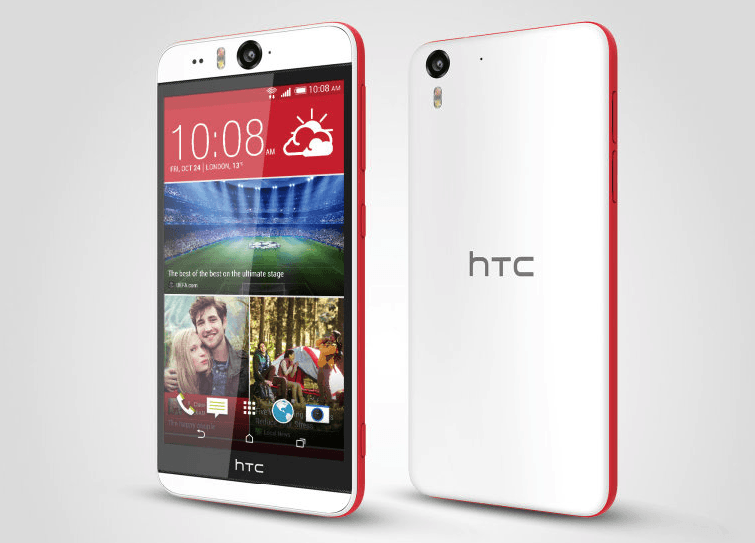
Gionee Elife E7 was the first smartphone to take the front-facing camera seriously. It was equipped with an 8-megapixel front-facing camera with autofocus. Sony launched its first selfie-centric mid-range smartphone, the Sony Xperia C3 with an 8-megapixel front-facing camera with an LED flash. HTC launched a bunch of smartphones with high-resolution front-facing cameras, but the most interesting device from the Taiwanese brand was the HTC Desire Eye. It is equipped with a 13-megapixel front-facing camera with autofocus, dual-tone LED flash and 1080p video recording. HTC also ships these devices with Eye Experience software, which has a lot of selfie-related features such as split capture and more.
Samsung started focussing on front-facing cameras with their new series of mid-range smartphones, the Galaxy A3 and the Galaxy A5. The Samsung Galaxy Note 4 comes with a decent 3.7-megapixel wide-angle front-facing camera, but it has a lot of selfie-related camera features such as Wide Selfie, Beauty Face, rear-camera selfie, and using the heart-rate monitor as a selfie trigger. The Lumia 730 and the Lumia 535 from Microsoft have 5-megapixel cameras with a dedicated Lumia Selfie app. The app allows clicking of wide-angle selfies with front-facing camera and auto-capture using the rear camera. Nokia was also able to capture the world’s largest selfie, which included over a thousand people in it.
Xiaomi Redmi Note, a smartphone priced at Rs. 8,999 comes with a 5-megapixel front-facing camera.
Brands
Smartphones with high-resolution front-facing cameras for better selfies
Gionee
Gionee Elife E7, Gionee Elife S5.5
HTC
HTC One M8, HTC One Me Eye, HTC One E8 Dual SIM, HTC Desire Eye, HTC Desire 820, HTC Desire 820Q, HTC Desire 816, HTC Desire 816G
Huawei
Huawei Honor 6
Intex
Intex Aqua i7, Intex Aqua i5 HD, Intex Aqua Amaze (Octa), Intex Aqua Star HD
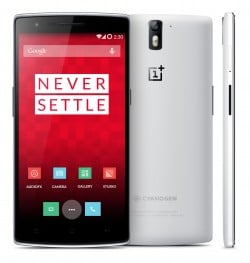
Thanks to high-performance processors like the Exynos 5430 and the Snapdragon 801, most of the high-end smartphones are now equipped with 4K video recording abilities. Fast image processors are necessary to accomplish such a huge task. Currently, only OnePlus One supports true 4K video recording, which is captured at 24 FPS. Other smartphones capture the videos at 3840 x 2160 pixels, which is just short of being true 4K resolution.
Unsurprisingly, the latest iPhones do not support 4K video recording with the stock camera app. Apple says that the software/hardware isn’t ready for 4K videos yet, though you can use third-party apps like the Pro Cam to capture 2160p 4K video recording.
OnePlus One (True 4K DCI – 4096 x 2160 pixels @ 24 FPS)
Lenovo
Lenovo Vibe Z2 Pro
LG
LG G2 Pro, LG G3
Nokia
Nokia Lumia 930, Nokia Lumia 1520 (with Lumia Denim update)
Sony
Sony Xperia Z2, Sony Xperia Z3, Sony Xperia Z3 Compact
9. 4G LTE adoption
Mobile carriers have started rolling out 4G LTE network in India, though the coverage is extremely small. This has not stopped smartphone brands in rolling out good number of devices with 4G LTE connectivity. Apple, HTC, and LG have a bunch of 4G ready smartphones in India. Lenovo, Sony, Oppo, Samsung, Xiaomi, and OnePlus have released 4G LTE ready smartphones as well.
Brands
Smartphones
Apple
Apple iPhone 5C, Apple iPhone 5S, Apple iPhone 6, Apple iPhone 6 Plus
HTC
HTC One M8, HTC One M8 Eye, HTC One E8, HTC Desire Eye, HTC Desire 820, HTC Desire 820Q
Not all was too rosy in the Indian smartphone market. We’ve seen a couple of bans in the past few days. First, the import and sale of Xiaomi smartphones was banned temporarily. Then, sale of OnePlus One in India was banned by the Delhi High Court.
Xiaomi vs. Ericsson
Ericsson filed a complaint against the sale of Xiaomi smartphones in India, as the Chinese smartphone vendor allegedly infringed upon some essential patents, which are owned by Ericsson. A few days later, the Delhi High Court allowed Xiaomi to sell Qualcomm Snapdragon processor based smartphones in India. Fortunately, all the smartphones from the company except the Redmi Note 3G are powered by Qualcomm processors. The final hearing of the case will commence in February 2015. To save itself from the loss, Xiaomi started selling the Redmi Note 4G in India. Meanwhile, Xiaomi might be working on an out-of-court settlement, just like Gionee did in the past.
As the year 2014 is ending, we all hope that we would see a number of important and meaningful trends next year. What do you want from smartphone brands next year? Let us know your thoughts in the comments section below.
 Support Telecomtalk