Support Telecomtalk







Andrew Bonwick
Vice President of Product Development at Relm Insurance

Madhav Sheth
CEO of Ai+ Smartphone

Stephen Rose
CEO Render Networks



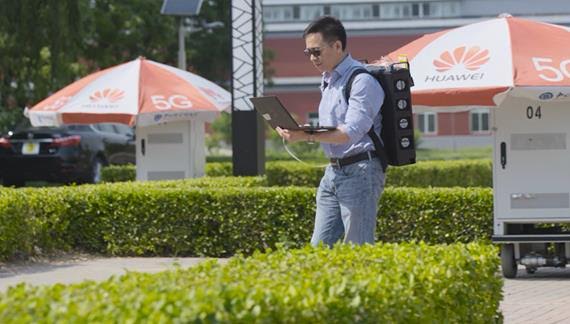
The Mobile World Congress Shanghai 2017 has begun, and we’ve already big announcements from Qualcomm and Vivo. At the same event, Chinese gear maker Huawei and SAIC Motor jointly demoed the world’s first 5G-based remote driving technology with a consumer car.
- Make Telecom Talk My Trusted Source




Their demonstration verified the High-bandwidth, low-latency potential in C-band frequency, laying a foundation for future development of connected smart vehicles. This demo marks an important milestone in improving the reliability of autonomous and driverless vehicles, and also a significant step forward in the commercial application.
Huawei provided the 5G wireless solution that connected SAIC Motor’s smart concept car, the iGS. China Mobile provided the connectivity. Working closely together, the three companies successfully demonstrated the world’s first remote driving field test for a real consumer vehicle on a 5G network.
In the trial, the driver was located over 30 kilometres away from the vehicle. Several high-definition video cameras installed in the vehicle sent multiple real-time HD video feeds to the driver, providing him with a 240-degree view of the vehicle’s surroundings over a high-bandwidth 5G network.
Control signals for the steering wheel, gas pedal, and brakes were also transmitted over the 5G network, which provided the ultra-low latency needed to support instant response to different roadside conditions. From his remote position, the driver was able to maintain full control over the vehicle at all times.
The low latency and high bandwidth of 5G networks are essential to meeting the requirements of remote driving applications for HD video streaming, fast response, and reliable connections. In this particular test, 5G’s ultra-high bandwidth provided the required speed for flawless HD video connections between the vehicle and the driver at all times.