
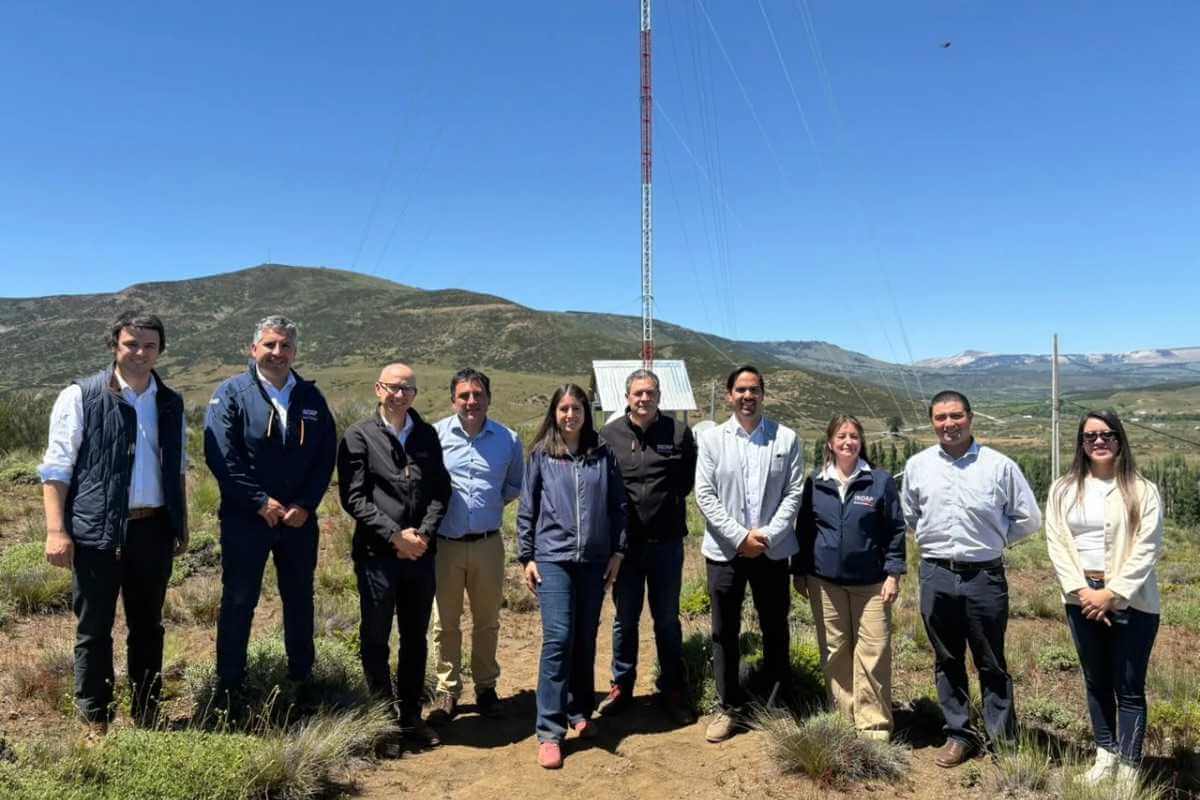
Claro Chile switched on Liucura’s first 5G site on November 26, ahead of the operator’s planned 2027 delivery. Chile’s telecom regulator, Subtel, said it accepted the station after an on-site inspection that checked backup power, data transmission and emergency alert messaging. The site is in the Lonquimay municipality, about 17 kilometres from the Pino Hachado crossing on Chile’s border with Argentina.
Key Highlights
- The Liucura station forms part of Claro’s required rollout to rural and border communities.
- Subtel reported 200 Mbps in a field test at the site.
- WOM’s settlement requires its committed infrastructure to be installed and accepted by December 31, 2026.
The station is part of Claro’s obligation to cover designated rural and border communities. Rodrigo Sahr, Claro Chile’s vice president for brand, communications and sustainability, said the operator was several months ahead of its projected schedule for Liucura and was working through the third and final stage of its 5G commitment to the state.
What Subtel Checked at the Site
Subtel’s team checked that the base station worked and that its backup power and Chile’s emergency alert messaging system were operational. During a demonstration that included a video call, the connection reached 200 Mbps, according to the regulator. That was the result of a field test. Speeds on a customer’s device will vary with signal strength and network load.
The backup and alert checks matter in a mountain community where residents may depend on mobile service during severe weather or an emergency. Backup power gives the station a way to keep operating if mains power fails. The alert check verifies that the site can relay emergency warnings to compatible phones.
Claro, the local municipality and Chile’s agricultural development institute also distributed 17 tablets with free mobile connectivity to selected farmers, livestock producers, artisans and shopkeepers. Liucura’s school received devices as well. Separately, Subtel says an existing education programme provides subsidised internet to 17 schools in the municipality, reaching more than 2,000 students.
Liucura is also on the route of an open access fibre backbone that Subtel says will link 24 municipalities in La Araucanía. The backbone is a separate project, with planned connection points in Lonquimay, Liucura and Icalma.
How Chile Enforces Rollout Commitments
The Liucura inspection shows what regulatory acceptance looks like at one site. A separate enforcement case shows what can happen when an operator falls short of a project milestone. On November 12, Subtel notified WOM that it was calling in guarantees worth about US$2.6 million. Under a judicial settlement, WOM was required to have 90% of its technical project accepted by September 30. Subtel recorded accepted shares of 53.01% in the 700 MHz band, 68.21% in AWS spectrum and 67.55% in the 3.5 GHz band.
Subtel said WOM’s network was already operating in those bands. The settlement still requires all committed infrastructure to be deployed and accepted by December 31, 2026. Claro’s obligation at Liucura and WOM’s settlement have different terms. Both cases show why the regulator tracks the acceptance of infrastructure as well as the date a network starts carrying traffic.
TelecomTalk previously covered Entel’s 5G deployment on Chile’s remote Rapa Nui island. Liucura offers another example for readers tracking rural coverage in India, where the Department of Telecommunications reported this month that 11,372 villages still lacked 4G. Chile’s field checks highlight what residents need once a site is built, including a working data connection, backup power and the ability to receive an emergency warning.


