




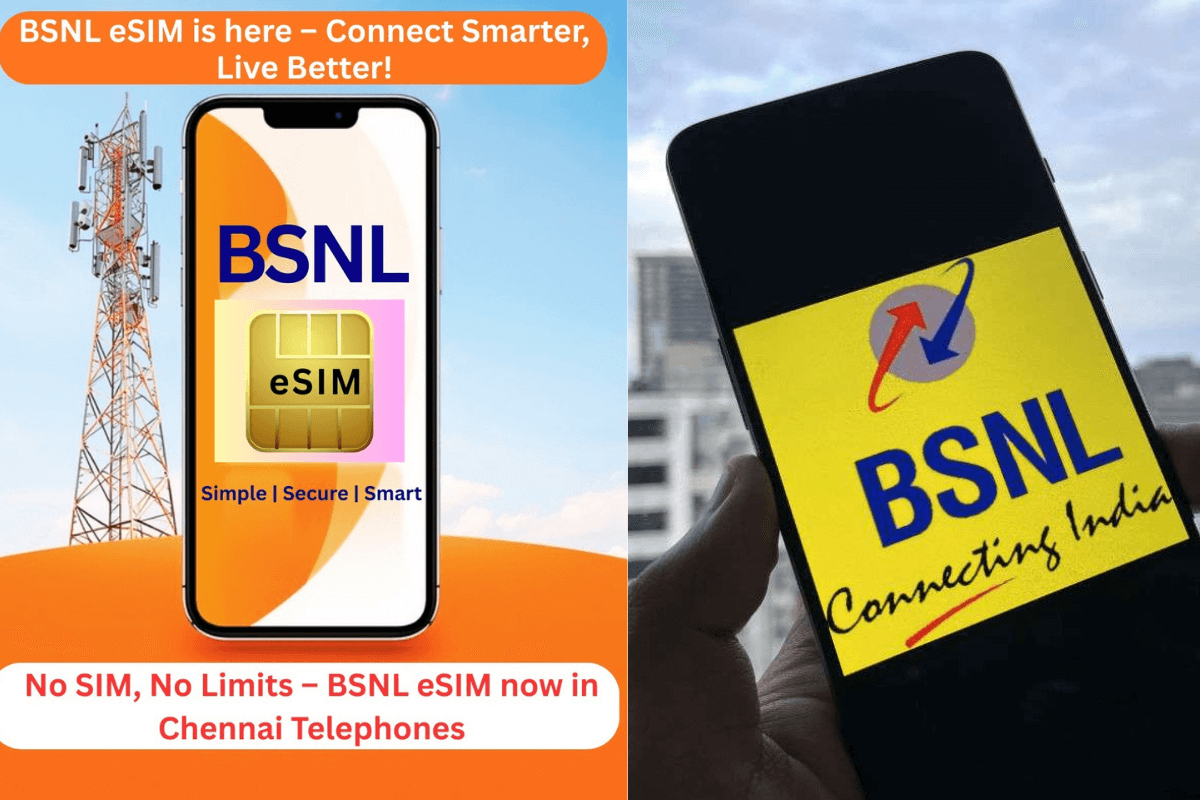
 BSNL Chennai Telephones is moving to modernise its services with two significant rollouts — the launch of eSIM services for local subscribers and the introduction of international prepaid roaming on LTE in partnership with StarHub Singapore. Both developments signal the state-run operator’s intent to stay competitive as the Indian telecom sector shifts toward digital-first solutions.
Also Read: BSNL 4G Goes Live with 97,500 Towers
eSIM for Chennai Users
The eSIM service, now available to BSNL customers in Chennai, eliminates the need for physical SIM cards. Embedded directly into supported smartphones, the eSIM promises easier activation, improved security, and the ability to host multiple operator profiles on a single device.
Marketed under the line “No SIM, No Limits – BSNL eSIM now in Chennai Telephones,” the service positions BSNL alongside global peers that have already adopted the technology. Customers can activate the facility through BSNL’s customer service centres or by calling the company’s helpline.
Roaming on StarHub Singapore
BSNL has also announced the commercial launch of prepaid roaming services on Singapore’s StarHub network, effective August 4, 2025. The facility enables data and SMS usage for Chennai subscribers travelling abroad.
Also Read: BSNL Brings Back Old Postpaid Plan as Prepaid
Tariffs have been set at Rs 7.95 per outgoing SMS, while incoming SMS remain free. Data will be charged at Rs 0.0037 per 10 KB. VoLTE services, however, remain under testing and are not yet available.
To use the roaming service, customers must switch to a new international roaming Dual IMSI SIM and activate either STV IR57 (valid for 30 days) or STV IR167 (valid for 90 days).
A Broader Push
The dual launch reflects BSNL’s broader strategy of aligning its services with the demands of a digital-first consumer base while keeping pace with global telecom trends. For users, the initiatives promise smarter connectivity at home and more seamless access abroad. For BSNL, they represent a step toward rebuilding relevance in a market where private players dominate both 4G and the yet-to-launch 5G space.