 Support Telecomtalk







Andrew Bonwick
Vice President of Product Development at Relm Insurance

Madhav Sheth
CEO of Ai+ Smartphone

Varun Kashyap & Sridevi Reddy
Co-Founders, Zithara.ai
Transforming Indian Offline Retail and Customer Engagement Using AI


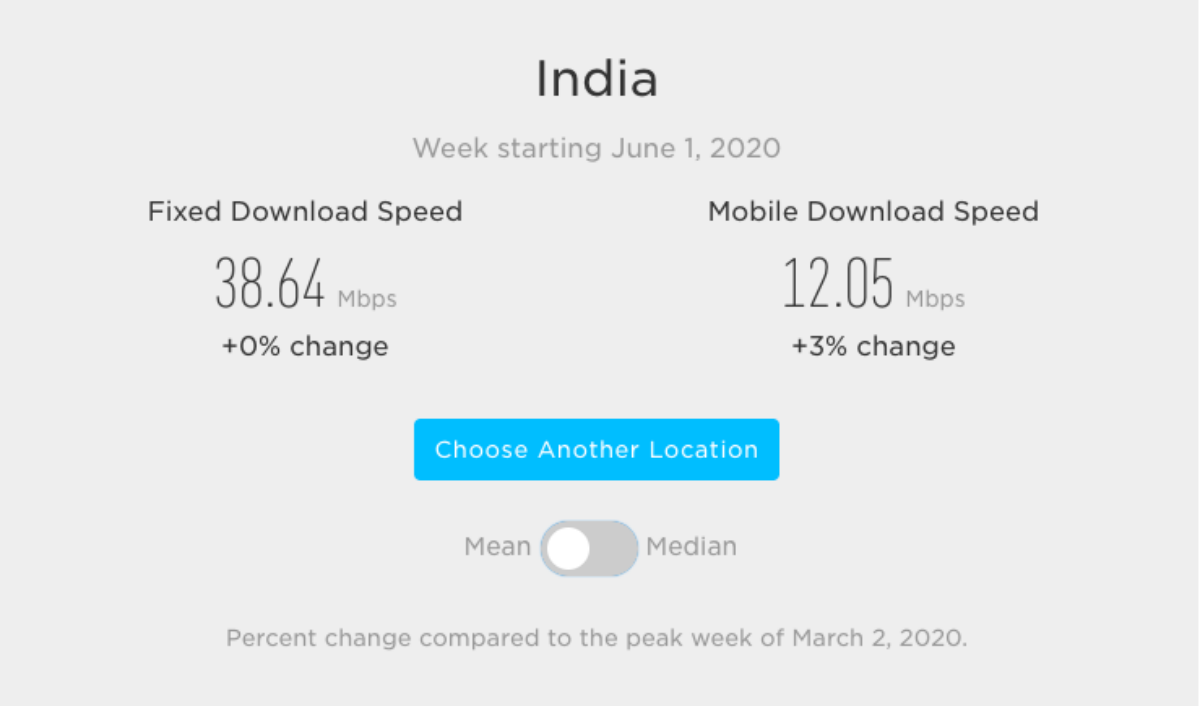
The mean fixed broadband download speeds in India are on par with the pre-COVID lockdown levels registered in the first week of March, latest Ookla report reveals. The company in a report on Monday said that India recorded a mean fixed broadband download speed of 38.64 Mbps during the week of June 1 to June 7. According to the data available on Ookla, India registered a mean fixed broadband download speed of 38.66 Mbps during the week of March 2 considered by Ookla as the peak week.
- Make Telecom Talk My Trusted Source



Fixed Broadband Download Speeds Recover to Pre-COVID Lockdown Levels
In India, the mean fixed broadband download speeds have dipped since mid March with the country recording its lowest speeds of 32.88 Mbps during the week of March 23. While the speeds have improved since the week of March 23, the lowest since December, the data recorded in the week of June 1 matches with that of early March levels.
The data is similar on a global scale with Ookla registering a mean fixed broadband download speed of 77.07 Mbps during the week of June 1. Ookla data reveals that the speeds represent an 1% increase since the peak week of March 2.
Lebanon tops the charts with the country recording an 141% increase in mean fixed broadband download speeds since the peak week of March 2. The country registered mean fixed broadband download speed of 17.71 Mbps during the week of June 1 to June 7.
Several other countries recorded over 30% increase in the mean fixed broadband download speeds in the week of June 1 including Iraq, Kuwait, Qatar and Taiwan.
Mobile Download Speeds in India Remain Flat
Meanwhile, the mean mobile download speeds in India continued to remain flat when comparing the week of June 1 to the prior week of May 25. According to Ookla, India registered a mean mobile download speed of 12.05 Mbps during the week of June 1, representing a 3% increase since the peak week of March 2.






























