 Support Telecomtalk







Andrew Bonwick
Vice President of Product Development at Relm Insurance

Madhav Sheth
CEO of Ai+ Smartphone

Varun Kashyap & Sridevi Reddy
Co-Founders, Zithara.ai
Transforming Indian Offline Retail and Customer Engagement Using AI


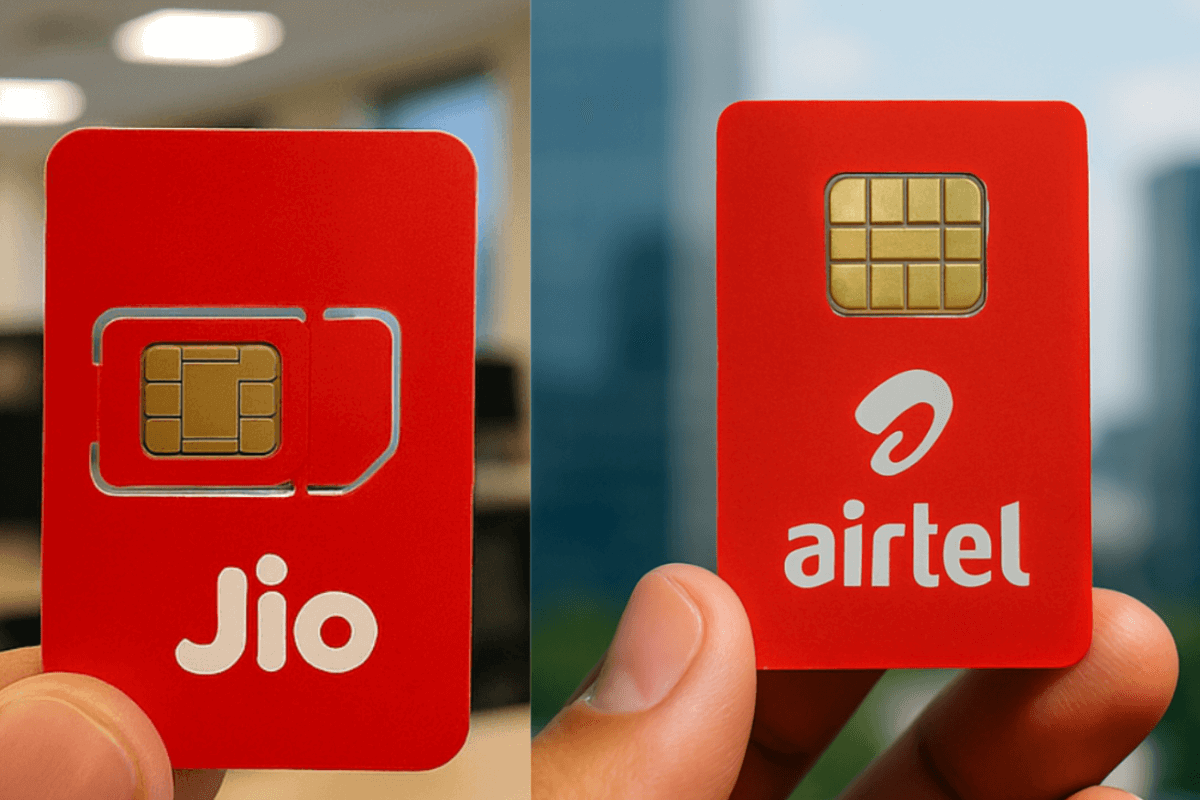
A quiet but significant development appears to be taking shape in India’s mobile voice ecosystem. Users across multiple telecom circles have started reporting that HD Voice typically limited to calls within the same network is now appearing during calls between Reliance Jio and Bharti Airtel. If confirmed, this would mark one of the most important improvements in inter-operator voice quality since VoLTE became mainstream.
- Make Telecom Talk My Trusted Source



Traditionally, HD/VoLTE calling (powered by AMR-WB codecs) has worked only within a single operator’s network. Jio-to-Jio and Airtel-to-Airtel calls have long supported HD Voice, offering clearer sound, faster call setup, and better stability. However, cross-network calls especially Jio to Airtel to Jio usually fell back to narrowband voice, often routed through legacy interconnect systems that did not support wideband audio.
Also Read: Airtel Alleges BSNL 4G Gear Causing Network Interference in Rajasthan; Tejas Denies: Report
But over the last few weeks, users in several circles have noticed something different. The HD/VoLTE icon that typically appears only on same network calls is now lighting up even during calls from Jio to Airtel and vice versa. Many have reported consistent HD indicators, not just isolated instances, suggesting that both operators may be testing or gradually enabling wideband voice across their interconnect layers.
If this change is indeed underway, it would be a major step forward for both user experience and India’s broader telecom evolution. Cross-network HD voice requires upgraded IP interconnect, more harmonized VoLTE signalling, and alignment between operators on codec negotiation. While this is common in some global markets, India has so far lacked nationwide cross-operator HD calling due to legacy interconnection paths and differing implementations of VoLTE.






























