The financial narrative around artificial intelligence is being written by the people with the most to gain from it. Analysts covering the sector, platforms raising capital, chip manufacturers reporting record revenues, investors defending positions they have already taken. The story is consistent: AI is the defining infrastructure investment of the generation, demand is limitless, and the only question is how fast the build-out can happen.
AI infrastructure build-out is progressing slower than market expectations due to constraints around power, fibre, cooling, permits and physical construction.
Infrastructure visibility suggests AI's long-term future remains strong, but the industry may face a correction or consolidation before supply catches up with demand.
The author argues that backbone networks provide a real-world view of AI deployment that can differ significantly from market expectations and financial narratives.
Highlights
AI infrastructure build-out is progressing slower than market expectations due to constraints around power, fibre, cooling, permits and physical construction.
Infrastructure visibility suggests AI's long-term future remains strong, but the industry may face a correction or consolidation before supply catches up with demand.
The author argues that backbone networks provide a real-world view of AI deployment that can differ significantly from market expectations and financial narratives.
I operate a backbone network, the foundational layer that the AI ecosystem is built on. That position offers a particular kind of visibility into the physical reality of what is actually being built, where the equipment is going, and what the supply chain looks like under real pressure. That reality and the financial narrative are not always telling the same story.
Make Telecom Talk My Trusted Source
From the backbone layer, demand is visible in different ways. It is reflected not only in announcements of new GPU clusters but in requests for long-haul fibre, optical transport, interconnection capacity and cross-border connectivity. Those projects have long lead times, require permits, power availability and physical construction. They cannot be accelerated at the pace that software development or capital raising often assumes.
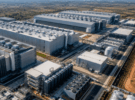
The gap between what has been announced and what has actually been built deserves more scrutiny than it is getting. The stated commitments to data centre construction are extraordinary. The physical reality is more nuanced. A significant share of announced capacity remains somewhere between planning approval, financing and early construction. Announced capacity and operational capacity are very different measures, yet they are often discussed interchangeably. The distance between those two numbers is large enough to matter for anyone modelling AI supply over the next several years.
The hardware picture adds another layer. Independent technical research increasingly points to a different challenge. New generations of AI processors will undoubtedly deliver higher absolute performance, but they are unlikely to remove the fundamental constraints that increasingly define large-scale AI systems: power availability, memory bandwidth, networking, cooling and the economics of deploying compute at scale. More compute does not automatically translate into proportionately greater capability or lower cost. Delivering those gains will also require substantially more power, cooling and supporting infrastructure, shifting the bottleneck from processor performance alone to the economics of deploying AI systems at scale. The assumption that more hardware produces proportionate gains in capability may not hold in the way the financial models require.
Then there is the question of capital. The growing expectation is that today’s largest frontier AI companies will eventually seek broader access to public markets, whether through traditional IPOs or other forms of liquidity. The conventional interpretation is that such a transition reflects confidence. Another possibility is that it reflects the extraordinary capital intensity of frontier AI. Building larger models increasingly requires investments measured in tens of billions of dollars, a scale that even deep private markets may eventually struggle to absorb efficiently.
Accessing public markets is therefore not necessarily a signal of strength alone. It may equally reflect the growing scale of capital requirements relative to what even sophisticated private investors are willing to finance over extended periods. Public markets can provide that capital, but they also introduce a different set of expectations around transparency, execution and financial returns.
What these signals suggest, taken together, is not that AI will fail. The technology is real and the applications are genuinely valuable. What they suggest is that the current investment cycle is pricing in a version of AI development that the physical infrastructure is not yet able to support, and that the next two to three years will force a reckoning between the financial narrative and the engineering reality. That reckoning will most likely take one of three forms.
The first is a controlled correction. Construction catches up, hardware improves faster than the technical literature currently suggests, and the additional capital buys enough runway for the returns to materialise. The companies that survive are fewer than the ones that entered, but the technology delivers on a longer timeline than the market priced in. This is the scenario the people writing the narrative are betting on.
The second is a harder reset. The data centre shortfall proves structural rather than temporary, the next hardware generation disappoints, and several of the largest players find themselves caught between the capital they raised and the returns they cannot yet demonstrate. Public markets, less patient than the private capital that funded the buildout, reprice the sector sharply. The technology survives but the current valuations do not.
The third, and least discussed, is a bifurcation. A small number of vertically integrated players who built their own infrastructure from the ground up continue to consolidate their position, while the broader AI ecosystem, the hundreds of companies that assumed cheap access to abundant compute, faces a sustained squeeze on margins and capability. The infrastructure advantage becomes a permanent moat. AI becomes less of an open ecosystem and more of an oligopoly.
The infrastructure layer sees things that financial models do not capture. It sees where equipment is actually being delivered versus where it was announced. It sees which supply chains are under real strain and which are performing to plan. It sees the gap between stated buildout timelines and physical construction reality. On that basis, the second scenario appears more plausible than current market pricing implies, while the third remains underappreciated in much of the public discussion. The infrastructure does not trade on expectations. It just moves the traffic, and right now the traffic tells a more complicated story than the one being told elsewhere.
What that story ultimately points to is not the end of AI but the beginning of a more honest conversation about it. The technology is real. The applications are genuinely valuable. But software scales faster than physical infrastructure. Power, fibre, cooling and data centres do not obey venture capital timelines. In the long run, infrastructure outlasts every hype cycle. It always has.
If this article saved you time or helped you decide better, consider supporting our work.
 Support Telecomtalk