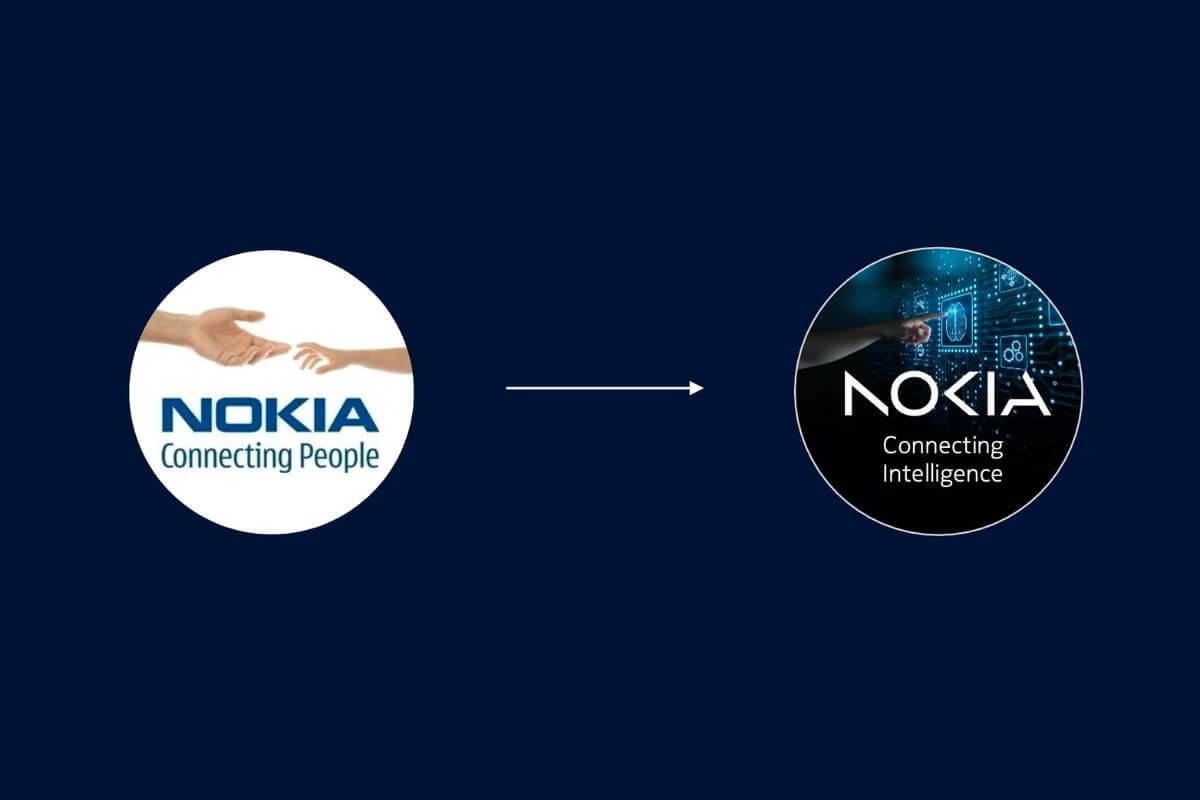
Nokia President and CEO said the company intends to “connect intelligence” in the same transformative way it once connected people.
“The reorganization recognizes Network Infrastructure as a growth segment, positioned to capitalize on the rapid, global AI and data center build-out while continuing to innovate for its telecommunications customer base,” Nokia said in an exchange filing.
The new Mobile Infrastructure segment will consolidate Nokia’s Core Networks portfolio, Radio Networks portfolio and Technology Standards, formerly Nokia Technologies. CEO Justin Hotard will lead this division on an interim basis, overseeing Core Software, Radio Networks and Technology Standards.
“It will be positioned for core and radio network technology and services leadership to lead the industry to AI-native networks and 6G. The new segment brings together a portfolio whose value creation is founded on mobile communication technologies based on 3GPP standards with a strong cash flow position underpinned by IP licensing,” the company said.
Leadership Changes
The company also announced several leadership changes effective next year. Raghav Sahgal will assume the role of Chief Customer Officer, while Patrik Hammaren will continue in the Group Leadership Team as President of Technology Standards. Tommi Uitto will step down from the leadership team at year-end, effective December 31.
Portfolio Businesses Segment
Nokia is also creating a dedicated “Portfolio Businesses” segment for units considered non-core to its future strategy but with potential standalone value. These include Fixed Wireless Access CPE, Site Implementation and Outside Plant, Enterprise Campus Edge, and Microwave Radio. Together, the units generated roughly EUR 0.9 billion in sales and a EUR 0.1 billion operating loss over the past year.
Nokia expects to decide on its long-term direction in 2026. The company is also launching “Nokia Defense” as an incubation unit to consolidate research, development, and go-to-market activities in defense-grade solutions for allied markets.
“Building on the strong foundation of Nokia Federal Solutions in the US, the company sees further opportunities in the US, Finland, and other allied countries to deliver defense-grade solutions based on Nokia’s core technologies in Network and Mobile infrastructure,” Nokia said.
Financial Targets and KPIs
As part of its updated financial framework, Nokia has set a new long-term target to lift comparable operating profit to between EUR 2.7 billion and EUR 3.2 billion by 2028, up from EUR 2.0 billion over the last 12 months. The company also introduced a series of strategic KPIs, including a 6–8 percent net sales CAGR for Network Infrastructure, a 13–17 percent operating margin target by 2028, and a Mobile Infrastructure gross margin goal of 48–50 percent. Nokia aims to reduce Group Common and Other operating expenses to EUR 150 million by 2028 and deliver free cash flow conversion of 65–75 percent.
Nokia will begin reporting under its new structure in the first quarter of 2026 and plans to publish recast financials for 2024 and 2025 early that year to aid investors’ transition to the updated framework.
Nokia Announces USD 4 Billion US Investment
On Friday, November 21, 2025, Nokia announced plans to invest USD 4 billion in expanding its US-based research, development, and manufacturing operations, in collaboration with the Trump administration. The multiyear investment is aimed at accelerating innovation across AI-ready mobile, fixed access, IP, optical and data center networking technologies. The planned investment over multiple years is in addition to Nokia’s USD 2.3 billion investment in US manufacturing, R&D, and AI connectivity through its acquisition of Infinera. Infinera had previously committed USD 456 million toward two US manufacturing facilities that received CHIPS Act incentives.
The company expects to allocate roughly USD 3.5 billion of the new investment to US R&D, underscoring its long-term commitment to advancing next-generation connectivity and AI technologies. The investment will support development across the full spectrum of network technologies—including mobile, fixed, IP, optical, data center networking, and mission-critical and defense solutions. Nokia emphasized that its US innovation efforts will continue to build on the legacy of Nokia Bell Labs, headquartered in New Jersey, which has produced breakthrough technologies for more than a century.
Of the total amount, approximately USD 500 million will be directed toward capital expenditures for manufacturing and R&D infrastructure in states including Texas, New Jersey, and Pennsylvania. The company said these investments will help bolster its portfolio of AI-optimized networking solutions and strengthen innovation in automation, quantum-safe networks, semiconductor manufacturing and testing, packaging, and materials science.
“Nokia’s USD 4 billion investment is another Trump administration win for America,” said Secretary of Commerce Howard Lutnick. “Their investment in manufacturing, packaging, and R&D for optical chips means the most innovative technologies that power AI, data centers, and critical national security applications will be developed and built here in the USA.”
“Nokia innovation and technologies are foundational to today’s critical network infrastructure. Our expanded investment will help strengthen the nation’s capacity to deliver greater security, productivity, and prosperity through AI-optimized connectivity at scale, while advancing the newest research and innovation that will shape the future of networking for the years to come,” said Nokia President and CEO, Justin Hotard.
Found this useful? You can support us.
 Support Telecomtalk