
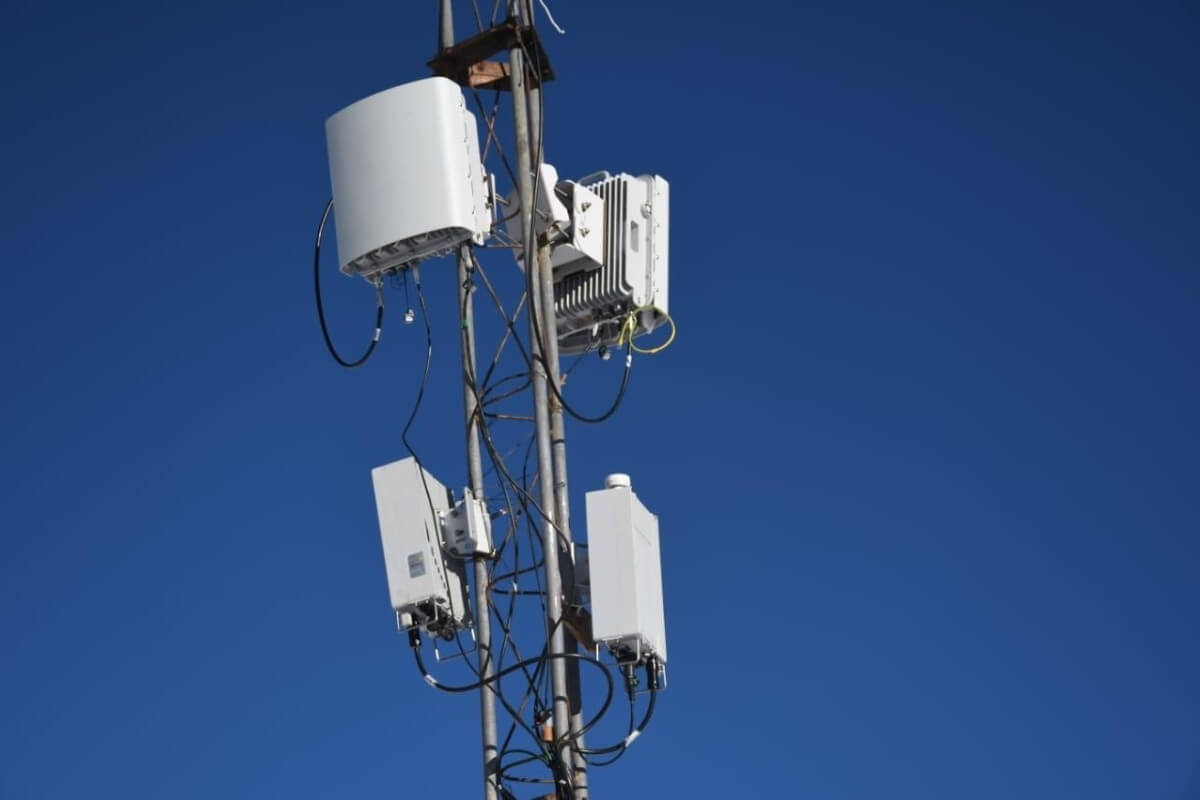
Indonesia says its 5G networks reach 40.84% of the population, about 10 percentage points short of the minimum coverage target attached to its 2026 spectrum awards. Communications and Digital Minister Meutya Viada Hafid gave the figure in a government release dated November 28, 2026. The same update put 4G coverage at 98.95%, or about 276 million people, up from 235 million in 2025.
Key Highlights
- The latest 5G figure is 10.16 percentage points below the minimum target.
- Telkomsel, Indosat and XLSMART won spectrum in both bands.
- The government reported nationwide 4G population coverage of 98.95%.
The 5G figure describes the share of people living within reach of a network. It leaves about six in ten people outside the reported footprint. The release gives a national figure and does not break it down by operator. Local availability can vary with the operator, the location and the device. Earlier deployments illustrate how specific the footprint can be. In 2024, for example, Telkomsel expanded its 5G network to Denpasar and Badung in Bali, including along busy travel routes.
For an earlier benchmark, a GSMA spectrum report estimated that 5G reached about 26% of Indonesia’s population at the end of 2024. The GSMA estimate predates the latest spectrum award and comes from a different source than the ministry’s figure. The November release also puts mobile broadband speeds at 86 Mbps overall. That is a figure for mobile broadband across technologies.
What the Spectrum Winners Have to Deliver
Indonesia’s communications ministry, known as Komdigi, confirmed the auction winners on July 21, 2026. Telkomsel, Indosat and XLSMART won spectrum in both the 700 MHz and 2.6 GHz bands. Komdigi set a minimum target of 51% national 5G population coverage by the fifth year. The latest national figure puts the gap to that target at 10.16 percentage points.
Komdigi’s auction results table shows how the blocks were divided. XLSMART selected the largest allocation in the 700 MHz band at 30 MHz, while Telkomsel and Indosat selected 20 MHz each. In the 2.6 GHz band, Telkomsel selected 80 MHz, Indosat 60 MHz and XLSMART 50 MHz.
The two bands address different needs. A 700 MHz signal can generally travel farther and reach inside buildings more readily, which helps operators cover more people from a site. The 2.6 GHz band can add capacity where many people connect at once. The ministry also set a separate target for average mobile broadband speeds to reach 100 Mbps by 2029. Customers’ actual speeds will depend on factors such as where they connect and how busy the network is.
The Same Award Includes a Rural 4G Requirement
The award also requires winning operators to bring 4G service to 538 villages and urban wards that lacked a signal or had weak coverage when Komdigi announced the results. The areas stretch from Sumatra to Papua. The ministry’s auction documents place that obligation within the five-year rollout period. The November update did not give a progress count for those 538 locations.
That distinction matters in India, where the Department of Telecommunications tracks village connectivity separately from wider mobile coverage. It reported this month that 11,372 Indian villages still lacked 4G, down from 45,180 in 2022. Indonesia’s 51% target measures how many people can get a 5G signal nationally. Its commitment to 538 identified areas tracks whether service improves in places that can still struggle for basic coverage even as the national numbers rise.


