 Support Telecomtalk







Andrew Bonwick
Vice President of Product Development at Relm Insurance

Madhav Sheth
CEO of Ai+ Smartphone

Stephen Rose
CEO Render Networks



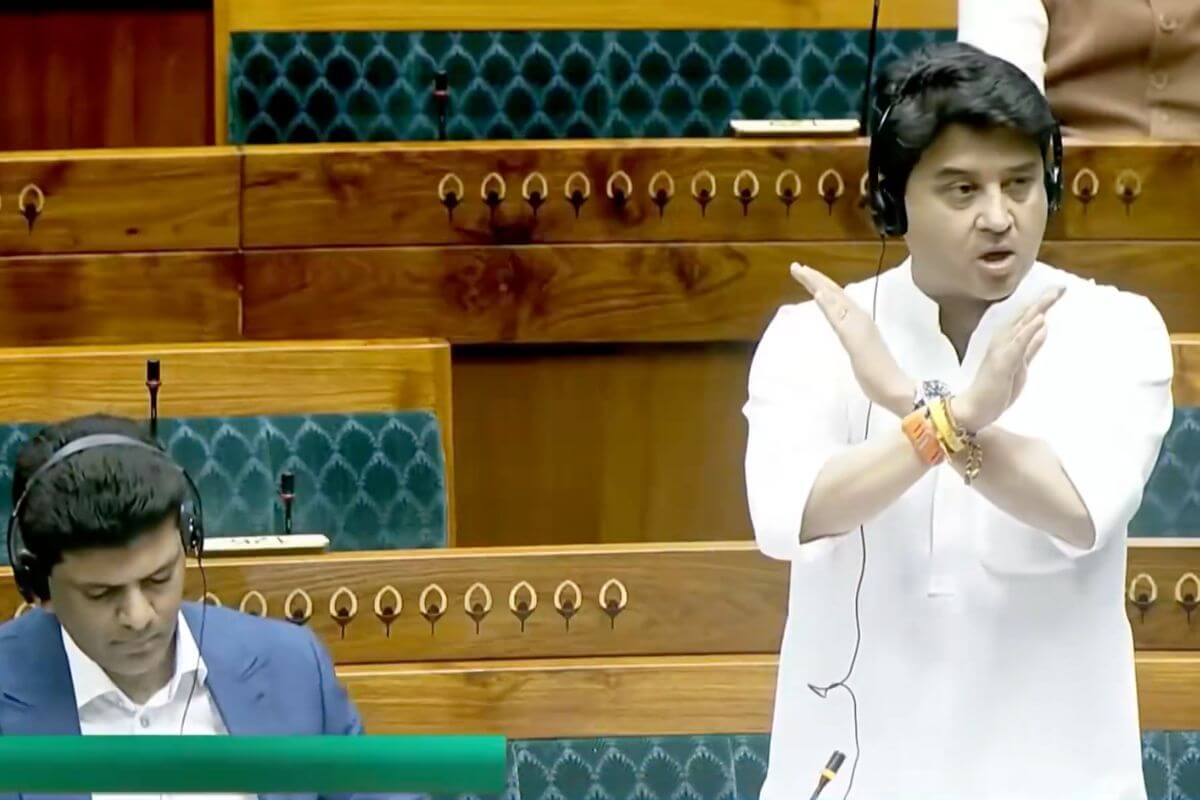
State-run Bharat Sanchar Nigam Limited (BSNL) will expand its network by adding 50,000 to 60,000 mobile towers, Union Telecom Minister Jyotiraditya Scindia said on Thursday. He also expressed confidence that the company’s operating profit will register double-digit growth in the current fiscal year. Highlighting BSNL’s recent investments, Scindia said the company has made its largest-ever capital expenditure of Rs 20,000 crore in a single year to build a 4G network, which will later be upgraded to 5G.
- Make Telecom Talk My Trusted Source



BSNL Plans Massive Expansion with New Towers
“Today, 1 lakh towers of BSNL are on the ground … radiating 4G signal on our own Atmanirbhar stack. The basis on which we are now looking to expand that network. So, 98,000 towers to be exact are pretty much done. We are trying to expand that to another 50,000- 60,000 towers. Ensure the robustness of that network and then very quickly switch to 5G,” he said at the Times Now Summit 2026.
Scindia noted that transitioning to 5G would not be difficult, as BSNL’s network is built on a self-reliant, indigenous Atmanirbhar 4G stack. He added that only additional mobile sites and core network software upgrades would be required for the transition.
The minister also pointed to steady growth in BSNL’s subscriber base, which increased from 8.55 crore in June 2024 to 9.27 crore at present.
On the financial front, Scindia said BSNL has returned to profitability after nearly two decades, posting a quarterly profit of Rs 262 crore following an 18-year gap.
“On an EBITDA basis, in 2023-2024, on an operating margin basis, we made close to Rs 2,395 crores. We are now spinning out cash. In 2024-2025, that grew to Rs 5,100 crores. My hope is that this year, which closes next week, we should increase that Rs 5,000 crore operating profit by double-digit figures in fiscal 2025-26,” he said.
No Plan to Privatise BSNL
Earlier this month, Communications Minister Jyotiraditya Scindia ruled out any move to privatise BSNL. He told the Lok Sabha that the state-run telecom operator will remain a public enterprise.
“There is no question at all of privatising BSNL. BSNL belongs to the people of India, and is for the people of India,” the minister said on March 18, 2026. “There is no issue of privatisation under the Prime Minister’s leadership. BSNL is fully committed to serving the people of the country,” he added.
He reiterated that BSNL’s subscriber base has increased from 8.55 crore to 9.27 crore, showing growing consumer trust. “Around 1 lakh 4G towers have already been rolled out, and 5G services will be introduced after the 4G network stabilises,” the minister said.
The Department of Telecommunications (DoT), in a series of posts on X shared:
“While giving information in the Lok Sabha, Union Telecom Minister Jyotiraditya Scindia said that: “Under the leadership of Prime Minister Shri Narendra Modi, BSNL has reported net profit for two consecutive quarters (Q3 and Q4) in FY 2024-25 after nearly 18 years. These two quarters have generated profits of Rs 280 crore and Rs 262 crore. BSNL’s subscriber base as of June 2024 was approximately 85 million, which has increased to 92.7 million with the expansion of its indigenous 4G/5G network.”
Samriddh Gram Project
“Samriddh Gram Project is bringing data driven farming to rural India,” Scindia posted on X while sharing a video snippet of his speech during the 5G Congress on March 20, 2026.
Speaking at the ET Telecom 5G Congress 2026, Scindia elaborated on the Samriddh Gram Yojana: “…I just inaugurated, in Madhya Pradesh,… example of where physical and digital come together. We have used 5G technology, and we have used AI. And brought them together under a project called Samriddh Gram Yojana, where technology is being used to provide services to every single citizen. This is based in a small village in rural Madhya Pradesh, where we are providing farmers data on moisture content of soil, potash content of soil, NPK content of soil, with equipment allowing them to see the moisture level and when drip irrigation is required. And the switching on and switching off of drip irrigation at the touch of a button from the mobile.”
In a post dated March 18, 2026, the DoT highlighted the inauguration of the first ‘Samriddhi Kendra’ in Gram Umari.
“Under the Ministry of Communications, the Hon’ble Union Minister for Communications Shri Jyotiraditya Scindia ji, while inaugurating the first ‘Samriddhi Kendra’ in Gram Umari, described the ‘Samriddh Gram’ initiative as a strong medium for digital transformation in villages and easy access to better services, saying:-
”This center will function as an integrated phygital (physical + digital) service center, where services like health, education, agriculture, banking, and e-governance will be available at one place through better connectivity.”
Now with connectivity, villages are also moving forward.”
Telecom growth and 6G vision
In another post highlighting Scindia’s remarks in the Lok Sabha, the DoT noted: “Hon’ble Union Minister of Communications Shri Jyotiraditya Scindia Ji, while highlighting India’s rapid progress in the telecommunications sector in the Lok Sabha, said:
“The price of data has decreased from Rs 290 to approximately Rs 8 per GB (a 97% reduction), and the number of (BTS- Base Transceiver Stations) used on mobile towers was 6 lakh in 2014, which has now increased to 32 lakh. In addition, India has adopted 5G the fastest in the world by reaching it to 99.9% districts in 22 months.”
Robotic Surgery Powered by 6G
“6G is not just the next generation of telecom, it is the next leap in human possibility,” Scindia said in a post on X on March 18, 2026.
Speaking at the International Workshop on 6G Standardisation, he added:
“I was recently in my constituency, where we’re trying to hold one of the largest health camps in the country, and one of the components of that is robotic surgery.
But think of what 6G can do to power robotic surgery. The surgeon who’s today in Shivpuri doing the robotic surgery can be sitting in Mumbai or in New York City, and through this 6G technology, do remote robotic surgery in every single village across our country.
That is the power of 6G. Think about the concept where a student sits in a classroom in a village and looks at a holographic image of one of the world’s most profound professors teaching a class, except it’s no longer on the grounds of Stanford or Harvard University, but in her village environment.
And it is these possibilities that get empowered by the technology of 6G.”
Indian telecom Market Delivering Greater Value
Union communications minister Jyotiraditya Scindia reportedly said Indian telecom operators are among the healthiest globally, with the sector continuing to grow steadily.
“The government is discussing the next leg of the telecom production-linked incentive (PLI) scheme,” he said in an interview with Mint, according to a report dated March 20, 2026. He noted that the country’s telecom market is consistently growing and delivering greater value than other global markets.
Scindia at the Times Now Summit 2026
– Edited Excerpts –
Jyotiraditya Scindia:
6G is something that’s on the anvil.
The process is being rolled out today with regard to global standards on technology, interoperability being laid out. That is being done both at the ITU, the International Telecommunication Union, and 3GPP—both standard-setting bodies for the world. Have been so for 2G, 3G, 4G, and 5G, and now for 6G. We see those standards and the rollout happening only by 2030. So we are still in the ideation mode, if you will.
But the big difference here is that India was nowhere on the table with regard to global standards-setting for telecom on 3G or 4G. We made our first foray on 5G when, on 5Gi, we submitted a proposal for ubiquitous connectivity across the world.
And this time around, as far as 6G is concerned, we are partners on that round table. This is the first time in the history of independent India that India today is on the standard-setting table for telecom technology that’s being rolled out.
We’ve set up, as you’re probably aware, the Bharat 6G Alliance, which was put together—the vision that was put together by the Prime Minister very, very early. When even 5G had not been fully rolled out in 2023, post-COVID.
And the B6G Alliance was constituted in 2024 with 14 members to start with; it’s now grown to 85 members. And who are these members?
They are people from the entrepreneur world, from academia, IIT professors and such, from industry, telecom service providers, original equipment manufacturers (OEMs), and across the board.
And these 85 individual constituents have been divided into 7 working groups. So we’ve got issues that we are handling where we’re going to contribute to standard-setting, from spectrum all the way to sustainability and green energy, applications and users of 6G. And as of date, our commitment is that we would like to contribute 10% of patents, global patents for 6G.
And as of date, over the last 4 years, we have contributed close to 4,000 patents already under our belt. First time that India has ever been on that standard-setting table.
Now, what will 6G do?
And I think that’s extremely important to understand in layperson’s terms. So what you have in terms of 5G is higher speeds, lower latency, and a thicker pipe through which more content can go through.
What 6G does is that it exponentially improves: the speed; brings down the latency to milliseconds; and also provides a much broader pipe.
So take, for example, I had a health camp in Gwalior-Chambal about a week ago, where we had doctors come in from across the country, and we did a robotic surgery. Now, the robotic surgery was done close to about 20–25 feet away from the patient.
And I had the honour…
Imagine the doctor sitting in Delhi and, over a 6G pipe, can conduct their robotic surgery in rural India, sitting here in Delhi. That’s the power of 6G.
Imagine a student sitting in Raipur in Chhattisgarh or in Rewa, logging into Stanford University, Harvard University, Yale courses live, sitting in rural India. That for you is the power of 6G.
Imagine a patient going through a health checkup and, through telemedicine, conducting live tests, and the doctor looking at the results and giving the prescription within a matter of minutes.
That for you is the power of 6G.
So there are tremendous applications that we can look at.
We right now are putting in—have already put in place—100 5G use-case labs in all the technical universities across India, and we are getting entrepreneurs to come on board to develop new applications for that.
Interviewer: So you’re essentially saying it’s going to help bridge the digital divide, it’s going to be a lot more democratic.
Jyotiraditya Scindia:
It’s actually going to bring the world live to your doorstep as is.
So one thing is to be able to statically connect digitally to the world.
The other is to have applications come to your doorstep as you have, as opposed to you having to go to avail of those services in far-off places, actually happening at your doorstep.
Interviewer: All of this is also happening in the backdrop of AI being rapidly adopted. How much of the 6G application, you know, will have an impact as far as AI and taking it to our display?
Jyotiraditya Scindia:
So let me explain that.
What telecom infrastructure is, is it’s the carriageway. And it’s the guardrails. The only difference being that you are able to see a highway, you’re able to see a railway line. A telecom network is, for all practical purposes, “invisible.”
But those are the guardrails and the carriageway on which a lot of that content moves. And that content moves with ultra-low latency at extremely high speeds. And AI is a form of that content, and that feeds the robustness of the network itself, and the network improves itself also based on AI.
Interviewer: Right. Because, you know, we are talking a lot about Atmanirbhar Bharat, you’re talking a lot about 6G. We also saw how, for instance, since Operation Sindhoor, there’s a lot of emphasis on how we need to be completely dependent on our own indigenous technologies and not be dependent on any other country. How much of that is going to be the focus when it comes to the adoption of these new technologies?
Jyotiraditya Scindia:
A lot of it. So as you’re probably aware, we’ve pierced the—I don’t want to call it the glass ceiling—but the wired ceiling in terms of telecom equipment.
For the first time in the history of the world, the telecom equipment manufacturing countries, which are a club of four—literally, a club of four—in which there is no USA, there is no Germany, there is no England; it’s just Finland, Sweden, South Korea, and China.
And we’ve, with the Prime Minister’s resolve and his perseverance, we’ve come up with our own 4G telecom domestic Atmanirbhar stack.
And we’ve entered that club of 4G. We’re now going to evolve that 4G stack towards 5G. So a lot of that is going to be built domestically.
And even our AI models, a lot of our smaller language models that are being built with higher ROI and focused interventions, will produce a huge amount of results for the world community going forward.
Interviewer: Right. One question that all telecommunicators perhaps have to contend with is call drops. How much of that—when will it happen that?
Jyotiraditya Scindia:
So, let me tell you, if you look at the robustness of the Indian telco network—and we have 4 players today in India, and very few countries can actually boast of having 4 players operating in a market.
The smallest player in India has close to 100 million subscribers, 92.55 to be exact, which is BSNL. And across all 4 telcos, one of the first things I did when we came in is I sat with TRAI, and we put together very clear SLAs, service-level agreements, and KPIs in terms of 7 parameters that we look at: call drop, jitter, packet drop, the robustness of the network, connectivity uptime.
And all 4 telcos today are operating at global standards. Having said that, I’ve built out a glide path over the next 15 months where we are going to be tightening each one of those parameters—from uplink, call drop, due to packet rate, all those 7 parameters—to even better than world-class.
And we are graduating our 4 telcos towards that even higher than global standard over the next 15 months.
Interviewer: Right. You mentioned BSNL. In last year, we had seen several of the BSNL employees, in fact, protesting. They were raising concerns about delays of the rollout of 4G and 5G. They were talking also about flagging the subscriber base coming down. How are you going to address all these issues?
Jyotiraditya Scindia:
So let me correct you, on both issues. First of all, we have, the reason why the rollout of 4G has taken a lot of time is because we’ve come up with our own Atmanirbhar stack. Countries across the world haven’t done it.
India did it in 22 months because the Prime Minister is very clear: if BSNL has to roll out 4G, we are not buying foreign equipment. We’re doing it on the basis of our own equipment.
And ladies and gentlemen, today, 100,000 towers of BSNL are radiating and are on the ground, on air, radiating 4G signal on our own Atmanirbhar stack. Basis that, we are now looking at expanding that network.
So 100,000—98,000 towers, to be exact—are pretty much done. We’re trying to expand that to another 50,000–60,000 towers. Ensure the robustness of that network, and then very quickly switch to 5G. Switching to 5G is not going to be as difficult as coming up with our own Atmanirbhar 4G stack because you need to put in additional BTS.
You need to redefine the core software a little bit, and your system is up and rolling. The second point that you made was with regard to…
Interviewer: What was the rollout of 4G technology? We were also talking about other issues. In fact, the subscriber base sort of…
Jyotiraditya Scindia:
So the subscriber base, yeah. So I’d like to correct that fallacy as well. In June 2024, we had 8.55 crore subscribers. Today, we have 9.27 crore subscribers.
So the subscriber base has gone through a process of accretive growth, as opposed to dilutive growth, which was the case earlier on.
So we are winning back the confidence of our customers.
Of course, CRM solutions have to be extremely robust. Customer satisfaction scores have to be monitored on a regular basis, and we’ve put in place systems to be able to do that.
I’d also like to tell you that BSNL, after 18 years—the last time BSNL made a quarterly profit was in 2008. After 18 years, in 2025, October to December, we made our first quarterly profit of 262 crores net. I’m talking about net profit, not on an EBITDA basis, not on an operating basis. Net profit of 262 crores, and the following quarter, 280 crores. On an EBITDA basis, in 2023–24, on an operating margin basis, we made close to about 2,395 crores.
So we are now spinning out cash. 2024–25, that grew to 5,100 crores. And my hope is this year,…Increase that 5,000 crore operating profit by double-digit figures in fiscal 2025–26.
Interviewer: That brings you to my next question, which I was about to ask you, because you’ve ruled out privatisation of BSNL. Now, many would have argued that this period in which you’re talking about profitability—that during that period, there were also heavy losses that were incurred—and this is ultimately taxpayer money that would have got it to be sustained.
Jyotiraditya Scindia:
No, no, no, no.
So I need to, explain the principles of financial accounting.
So telcos, today, BSNL, as I mentioned to you, is throwing out cash of close to about 5,300 crores, which means what?
I have a huge CapEx plan in place for the next 5 years.
Why? Because I’ve got to compete against the big boys.
I need to increase my customer base.
In order to be able to do that, I need to put in CapEx.
I’m going to be funding a lot of that CapEx through internal accruals.
And where are those internal accruals going to come from?
They’re going to come from my cash surpluses, which I’m generating through my operating profit.
When you go from the EBITDA operating profit line to your bottom line, you’re talking about interest costs, you’re talking about depreciation.
Now, last year, we put in place the highest CapEx in the history of BSNL—close to 20,000 crores worth of CapEx in one single year.
What does that mean?
If you take depreciation on an SLM, straight-line method, and you take a very simple calculation—back-of-the-envelope—5%—
You’re talking about close to about a 1,000–1,500 crore hit, non-cash hit to your bottom line. So even though you make an operating profit, you may make a net loss, but that’s a non-cash loss.
So I think it’s important to be able to understand that from an accounting perspective.
Interviewer: No, because it’s a government that talks about, you know, maximum governance, minimum government, which basically means—
Jyotiraditya Scindia:
I’m telling you—I made 5,395 crores operating profit last year. I hope to increase that by double digits. Now do the math.
Interviewer: Right. I’m just going to quote the TRAI chairman, Mr. Lahoti, who said that AI is central to telecom, powering self-optimizing networks, predictive maintenance, and cybersecurity. How’s the government going to shape this framework, which includes, you know, areas such as data privacy, ensuring that there are no network vulnerabilities, basically securing the networks of users?
Jyotiraditya Scindia:
So we are already using AI.
So, if you think AI is, going to be put in place over the next couple of months or couple of years, it’s already in our system. It’s embedded in our networks.
We use AI to be able to source spam calls.
We use AI to be able to source fraud calls.
We use AI in Sanchar Saathi, which is our app, to be able to detect fraud.
We use AI in our financial fraud risk indicator, which has been appreciated by RBI, and it’s been mandated by all banks across the country to be used.
We use AI in Astra, which is our AI-based recognition technology, which identifies a single person with multiple SIMs.
And let me give you an example.
So we had an individual, who went around getting SIMs in his name, and we had one individual, who had close to about 95 SIMs in his name.
And the only way we could catch the individual is because we used AI to be able to source that. So AI is very much already a part of our network’s model.
Interviewer: Right. But, you know, how serious a problem is this? How often do you find these individuals—a lot of fraud, a lot of security? Recently, when there were Pakistan…
Jyotiraditya Scindia:
So let me, let me, let me give you an example.
So with Sanchar Saathi, we have detected and shut down close to about 2 crore WhatsApp connections.
And again, Sanchar Saathi is one of the biggest successes in this country. Why? Because it’s a citizens’ movement.
It’s an application that’s out there, but the only information we get is through Jan Bhagidari.
When people come and become part of the system and report wrong things that are being done against their own numbers—whether they check their own mobiles and how many mobiles are there against their own numbers, whether spam calls or fraud or theft—
That assists us in being enabled to put the firewalls in place to be able to secure our networks for our citizens.
So it’s very much a Jan Bhagidari input, and I’d like to thank all of those who are crusaders along with us on the Sanchar Saathi app and other apps that make this possible.
Interviewer: Right. You’re also, of course, in charge of the Department of Post, and you’re looking at a transformative period for the department.
Department of Post
Jyotiraditya Scindia:
You’re moving from, you know, the traditional post, inland letters, et cetera, to more logistics, more e-commerce provisions.
How is this going to happen, and what are you envisioning for them?
So, the e-commerce market in India is just going to exponentially grow. We are today at close to about an 11 lakh crore market, which is going to grow to over about 30 lakh crores by 2030. E-commerce is going to be pretty much a part of our lives. And if you look at the capability of providing that service to every single citizen across our country, there is no other logistics network that’s better than India Post. Why?
Because we have 6.5 lakh villages in our country, and we have 1 lakh 65,000 points of presence of India Post.
It is my Gramin Dak Sevak and his value of trust and being able to deliver that is uppermost in citizens’ minds.
So we are using our network to be able to deliver goods across the length and breadth of India.
On the 17th of March, we unveiled 3 new products of India Post: 24-hour speed post, which ensures that your speed post letter will reach in 24 hours—that’s our commitment—48-hour speed post, and 24-hour speed parcel, which will ensure that parcels less than 5 kilos reach within 24 hours.
We have used technology in a huge way. For the first time, a public sector system like India Post—huge in its reach—We’ve got over 4 lakh family members as GDSs who work with us.
We use technology.
We’ve hired a Chief Marketing Officer.
We hired a Chief Technology Officer.
We’ve got 6 verticals that we work with between parcels, mail, citizen-centric services, international mail, post office savings bank, PLI.
We’ve got a vice CTO working across all divisions.
We put in place IT 2.0, which will be a live tracking system for each one of your articles, just like in every other logistics provider.
You can monitor, once you input and you book your article, exactly at which station it is, when it will reach your residence.
We bring in technology as a huge input into our value addition.
We have today a revenue run rate of close to 12,000–13,200 crores.
We are hoping to close this year—which again is another 2 days—
These are the two passions that I have in my life right now.
One is India Post, the second is BSNL.
I hold a quarterly review across both, across each vertical.
We hope to close this year with a double-digit increase in sales.
So pick a number and be my guest, but I will be out with the results by the 15th of April.
We want to make it a logistics powerhouse for India.
And my fervent hope is to make India Post profitable.
Today we are a cost centre to the Government of India, which means that our cost structure is way beyond our revenue structure.
My target is by 2029–30, I want to make it a profit centre for the Government of India, and hopefully—hopefully—Take it public.
Strait of Hormuz and Development in India
Speaking on the Strait of Hormuz and development, the Minister said:
Today, Strait of Hormuz. The only country that has had a breakthrough today is India. Our LPG tankers, our LNG tankers, our crude oil tankers—20 tankers—16 lakh metric tons; 16 tankers of crude oil, close to about 10 tankers of LNG, 3.5 lakh metric tons; 8 tankers of LPG, 2.5 lakh metric tons—all given safe passage from the Strait of Hormuz. Something that we could not comprehend earlier.
If you look at infrastructure, you look at our economic growth, the numbers that we are seeing—
My past portfolio—we had 74 airports; today we have 160 airports.
74 airports in 70 years and an addition of 84 airports in 12 years.
These are numbers that have not been comprehended before.
So you’ve got a leader who’s taking the country forward.
Everyone wants to be a part of that movement.
There is no time for nakaratmak soch in our country.
There is only time for sakaratmak soch and to move the country forward.
Conclusion of the Event
The discussion ended with Ashish Segel, CEO, Times TV Network and Chief Growth Officer, Times Media and Entertainment, presenting the minister with a token of appreciation.
Some people read for free. A few choose to support. If you found TelecomTalk useful, you can help keep us running.



 Airtel’s Air-Gapped Cloud Lets Organisations Run AI Without Internet Connectivity
 OnePlus Ace 7 to Get New Cooling System with Airflow Design
 Samsung Brings One UI 9 for Galaxy S23: Which Phone Next?
 POCO X8s Launched with Snapdragon 7 Gen 4 SoC: Check Specifications
 Jio Wants Satellite Broadband to Reach Every Indian: What we Know






























