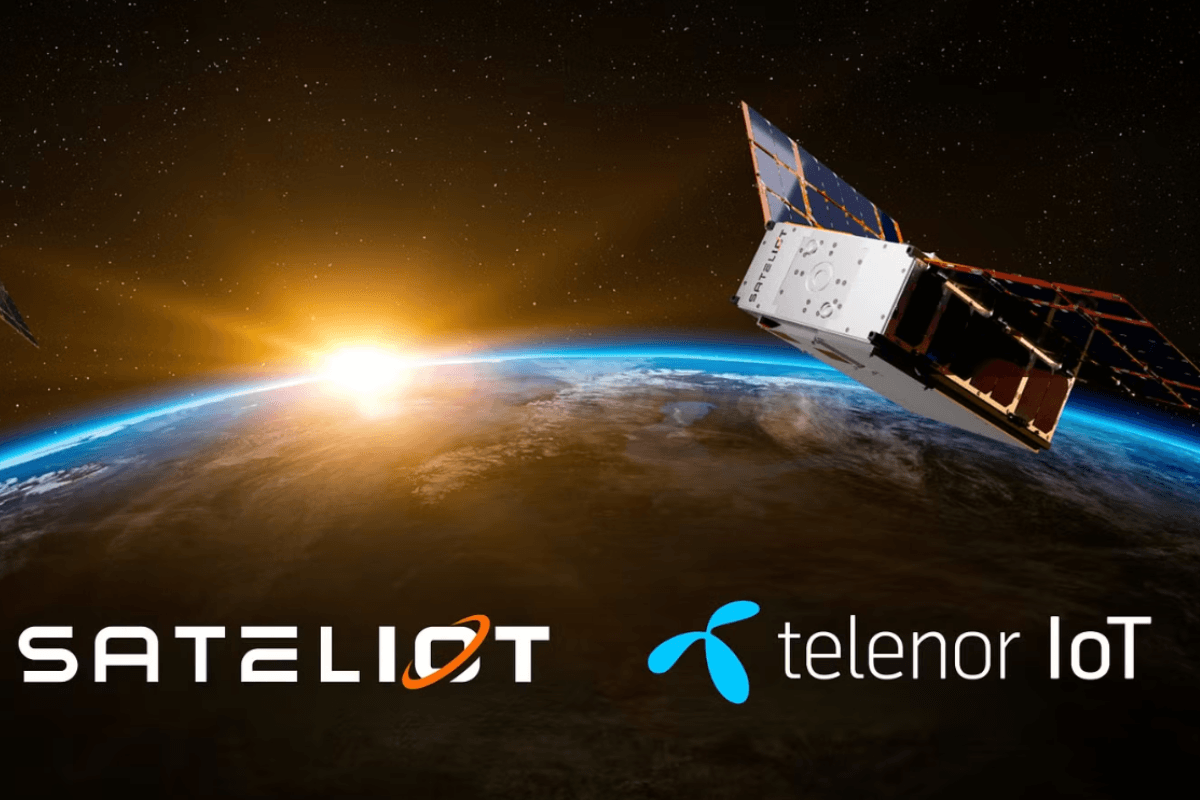
Telenor and Sateliot Want IoT Devices to Stay Connected Beyond Mobile Networks
Telenor IoT and Sateliot have announced a partnership aimed at enabling standard NB-IoT devices to move seamlessly between terrestrial mobile networks and Low Earth Orbit satellites without requiring proprietary hardware or complex integrations. The collaboration reflects the telecom industry’s broader push toward hybrid connectivity models that combine traditional cellular infrastructure with satellite-based coverage for remote and hard-to-reach areas.
The telecom industry’s push toward satellite connectivity is slowly moving beyond smartphones and emergency messaging. Now, the focus is shifting toward Internet of Things (IoT) devices that operate far away from traditional mobile networks in a new partnership announced this week, Telenor IoT and Sateliot said they are working together to enable seamless connectivity between terrestrial mobile networks and Low Earth Orbit (LEO) satellites for IoT applications.
Make Telecom Talk My Trusted Source
Key Highlights
Telenor IoT and Sateliot announced a partnership focused on seamless terrestrial-satellite IoT connectivity.
The collaboration aims to allow standard NB-IoT devices to connect to satellites without proprietary hardware or custom integrations.
Sateliot’s network is based on the 3GPP Release 17 Non-Terrestrial Network (NTN) standard.
The companies successfully tested satellite connectivity using Telenor IoT SIM cards in Spain.
The partnership targets industries including agriculture, maritime, logistics, energy, and environmental monitoring.
The move reflects the telecom industry’s growing shift toward hybrid terrestrial and satellite connectivity models.
The companies say the collaboration is designed to allow standard NB-IoT devices to stay connected even in areas where mobile coverage is weak or unavailable the broader idea is simple but significant IoT devices should eventually be able to move between traditional cellular infrastructure and satellite networks without requiring expensive proprietary hardware or complex custom integrations.
The announcement reflects a wider industry trend where telecom operators, satellite companies, and standards bodies are increasingly working toward hybrid connectivity models that combine terrestrial and non-terrestrial networks.
Bringing Satellite Connectivity to Standard IoT Devices
For years, satellite IoT connectivity has existed mainly through specialised systems that often required dedicated hardware, custom antennas, and proprietary communication setups this made deployments expensive and limited large-scale adoption across industries. Sateliot’s approach is different because its satellite network is designed around the 3GPP Release 17 Non-Terrestrial Network (NTN) standard. According to the company, this allows compatible NB-IoT devices to connect directly to satellites without major hardware modifications.
In practical terms, this means businesses may not need separate devices for cellular and satellite connectivity in the future. Instead, a single IoT device could potentially operate across both environments depending on network availability.
The companies said successful field tests conducted in Spain demonstrated that Telenor IoT SIM cards were able to remain connected to Sateliot’s satellite network for extended periods additional testing is expected to continue in multiple countries.
The partnership is aimed at creating what the companies describe as resilient global IoT connectivity, especially for remote environments where traditional mobile infrastructure remains difficult to deploy.
Why the Industry Is Interested in Hybrid Connectivity
While mobile networks continue to expand globally, large parts of the world still remain outside reliable terrestrial coverage. Remote mountains, deserts, oceans, forests, agricultural regions, and industrial zones often present major connectivity challenges.
For industries increasingly dependent on sensors and connected devices, maintaining uninterrupted coverage has become important for operational efficiency and safety the partnership between Telenor IoT and Sateliot targets several industries where constant connectivity could make a difference.
In agriculture, IoT sensors are increasingly used to monitor soil conditions, irrigation systems, weather patterns, and equipment performance across large rural areas in maritime operations, shipping companies and vessel operators are looking for more reliable ways to track assets and monitor operations far from coastal cellular towers.
Similarly, the transport and logistics sector continues to push for real-time tracking across long-distance routes that may pass through isolated regions. Energy companies are also deploying connected infrastructure across wind farms, pipelines, and remote power installations where terrestrial mobile coverage may not always be available.
Environmental monitoring is another potential use case. Wildlife tracking systems, research stations, and climate monitoring sensors are often located in remote areas where maintaining traditional network connectivity can be difficult.
Satellite and Telecom Networks Are Slowly Converging
The telecom industry has increasingly started treating satellite connectivity not as a completely separate ecosystem but as an extension of existing mobile infrastructure.
That shift has accelerated in recent years as 3GPP standards introduced support for non-terrestrial networks within the broader 5G ecosystem. Several telecom operators and satellite firms globally are now exploring ways to integrate satellite communication directly into existing mobile technologies.
Unlike earlier satellite systems that often relied on closed ecosystems, newer NTN-based approaches aim to make satellite connectivity work more like conventional mobile roaming. The long-term goal is to reduce complexity for device makers and enterprises deploying IoT solutions globally the Telenor IoT and Sateliot partnership fits directly into that evolving strategy.
What This Could Mean for India
India has also been exploring satellite-based connectivity initiatives, particularly for remote communication and digital inclusion. While most public attention has focused on satellite broadband services for consumers, IoT could become another important area for satellite integration.
Sectors such as agriculture, shipping, energy, logistics, mining, and disaster management could potentially benefit from wider satellite-enabled IoT coverage in remote regions.
As telecom operators and satellite companies continue developing NTN-based ecosystems globally, the idea of IoT devices automatically switching between terrestrial and satellite networks may gradually move closer to mainstream adoption.
Every article you read here is the result of time, research, and effort. If you feel it adds value, you can support TelecomTalk.
FAQs
What is the main goal of the partnership between Telenor IoT and Sateliot?
The partnership aims to enable IoT devices to switch seamlessly between terrestrial mobile networks and satellite connectivity without requiring special proprietary hardware.
Why is this partnership important for IoT connectivity?
It could simplify satellite IoT deployments by allowing standard NB-IoT devices to stay connected even in remote areas where traditional mobile coverage is unavailable.
What industries could benefit from this technology?
Industries such as agriculture, maritime, logistics, energy, utilities, and environmental monitoring could benefit from more reliable connectivity in remote regions.
Does the solution require specialised satellite hardware?
According to the companies, compatible NB-IoT devices supporting 3GPP Release 17 NTN standards can connect without custom antennas or proprietary satellite hardware.
What does this mean for the future of telecom networks?
The partnership reflects a broader industry trend where terrestrial mobile networks and satellite systems are increasingly being integrated into unified connectivity ecosystems.
 Support Telecomtalk