Support Telecomtalk







Andrew Bonwick
Vice President of Product Development at Relm Insurance

Madhav Sheth
CEO of Ai+ Smartphone

Stephen Rose
CEO Render Networks



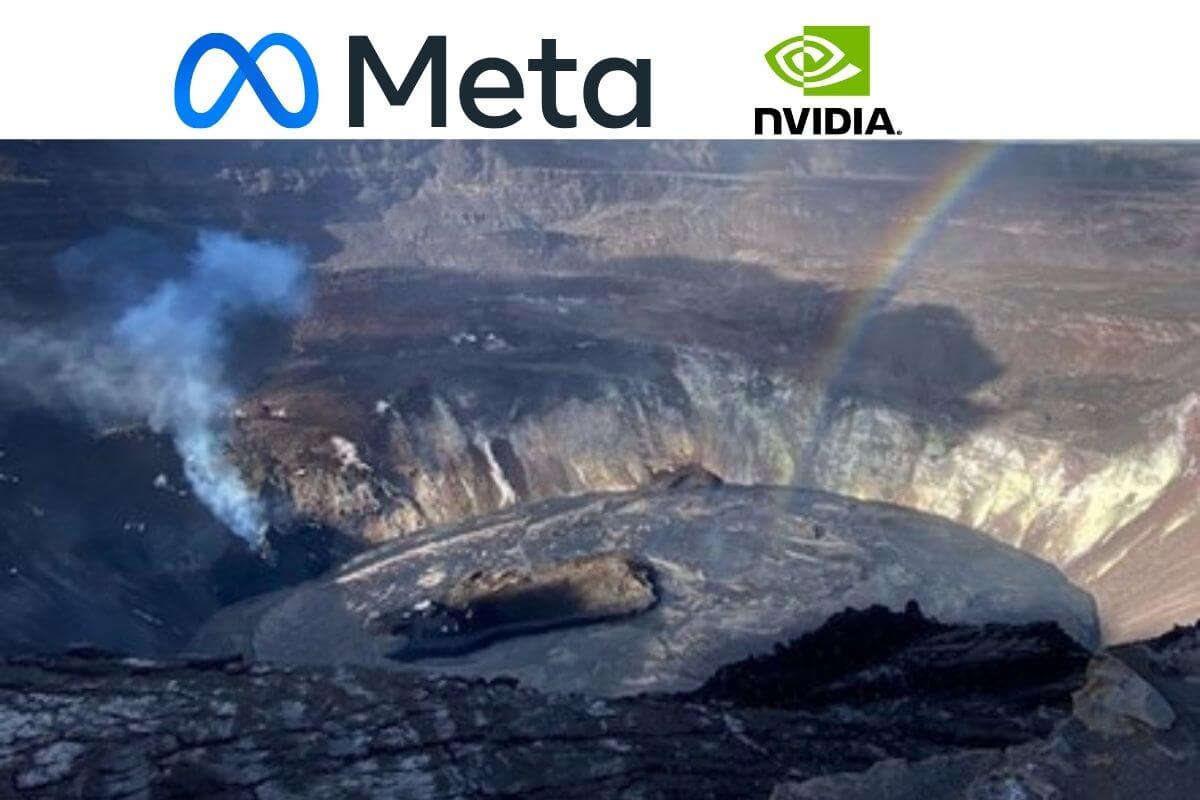
Artificial Intelligence (AI) built for speech is now decoding the language of earthquakes, Nvidia said in a blog post, noting that researchers have repurposed an AI model built for speech recognition to analyse seismic activity, offering new insights into how faults behave before earthquakes. A team at Los Alamos National Laboratory used Meta’s Wav2Vec-2.0, a deep-learning AI model originally designed to process human speech, to study seismic signals from Hawaii’s 2018 Kilauea volcano collapse. Their research, published in Nature Communications, reveals that faults produce distinct, trackable signals as they shift—similar to how speech consists of recognisable patterns.
- Make Telecom Talk My Trusted Source



Also Read: Nvidia Accelerates AI Integration in Medical Imaging with MONAI



AI Listening to the Earth
“Seismic records are acoustic measurements of waves passing through the solid Earth,” said Christopher Johnson, one of the study’s lead researchers. “From a signal processing perspective, many similar techniques are applied for both audio and seismic waveform analysis.”
By training the AI on continuous seismic waveforms and fine-tuning it with real-world earthquake data, the model decoded complex fault movements in real time—a task where traditional methods, like gradient-boosted trees, often fall short. The project leveraged Nvidia’s GPUs to process vast seismic datasets efficiently.
“The AI analysed seismic waveforms and mapped them to real-time ground movement, revealing that faults might ‘speak’ in patterns resembling human speech,” Nvidia said in a post.
Also Read: CES 2025: Nvidia AI Announcements, Launches and Partnerships Across Industries