 Support Telecomtalk







Andrew Bonwick
Vice President of Product Development at Relm Insurance

Madhav Sheth
CEO of Ai+ Smartphone

Varun Kashyap & Sridevi Reddy
Co-Founders, Zithara.ai
Transforming Indian Offline Retail and Customer Engagement Using AI


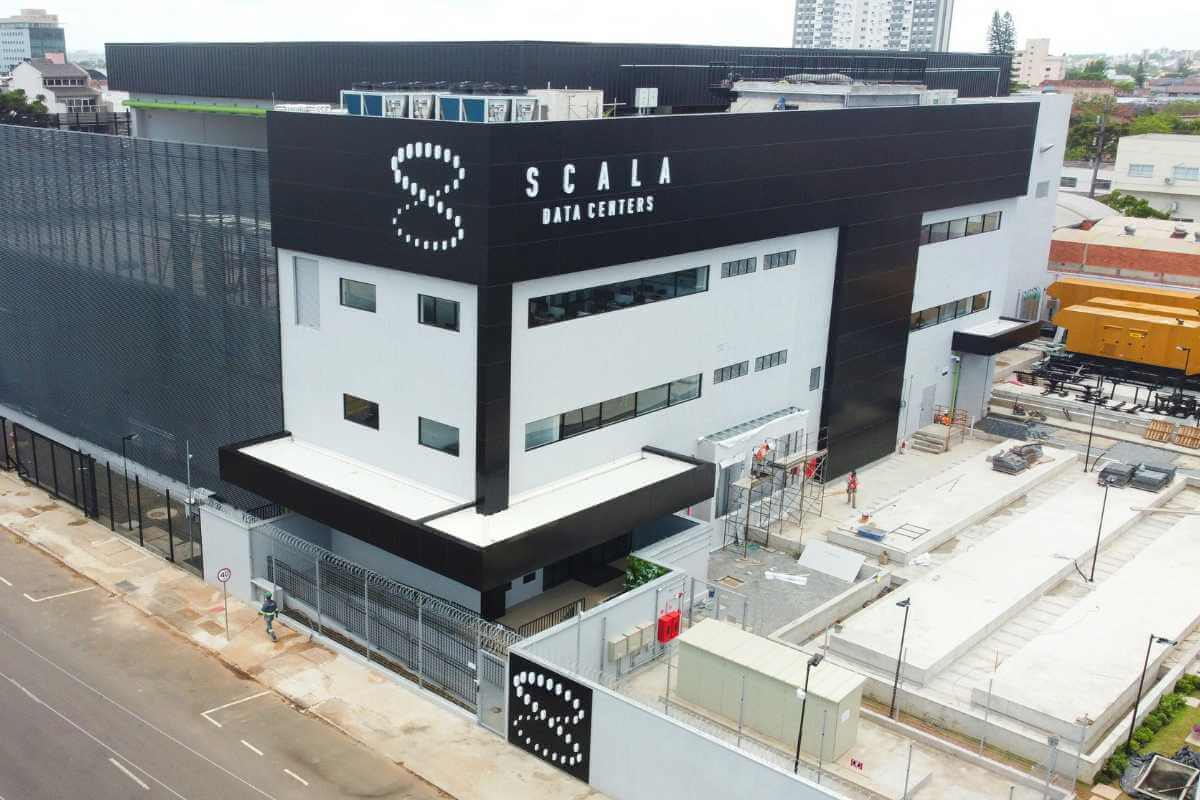
Scala Data Centers has launched its first site in the Brazilian Southern Region, located in Porto Alegre. The SPOAPA01 data center, part of the HyperEdge family, provides 4.8 MW of IT capacity, specifically catering to the needs of Hyperscale customers. Configured to address the demand for connection and distributed computing, the data center, with a BRL 240 million investment, is designed for large volumes of data and processing that are highly scalable.
- Make Telecom Talk My Trusted Source



Also Read: Scala Data Centers Fuels Expansion With USD 215 Million Green Debenture Offering
Sustainable Infrastructure
Positioned in the Navegantes neighbourhood near Salgado Filho International Airport, the SPOAPA01 data center aligns with Scala’s commitment to energy efficiency and sustainability. Scala said the HyperEdge data center operates with 100 percent certified renewable energy, achieving a Power Usage Effectiveness (PUE) of less than 1.4 and a zero Water Usage Effectiveness (WUE) through closed circuit and air cooling.
Connectivity
The company said the choice of Porto Alegre is not only due to its proximity to legacy data centers but also its potential role of becoming a connection point for the Malbec submarine cable. This cable, spanning 1,550 miles and already connecting Sao Paulo, Rio de Janeiro, and Buenos Aires, is set to include a branch connecting Porto Alegre directly to Buenos Aires. Reportedly, this position provides advantages for Scala customers, providing low-latency communication with the Argentine market.
“We are excited about the inauguration of this new data center, which occupies a strategic position close to data centers that serve telecom operators. Despite the obsolete architecture, density and capacity compared to Hyperscale customer standards, these other sites in the region represent relevant points of connection and traffic interest. With this site now in operation, our customers finally have the alternative of a global standard data center to serve the region’s growing market, including support for the Buenos Aires region, in Argentina,” said Scala.
Also Read: Scala Data Centers Unveils Its First Hyperscale Data Center in Tepotzotlan, Mexico
FastDeploy Approach
Scala said the HyperEdge SPOAPA01 project employed its proprietary FastDeploy approach, a design and construction methodology that enables deployment in up to 50 percent less time than traditional models. The use of prefabricated and transportable modular components contributes to sustainability goals.
Scala’s Latin America Projects Overview
Scala currently operates nine data centers across Latin America. Four of them are located at the Tambore Campus, in Barueri (Sao Paulo state, Brazil), and the others are distributed across the cities of Sao Paulo, Campinas (Sao Paulo state, Brazil), Sao Joao de Meriti (Rio de Janeiro state, Brazil), Curauma (Chile), Porto Alegre(Rio Grande do Sul state, Brazil) and Tepotzotlan (Mexico). Of these, the last four came into operation in 2023.
Also Read: Scala Data Centers Launches New Data Center in Curauma, Chile
The company, founded in 2020, has reportedly invested over BRL 8 billion in its Latin America projects and aims to achieve 500 MW of distributed capacity within the next five years across Brazil, Chile, Mexico, and Colombia. Ongoing projects include new sites in Tambore Campus and Chile, with plans for additional centers in Jundiai (Brazil), Chile, Mexico, and Colombia.
If this article saved you time or helped you decide better, consider supporting our work.






























