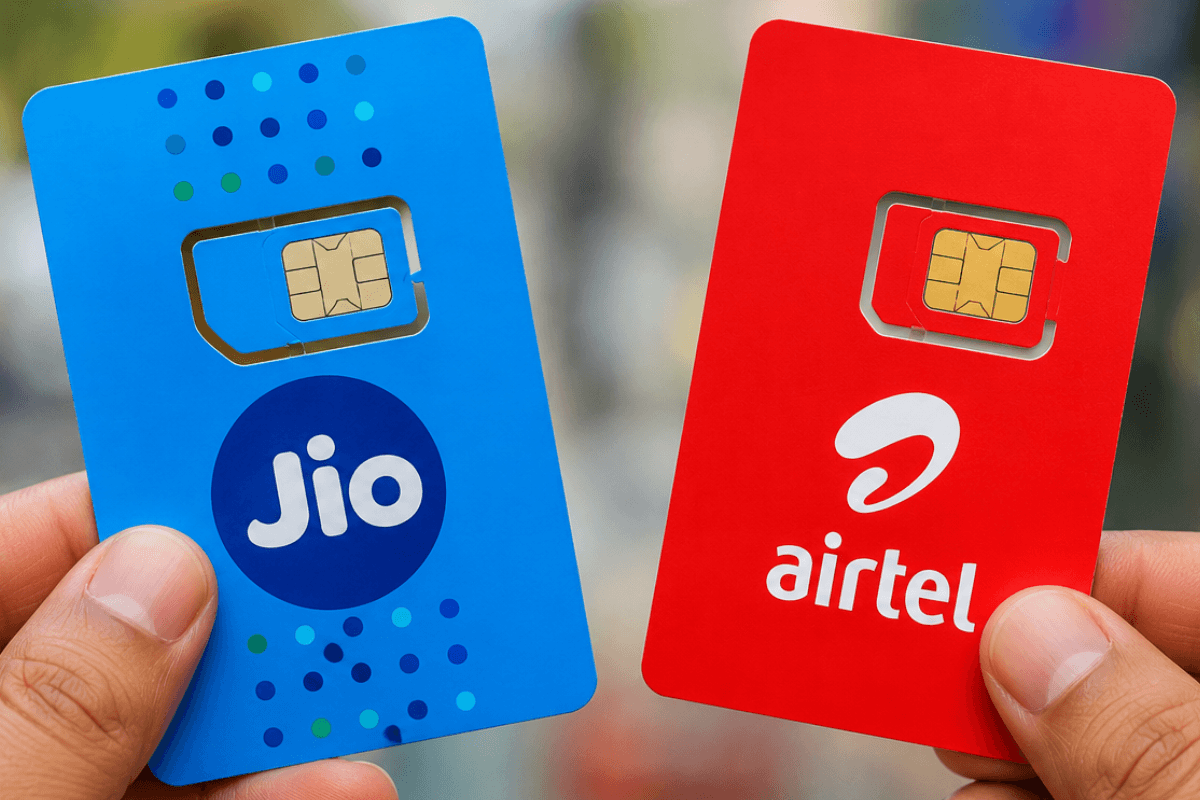
For years, India’s telecom market has largely been built around one idea more data at lower prices operators competed on validity, daily data limits, OTT bundles, and unlimited calling. But the next phase of telecom competition in India may look very different, and Reliance Jio appears to be positioning itself at the centre of that shift.
This is important because India’s telecom industry may now be entering a phase where “unlimited data” alone is no longer enough to drive growth.
Instead of treating every user and every type of internet traffic the same way, operators can create dedicated virtual layers on top of the same 5G network infrastructure each layer can then be optimised for a different experience.
One slice may prioritise ultra-low latency gaming another may focus on enterprise services and another one could support critical communications or high-quality video streaming. In the future, operators may even create premium slices that give paying users priority during network congestion.
This is one of the biggest reasons why standalone (SA) 5G matters Reliance JIO built its 5G network using a standalone architecture from the beginning, giving it more flexibility around advanced features like slicing that early decision may now start giving Jio a strategic advantage.
India’s Telecom Market Could Shift Beyond Unlimited Data
For years, India’s telecom pricing strategy focused on affordability and scale consumers became used to daily data packs, unlimited calling, and aggressive pricing but telecom operators are now facing a different reality.
Data consumption continues to rise rapidly, 5G network investments are expensive, and operators are looking for new ways to improve ARPU (average revenue per user) in this environment, premium network experiences may become an important monetisation layer.
In simple terms, the industry may slowly move from selling “gigabytes” to selling “experience quality.” that could completely change how mobile plans evolve over the next few years.
Instead of every user receiving the exact same network treatment, telecom operators could eventually introduce differentiated experiences:
- Premium gaming plans
- Priority video streaming
- Business-grade connectivity
- Guaranteed speed tiers
- Low-latency cloud services
- Premium stadium or airport connectivity
- Enterprise mobility slices
The shift may look small initially, but it could fundamentally reshape the Indian telecom market.
Airtel Appears to Be Watching Closely
Interestingly, recent developments suggest that Bharti Airtel is also exploring premium 5G capabilities and slicing-based services that matters because when India’s top operators start discussing similar technologies, it often signals the direction the industry is heading toward.
For Bharti Airtel, the challenge is slightly different unlike Jio, Airtel initially deployed non-standalone (NSA) 5G architecture and continues expanding its standalone capabilities gradually. Jio’s fully standalone deployment gives it a stronger foundation for advanced slicing use cases today.
This could create a situation where Jio tries to position itself as the operator delivering the “best” or “premium” 5G experience rather than simply the widest 5G availability that would represent a major shift in Indian telecom competition.
Vodafone Idea Still Has a Long Road Ahead
For Vodafone Idea, the situation becomes even more challenging Vi is still in the early phases of scaling its 5G rollout compared to Jio and Airtel. While the company has started expanding 5G into more cities, it is still focused heavily on improving overall network coverage and stabilising subscriber trends.
Also Read: 70 Percent of Eligible Vodafone Idea Users Experience Vi 5G in Live Cities
In such a scenario, advanced monetisation layers like network slicing may not become an immediate priority for Vi this could widen the technology and perception gap further if Jio and Airtel aggressively move into premium 5G experiences over the next few years.
Premium 5G Could Become the Next ARPU Driver
One of the most interesting parts of this shift is its potential impact on telecom pricing India’s telecom market has traditionally been highly price sensitive operators competed aggressively on affordability. But premium 5G experiences may create a new pricing structure where certain users voluntarily pay more for better performance.
This may especially appeal to:
- Gamers
- Remote professionals
- Content creators
- Businesses
- Cloud users
- Premium smartphone users
- Frequent travellers
For telecom operators, this creates an opportunity to improve ARPU without necessarily raising prices for every customer instead of broad tariff hikes alone, operators may introduce optional premium network layers that users can subscribe to.
That model is already being explored globally in different forms.
Could This Raise Net Neutrality Questions?
The idea of differentiated network experiences also raises an important debate if some users get priority access, lower latency, or faster response times through premium slices, could that eventually create a form of “fast lane internet”?
India has historically maintained a strong position around net neutrality principles any large-scale move toward differentiated traffic prioritisation may eventually invite regulatory discussions involving the Telecom Regulatory Authority of India.
At the same time, telecom operators may argue that slicing is necessary to support advanced 5G use cases and monetise next-generation infrastructure investments the balance between innovation and neutrality could become an important discussion over the next few years.
Jio May Be Preparing for the Next Telecom Phase
From subscriber growth to 5G rollout scale and with its IPO around the corner Jio already holds a strong position in the Indian telecom market but its network slicing push suggests the company may now be preparing for something much bigger than traditional prepaid competition the next telecom battle may not simply be about who offers the cheapest data it may instead revolve around:
- Who delivers the best experience
- Who controls premium connectivity layer
- Who supports next-generation enterprise services, and who successfully monetises 5G beyond basic mobile internet
That could redefine the future of telecom plans in India.
For consumers, the immediate impact may not be visible overnight but most users will likely continue using traditional unlimited plans for now but the foundation for a more layered and premium telecom ecosystem may already be taking shape behind the scenes and if Jio’s current direction is any indication, India’s telecom market could soon move beyond the era of simply selling “more GB” every month.
A small group of TelecomTalk readers helps keep this platform running. Support us if you find our work valuable.
 Support Telecomtalk