Diesel Shortages, Power Outages Raise Telecom Disruption Concerns Across States: Report
Telecom operators and tower companies warn the DoT of rising fuel constraints, unreliable grid power, and supply-chain disruptions impacting network operations and costs.
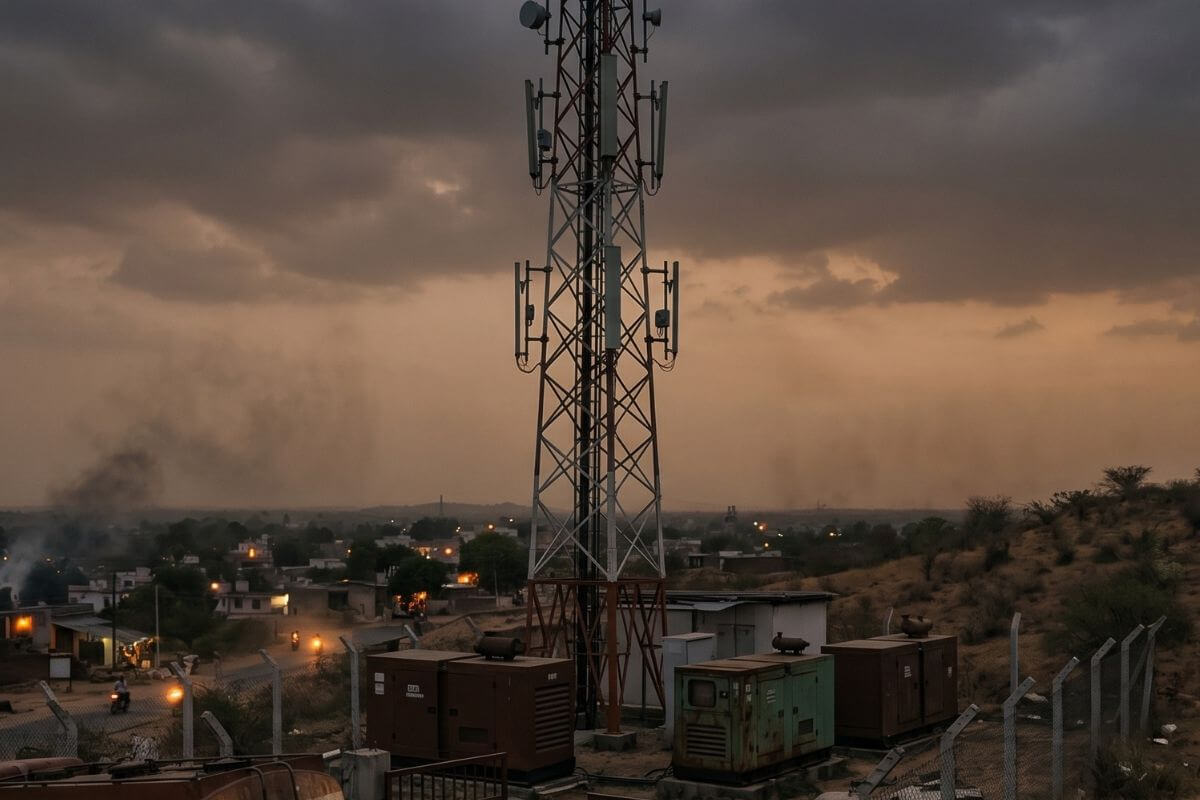
Unreliable grid power, diesel shortages and rising fuel prices are threatening to disrupt operations for telecom operators and tower companies, as firms grapple with escalating costs driven by increased reliance on diesel generators during power outages, according to a Moneycontrol report by Danish Khan dated May 26, 2026.
Diesel Supply Restrictions Hit Telecom Infrastructure
Telecom operators and infrastructure providers have informed the Department of Telecommunications (DoT) that restrictions on diesel supplies in states such as Uttar Pradesh, Odisha, Bihar, Andhra Pradesh and Telangana are affecting fuel availability for mobile towers, data centres and other telecom infrastructure.
Rising Dependence on Backup Power Deepens Cost Pressures
Unnamed industry executives were quoted as saying that said persistent load shedding and weak grid reliability are forcing companies to depend more heavily on diesel-powered backup systems.
The concerns were raised during a May 22 meeting convened by the DoT’s disaster management unit with the Cellular Operators Association of India (COAI), the Digital Infrastructure Providers Association (DIPA), telecom operators, tower companies and network equipment providers to assess the impact of the Iran war on the sector.
Operators also reportedly flagged supply-chain disruptions affecting telecom equipment, semiconductors, fibre components, petro-plastics and helium gas, warning that delays and shortages could significantly increase network deployment and maintenance costs.
“The issues primarily relate to restrictions on the overall quantity of diesel being supplied and denial of diesel supply in open/drum form, which is impacting telecom operations,” industry representatives said during the discussion, according to the report, citing a review of a copy of the office memorandum of the meeting.
Diesel prices have continued to climb amid disruptions linked to the West Asia conflict. Over the past 11 days, diesel prices have been raised four times, taking the retail price in Delhi to Rs 95.20 per litre.
Peak summer power demand has further heightened the risk of outages, intensifying pressure on telecom infrastructure providers that require uninterrupted backup power. Industry bodies have urged the government to ensure round-the-clock grid power availability to reduce dependence on diesel generators.
Sources reportedly said tower companies are expected to submit another communication to the DoT, seeking urgent intervention on fuel supply constraints and power reliability issues.
DoT Steps In Amid Industry-Wide Concerns
The DoT’s disaster management unit has advised local telecom bodies to convene State Telecom Disaster Coordination Committee (STDCC) meetings in regions facing diesel shortages to ensure uninterrupted fuel supply for telecom sites. Broadband Committee meetings with state authorities may also be convened if the situation worsens.
According to the report, the DoT cited Madhya Pradesh as an example where similar supply restrictions were resolved after intervention by the State Disaster Management Authority and the STDCC.
Energy Costs Add Financial Strain to Operators
According to brokerage firm IIFL Capital, cited in the report, energy costs account for nearly 10–12 percent of telecom operators’ mobile revenue. Industry estimates suggest that every Rs 3 per litre increase in diesel prices could raise annual operating costs for operators by nearly Rs 300 crore.
Even as operators and tower companies face diesel supply challenges, the industry has been steadily reducing dependence on diesel-run generators by adopting high-capacity batteries and renewable energy solutions.
Industry Accelerates Shift to Clean Energy Alternatives
During a recent quarterly earnings call, Vodafone Idea identified lower diesel consumption as a key cost-optimisation strategy and said it was increasing electrification across its network to reduce dependence on diesel.
Indus Towers, which counts Bharti Airtel and Vodafone Idea among its customers, said it added nearly 2,500 solar-enabled sites during the quarter, taking the total to around 42,400. The company reported a 7 percent year-on-year decline in diesel consumption at its sites in the fourth quarter despite higher co-locations and increased equipment loading.
Bharti Airtel also said it is cutting diesel dependence by transitioning to high-powered batteries and renewable energy solutions.
 Support Telecomtalk