Support Telecomtalk







Andrew Bonwick
Vice President of Product Development at Relm Insurance

Madhav Sheth
CEO of Ai+ Smartphone

Stephen Rose
CEO Render Networks



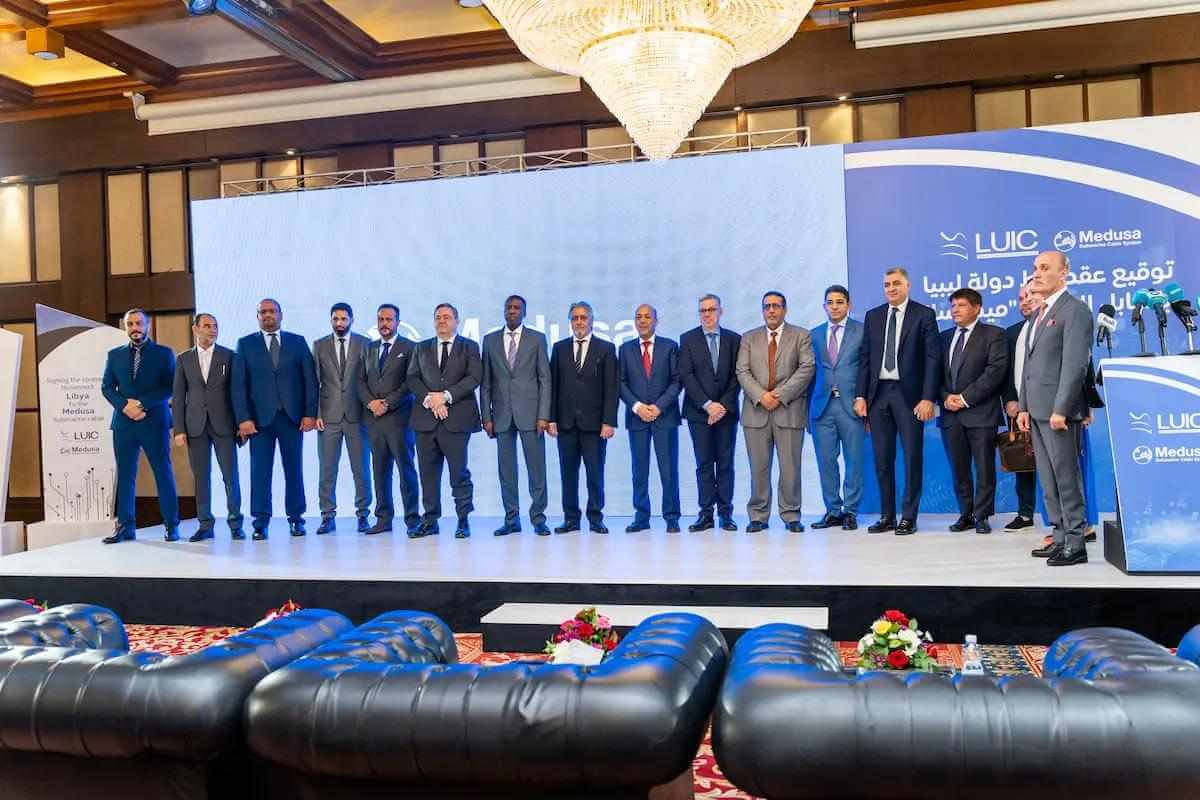
Neutral and independent Mediterranean submarine infrastructure operator, Medusa Submarine Cable System, and data service provider in North Africa and Sub-Saharan Africa, Libyan United International for Telecommunication and Technology (LUIC), announced this week that they have signed an agreement to extend Medusa to the Libyan coast. The 8,760 km long submarine cable will have two landing points in Libya, connecting the coastal cities of Tripoli and Benghazi, according to the statement.
- Make Telecom Talk My Trusted Source



Also Read: Orange Tunisia and Medusa to Develop Longest Subsea Cable System in the Mediterranean



Geographic Expansion
The Libyan branches of the Medusa cable strengthen the connection between North African countries and, consequently, their connection with Southern Europe. With this new agreement, Medusa will connect 11 countries through its landing points in Portugal, Morocco, Spain, France, Algeria, Tunisia, Italy, Greece, Cyprus, Egypt, and now Libya.
Important cable in the Mediterranean
“Medusa was born with the goal of being the most important cable in the Mediterranean, and to achieve that, it must have a solid structure on both shores,” said the Managing Director at Medusa and AFR-IX telecom.
“That is why it has always been essential to connect all the countries of North Africa. We are convinced that Medusa will mark a positive turning point for Libya’s connectivity, and this will have an impact on the region’s economy.”
Also Read: ASN, Elettra, and Partners Begin Construction of 8,700 Km Medusa Submarine Cable System
LUIC’s Vision
Libyan United International Company for Telecommunication and Technology (LUIC) stated, “The company is working on developing and connecting Libya to the world by enhancing connectivity and achieving geographic diversity of the international submarine cables infrastructure level. This would be done by establishing new landing stations, new routes for crossing subsea cables, using state-of-the-art technology and digital innovation to benefit the country’s socio-economic development.”