 Support Telecomtalk







Andrew Bonwick
Vice President of Product Development at Relm Insurance

Madhav Sheth
CEO of Ai+ Smartphone

Varun Kashyap & Sridevi Reddy
Co-Founders, Zithara.ai
Transforming Indian Offline Retail and Customer Engagement Using AI


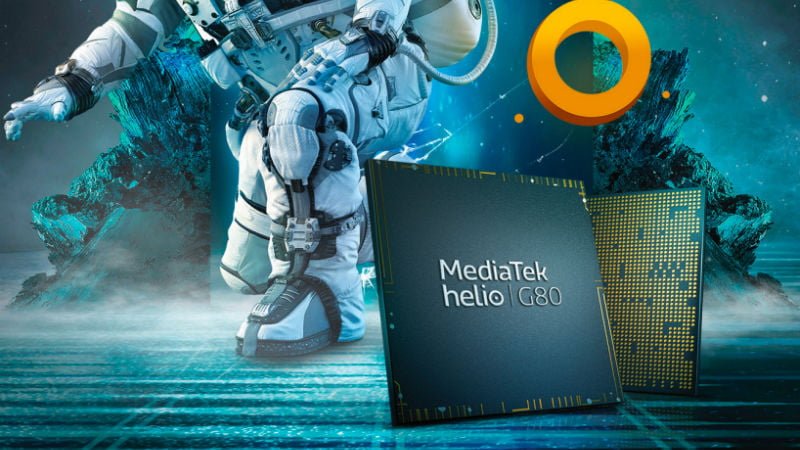
Global Semiconductor company MediaTek unveiled its latest mid-tier gaming-centric chipset, the MediaTek Helio G80. The newest G series chipset is an octa-core chipset positioned between the Helio G70 and G90 processors. The highlight of the new chip is MediaTek’s HyperEngine Game Technology, which was initially introduced in the Helio G90 series. The chipset is said to deliver fast and smooth gaming experience with intelligent networking and resource management. The HyperEngine tech includes intelligent Speed Uplift for Rapid Gameplay and features intelligent Wi-Fi and LTE concurrency for a lag-free connection during gaming. The chipset brings the option to defer calls in-game without connection dropping for a moment. The G80 also comes with a better Resource Management Engine which intelligently manages CPU, GPU and memory for a smoother experience in heavy loading games.
- Make Telecom Talk My Trusted Source



MediaTek Helio G80: Features Detailed
The MediaTek Helio G80 is designed using a 12nm fabrication process. The octa-core CPU incorporates two powerful ARM Cortex-A75 cores clocked at 2.0 GHz and six ARM Cortex-A55 cores clocked at 1.8GHz. The chipset is paired with Mali-G52 MC2 GPU and features speeds up to 950MHz.
The Helio G80 supports up to 8GB of LPDDR4X RAM clocked at 1800MHz. Unfortunately, it doesn’t support Universal Flash Storage (UFS) and instead sticks with the outdated eMMC 5.1 storage.
In terms of camera, MediaTek Helio G80 can handle 25MP single camera or dual 16MP camera setup at 30 frames per second. There is also support for a 48MP single camera, but only at 17fps. In terms of video recording, it can handle Full HD+ videos at 60fps.
Although the Helio G80 chipset lacks a dedicated APU and AI engine, the chipset will support AI Face ID, AI Smart Photo Album, single or dual camera bokeh effect. Other camera features include hardware warping engine (EIS), rolling shutter compensation (RSC) engine and multiple-frame noise reduction.






























