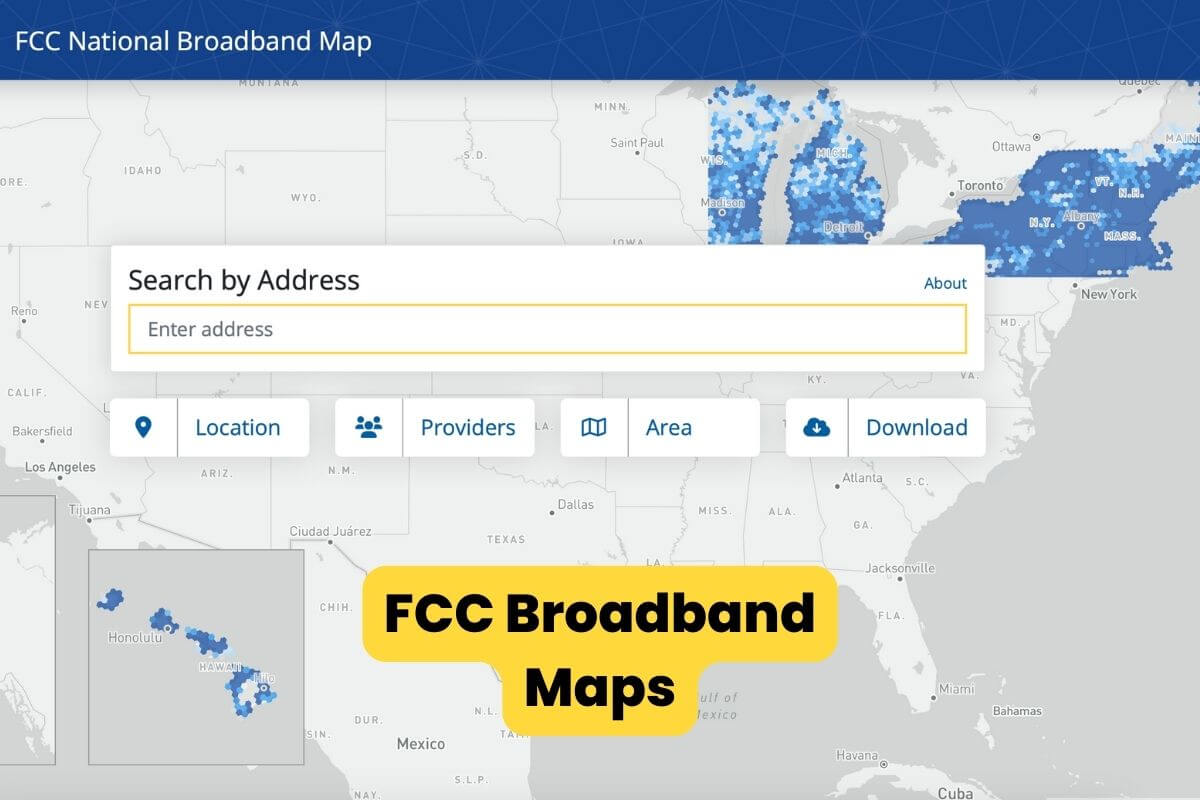
In a major development, the Federal Communications Commission (FCC) has unveiled an updated broadband map that promises to revolutionize the way high-speed internet access is assessed across the US. This breakthrough marks a crucial step towards closing the digital divide and ensuring that all Americans have equitable access to reliable broadband services.
For years, the FCC relied on census blocks as the basis for its broadband maps. This outdated approach led to inaccuracies and failed to capture the true availability of broadband services. By assuming that if one location within a census block had access, the entire area was deemed served, the previous methodology painted an incomplete and misleading picture of broadband coverage in the United States.
A New Era of Location-Based Mapping
Recognizing the need for a more precise and comprehensive approach, the FCC introduced its first location-based broadband map in November 2022. Departing from census block-level reporting, the new map identifies every household and small business in the country that should have access to high-speed internet. FCC says this meticulous approach allowed the Commission to identify over 114 million potential locations for broadband installation, a significant leap from the previous 8.1 million census blocks.
While the November 2022 broadband map was the most accurate to date, the FCC acknowledged that it was only a starting point. To ensure accuracy, the map underwent challenges from various stakeholders, including consumers, states, localities, and Tribes. These challenges were crucial in refining the data and addressing any discrepancies. The feedback received during this process played a pivotal role in shaping the enhanced broadband map released today.
The latest broadband map reveals that more than 8.3 million homes and businesses in the United States still lack access to high-speed broadband. This finding underscores the need for increased deployment efforts to bridge the digital divide effectively.
The iterative nature of the mapping process has resulted in the identification of nearly 330,000 additional unserved locations. The map also reflects a net increase of over one million new serviceable locations compared to the pre-production draft released in November 2022.
Collaboration and Data Quality Assurance
The FCC prioritized collaboration with stakeholders throughout the mapping process. State representatives, local authorities, and Tribal governments participated in over 200 individual sessions to ensure a thorough understanding of the map’s functionality and to facilitate the submission and resolution of challenges. Additionally, the FCC’s rigorous data quality tools, including automated checks and verification processes, were instrumental in maintaining the accuracy and reliability of the map.
The FCC says it remains committed to an iterative approach in developing the broadband map. The Commission plans to release major updates twice a year, integrating provider data with millions of serviceable locations. Minor updates will be made regularly to reflect challenge outcomes and corrections from internet providers. By continuously accepting challenges and refining the map, the FCC aims to ensure the most accurate and up-to-date representation of broadband availability nationwide.
Acknowledging the Mapping Team’s Achievement
The successful release of the enhanced broadband map is a testament to the dedication and hard work of the FCC’s mapping team. Their commitment to building a tool that effectively addresses the digital divide demonstrates the efficacy of the Broadband DATA Act. The FCC anticipates further improvements and an increasingly reliable National Broadband Map as the iterative process continues.
In conclusion, the FCC’s release of the updated broadband map signifies a significant milestone in advancing broadband accessibility and closing the digital divide. With a more accurate depiction of broadband availability, policymakers and stakeholders can work together to bridge the gap and ensure equitable high-speed internet access for all Americans.
If this article saved you time or helped you decide better, consider supporting our work.
 Support Telecomtalk