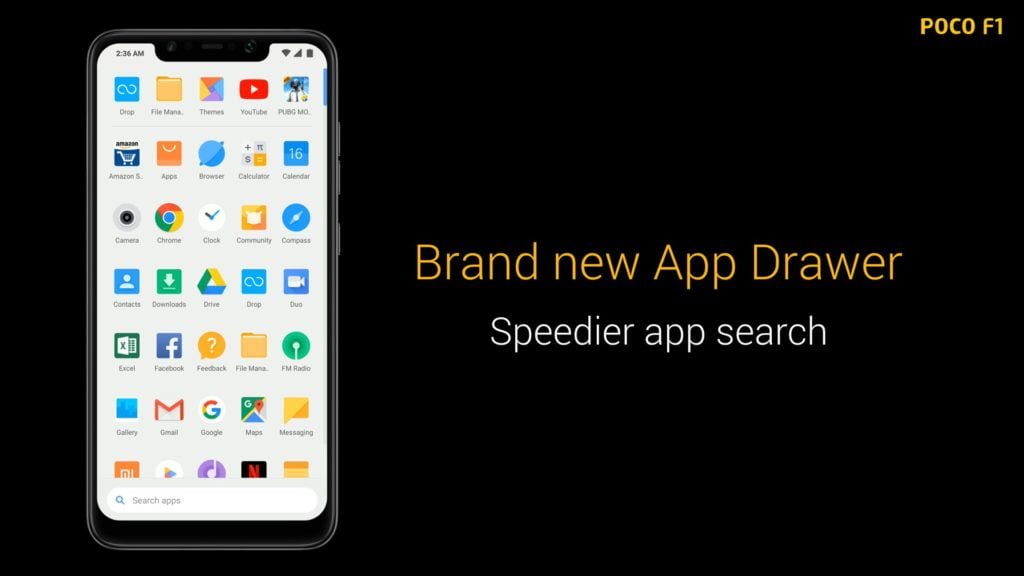
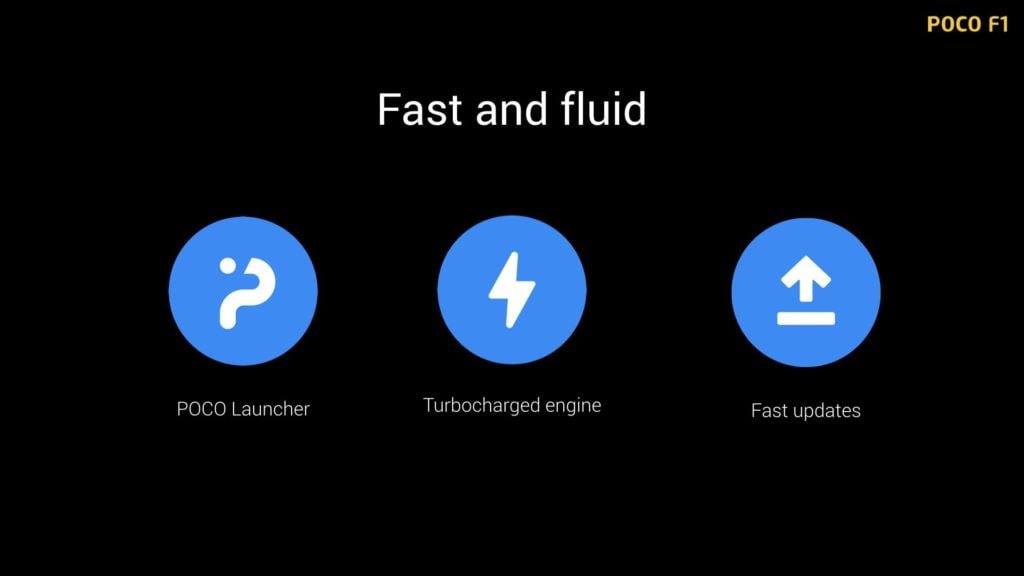
The major difference in the interface of the two phones is between the Android skin. The two phones diverge from one another despite branching out from the same roots. Even in this area, the Poco F1’s UI offers a better choice for the users given its clean interface and much more likeable app drawer. The app drawer is part of the Poco Launcher which has also been launched recently on the Google Play Store. This new app drawer brings onboard better app sorting based on the colour of icons or categories. There is also the ability to hide apps. Further, the MIUI for Poco also cuts down on bloatware substantially, which otherwise comes as a part of the standard MIUI.
User Experience
Undoubtedly, the MIUI for Poco is not a UI with just a prettier face and same primary offerings. Instead, this MIUI for Poco offers a better experience as well, thanks to its “Turbocharged Engine” which according to the company’s claims, notches up the speed of app launch by as much as 25%. In the new MIUI for Poco, the company has also done away with some of the unnecessary animations. Many might of the view that the animations do not match the level of OnePlus’ OxygenOS, however, it is still an improvement over the previous standard MIUI.

Updates
The users of MIUI have been troubled by late updates for their phones. However, since the shaping of MIUI takes a lot of time, and top it up with the time for developing new features, the MIUI lags behind when it comes to the latest Android updates. However, things are expected to change for MIUI for Poco as the company has promised that it would launch quarterly updates for the Pocophone. In addition to that, the brand has also claimed that it will be releasing an Android Pie update this year only.
Kernel Source
Xiaomi has been known to be an erratic company when it comes to releasing Kernel source codes. It’s worth noting that in developers communities and amongst programmers, kernel source codes become a big deal especially with Xiaomi being a big brand in India and China. These codes are vital for the development of custom ROMs and custom Kernels which can be used to optimise the performance of a smartphone further. However, after being threatened by the dev community over the violation of General Public License v2 (GPLv2), Xiaomi has promised to release the Kernel source within three months after the launch of the new device.
However, things have been fast in case of Poco, where the Kernel source was released only after a week of the launch. That being said, the Poco Kernel source will now be usable by the dev community to develop ROMs which would better utilise the hardware capabilities, and this development could go on long after the company stops pushing updates for the Pocophone.
Verdict
Since there is no set parameter to compare the UI and UX of these two Android skins, we would say that it is all about personal preferences while choosing a UI. For people who have used MIUI before and want to have a fresh look with an updated MIUI, the Poco F1 might be a good choice. However, for people who would like to see stock Android experience with no bloatware whatsoever, the Xiaomi Mi A2 makes up for a good buy.
Some people read for free. A few choose to support. If you found TelecomTalk useful, you can help keep us running.
 Support Telecomtalk