Support Telecomtalk







Andrew Bonwick
Vice President of Product Development at Relm Insurance

Madhav Sheth
CEO of Ai+ Smartphone

Stephen Rose
CEO Render Networks




Once upon a time, BlackBerry was a synonym for smartphones. The device used to be a phenomenon among the corporates and BBM (BlackBerry Messenger) was an eye-candy applications for both masses and classes. But BlackBerry failed to keep up with the changing times and lost the game. iPhones and Android gripped the market and left a skimpy space for others to pass in. BlackBerry is now making a revengeful comeback with its latest smartphone named Passport, which is carrying a heavy load of expectations to bring back the lost charm of the company.
- Make Telecom Talk My Trusted Source



The BlackBerry Passport is a 4.5-inch square-shaped smartphone. it is BlackBerry’s first big release over a period of two years. The square screen is deliberately crafted with a QWERTY keyboard in order to woo corporate and bureaucrat consumers. The device was launched simultaneously in Dubai, London and Toronto.

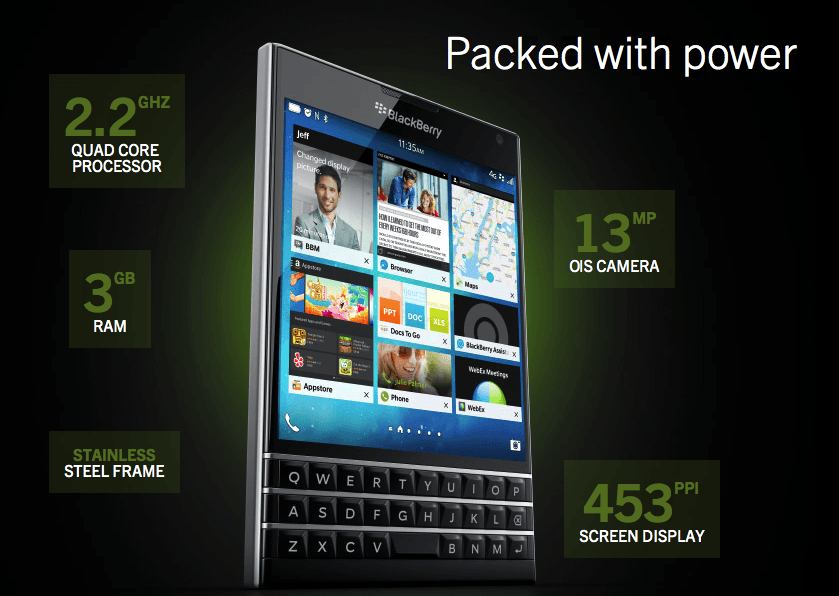
The Passport bears an excellent display resolution of 1440×1440 with a pixel density of 453 ppi. It also features 10-point multi-touch and Corning Gorilla Glass 3 protection. The processing abilities of the smartphone are managed by a 2.26 GHz quad-core Snapdragon 800 processor coupled with 3GB of RAM. It has an internal storage capacity is 32GB which is further expandable by up to additional 128GB. The phone also features NFC payment and file transfer. The Passport features a 13-megapixel rear camera and a 2-megapixel front camera. The phone is backed by a massive 3450mAh battery which can provide more than enough backup.
Blackberry emphasises that the physical QWERTY keyboard provides consumers with more accurate typing and the one offered in the Passport is touch-enabled. The keyboard is responsive to touch which facilitates in scrolling down the web pages, flick to type or slide along in order to move the cursor.