Support Telecomtalk







Andrew Bonwick
Vice President of Product Development at Relm Insurance

Madhav Sheth
CEO of Ai+ Smartphone

Stephen Rose
CEO Render Networks




For years, a small but persistent issue has quietly frustrated millions of prepaid mobile users in India the 28 day recharge cycle. While the telecom sector has moved on to conversations around 5G, fiber, and ARPU growth, Vodafone Idea (Vi) has gone back to the basics. Its latest offer isn’t about faster speeds or more data. It’s about something far simpler: validity and fixing the gap that has long existed between recharge plans and the actual calendar month.
- Make Telecom Talk My Trusted Source



The Problem Everyone Just Lived With
For most prepaid users on unlimited voice packs, plans typically last 28 days. But the problem is obvious most months have 30 or 31 days. That forces users, especially those relying only on voice services, to recharge twice in a month, or worse, face a brief service disruption.



Also Read: Vodafone Idea Backs 2G Users, First in India to Do So
This might not sound like a big deal for someone on a high-end smartphone, but for 2G users, daily wage workers, and people in rural areas, it adds up. It’s extra money, extra effort, and often, unnecessary stress.
Vodafone Idea’s Quiet Fix: 2 Extra Days, Every Time
Last week, Vodafone Idea launched a simple fix. Under its Vi Guarantee programme, users on 2G handsets who recharge with voice packs of Rs 199 and above will now get 2 extra days of validity each time.
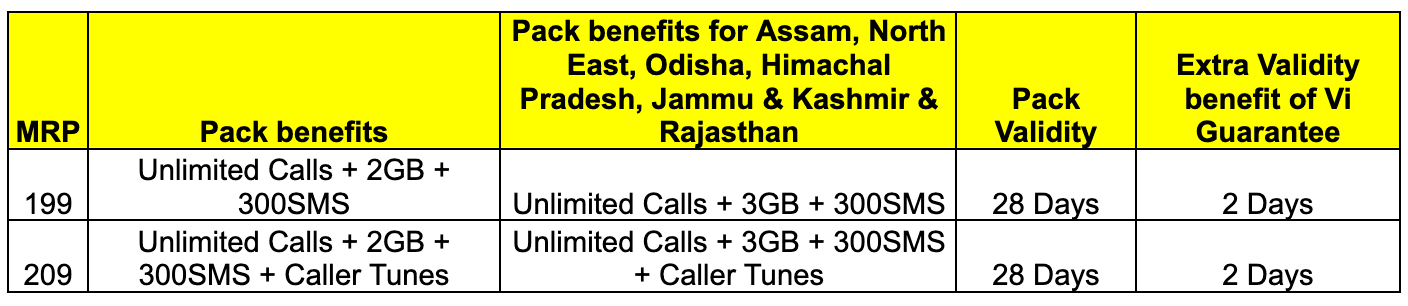
That’s 30 days instead of 28 matching the monthly calendar and eliminating the need for that extra recharge every few months.
Do this every month, and a user effectively gets 24 extra days of service in a year, without paying anything more..