India’s Bioeconomy Surges From USD 10 Billion to USD 195 Billion in a Decade, Poised for Global Leadership

Jitendra Singh highlights rapid growth, policy push, and BIRAC’s role in driving innovation and biotech entrepreneurship.

Most readers read for free. A small group from the TelecomTalk community keeps this going. Support only if our work adds value for you.

Highlights

  • India’s bioeconomy grew from USD 10 billion in 2014 to USD 195 billion in 2025.
  • Target set at USD 300 billion bioeconomy by 2030.
  • Rs 1 lakh crore RDI Fund to support scaling and commercialisation.

Follow Us

India’s Bioeconomy Surges From USD 10 Billion to USD 195 Billion in a Decade
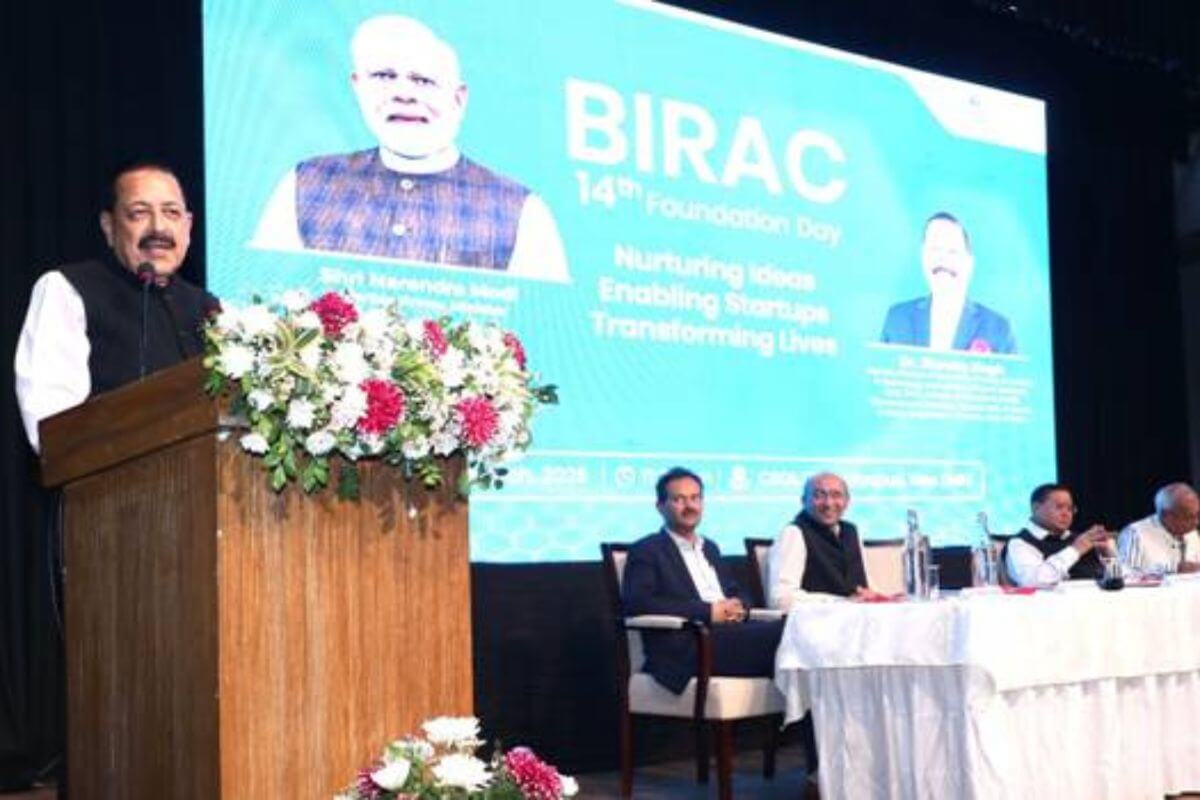
India’s bioeconomy has witnessed a remarkable expansion over the past decade, growing from nearly USD 10 billion in 2014 to over USD 195 billion in 2025, Union Minister of State (Independent Charge) for Science & Technology, Earth Sciences, and MoS PMO, Personnel, Public Grievances, Pensions, Atomic Energy and Space, Jitendra Singh, said on Thursday. The sector recorded an annual growth of around 17–18 per cent in the past year alone, underlining India’s emergence as a significant global biotechnology hub, according to an official statement from the Ministry of Science and Technology dated March 19, 2026.

Biotechnology Emerges as Key Growth Driver

Addressing the 14th Foundation Day celebrations of the Biotechnology Industry Research Assistance Council (BIRAC) in New Delhi, the Minister highlighted biotechnology as a central pillar of India’s future growth, with applications spanning healthcare, agriculture, climate solutions and sustainable manufacturing. He noted that the country is on track to achieve a USD 300 billion bioeconomy by 2030, supported by a strong base of scientists, entrepreneurs and startups.


Singh added that BIRAC has played a crucial role in connecting research with industry and enabling the transition of ideas from laboratories into market-ready solutions. He said the agency has significantly contributed to the growth of India’s biotechnology ecosystem through funding, incubation and mentorship, leading to affordable healthcare solutions, job creation and enhanced industry-academia collaboration.

BioE3 Policy to Boost Sustainable Innovation

Highlighting policy initiatives, the minister referred to the BioE3 Policy—Biotechnology for Economy, Environment and Employment—as a major step towards promoting sustainable biomanufacturing and bio-based industries.

He said the policy will promote innovation in areas such as precision biotherapeutics, smart proteins, climate-resilient agriculture, bio-based chemicals, and carbon capture technologies.

RDI Fund to Accelerate Commercialisation

On the financial front, he pointed to the Rs 1 lakh crore Research, Development and Innovation (RDI) Fund, under which BIRAC has been entrusted with a key role in supporting biotechnology ventures and facilitating scale-up and commercialisation of innovations. He also added that BIRAC is facilitating this transformation by building shared infrastructure such as biofoundries, Bio-AI hubs and advanced biomanufacturing platforms.


India’s Biotech Startup Ecosystem Expands Rapidly

According to the India Bioeconomy Report 2026 released at the event, the sector now contributes approximately 4.8 per cent to the national GDP and has more than doubled since 2020. The reports—the India Bioeconomy Report (IBER) 2026 and the BIRAC Impact Report—highlight that India’s bioeconomy reached USD 195.3 billion in 2025. India currently hosts over 11,800 biotech startups, reflecting the sector’s rapid expansion and growing entrepreneurial base.

Focus on Inclusive Growth and Emerging Talent

According to the official release, the BIRAC Impact Report showcases how targeted funding, incubation and mentorship have enabled industry-academia collaboration and led to the development of affordable healthcare solutions, sustainable technologies, and job creation. It reflects measurable outcomes, including the commercialisation of products, the expansion of startups and wider societal impact.

Emphasising inclusive growth, Singh called for nurturing young scientific talent, particularly from tier-2 and tier-3 cities, and highlighted initiatives aimed at supporting students, researchers and women entrepreneurs. He urged continued collaboration among scientists, industry stakeholders and policymakers to translate innovation into large-scale impact and drive India towards becoming a self-reliant and developed nation.

Most readers read for free. A small group from the TelecomTalk community keeps this going. Support only if our work adds value for you.

Reported By

Kirpa B is passionate about the latest advancements in Artificial Intelligence technologies and has a keen interest in telecom. In her free time, she enjoys gardening or diving into insightful articles on AI.

Recent Comments

Faraz :

Unlimited Non-Stop Hero on 100 Mbps vs on 10 Mbps is not same. The name is GigaNet but never reached…

Tariff Hike 2026: Vodafone Idea Cuts Benefits and Raises Prices…

Faraz :

That might happen now only because of war (increase cost of energy to keep running infra towers/data centres etc) as…

Tariff Hike 2026: Vodafone Idea Cuts Benefits and Raises Prices…

lbp :

299 1gb/day 28 days still available in unlimited section TN for now, after next tariff hike VI may offer cheap…

Tariff Hike 2026: Vodafone Idea Cuts Benefits and Raises Prices…

Rhishav :

Airtel first introduced this in March 2026. Positive initiative from Airtel.

Airtel Starts Warning Users During Calls for OTP Fraud

TheAndroidFreak :

Not by 2029. By 2032. Vi might use Tejas for 5G. That's why spectrum/fiber sharing between Vi and BSNL. BSNL…

Tejas Networks Did Not Have a Great 2026

Load More
Subscribe
Notify of
guest
0 Comments
Inline Feedbacks
View all comments