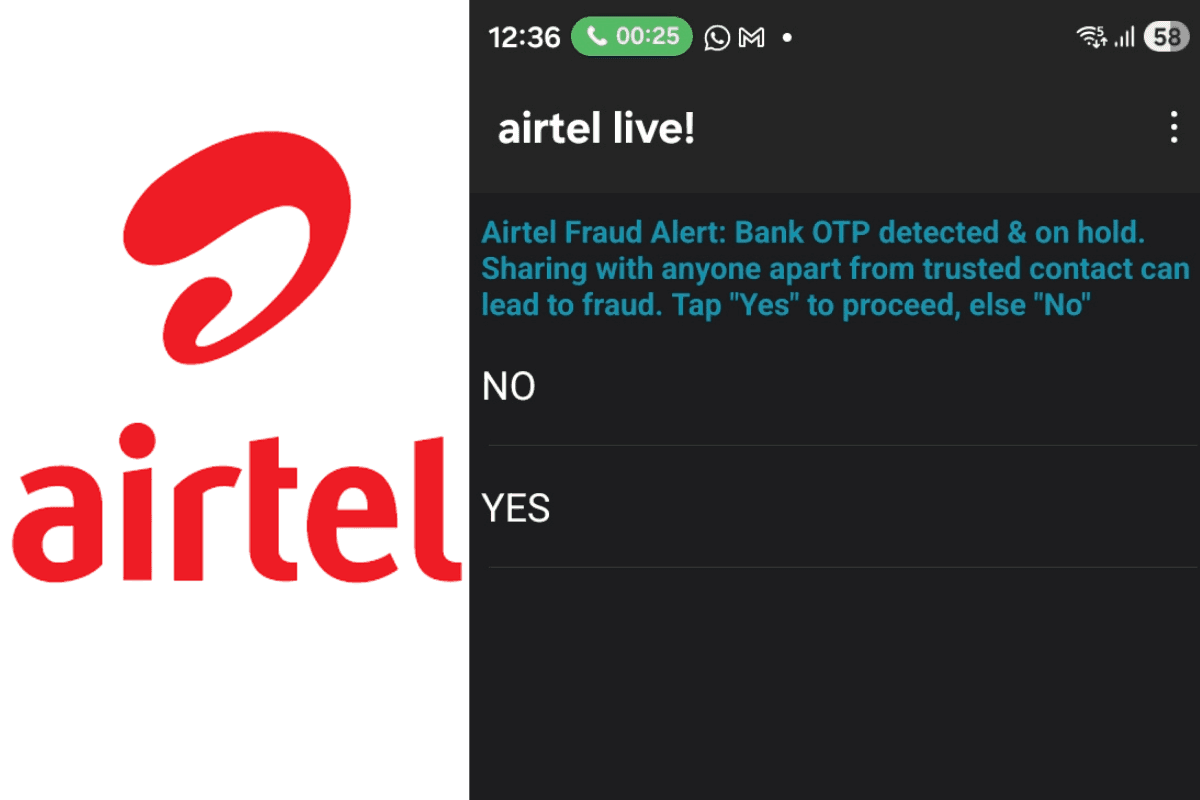
At a time when financial scams are increasingly being executed over voice calls, this move by Bharti Airtel focuses on addressing the problem at the exact moment it occurs. Unlike traditional spam detection systems that alert users before or after a suspicious interaction, this feature intervenes during the call itself.
This approach shifts the focus from passive alerts to active intervention. Instead of relying solely on users to identify suspicious behavior, the network itself plays a role in nudging the user at a critical moment.
Importantly, the feature does not block calls or take control away from the user. It simply adds a layer of awareness, allowing users to make more informed decisions while they are still engaged in the interaction.
The Real Impact on Users
Most digital fraud cases in India do not happen because users are unaware of scams. Instead, they occur because scammers create a sense of urgency during live conversations. Victims are often pressured into sharing OTPs or other confidential details within seconds.
Also Read: Bharti Airtel introduces AI alert to curb OTP-led banking fraud during calls
By introducing an alert during this exact moment, Airtel is attempting to break that chain of urgency even a small pause can be enough for users to rethink their actions and avoid making a costly mistake.
This is where the feature stands out it is not just about identifying fraudulent calls but about reducing the chances of user error during high-pressure situations.
A Growing Fraud Landscape
India has seen a steady rise in digital fraud incidents over the past few years, with voice-based scams playing a significant role. Fraudsters often impersonate bank officials, customer support executives, or even law enforcement authorities to gain trust and extract sensitive information.
In many cases, the scam is successful because the victim is caught off guard. The combination of urgency and perceived authority makes it difficult for users to think clearly in the moment.
Features like Airtel’s in-call alert are designed to counter exactly this pattern by introducing a moment of friction, the network can help reduce the success rate of such scams.
What Airtel Can Do Next
While the feature is a strong step forward, its effectiveness will depend on how widely it can be understood and adopted by users across different regions. One area where it can improve further is language accessibility.
India is a diverse market with users speaking multiple regional languages. Offering these alerts in regional languages alongside English could significantly increase their impact, especially among users who may not be fully comfortable with English.
Making the alert more inclusive would ensure that the message is clearly understood by a wider audience, further strengthening its role as a protective feature.
The Gap Between Airtel and Competitors
What also stands out is the broader industry context while telecom operators in India have largely focused on pricing, data benefits, and network expansion, fewer efforts have been visible in the area of real-time user protection.
Also Read: Airtel’s Anti-Fraud Solution Reduces Financial Losses for Customers by Nearly 69 Percent: Study
Airtel’s move signals a shift in priorities it highlights how networks can evolve beyond connectivity and start playing a more active role in safeguarding users.
At present, similar real-time in-call interventions are not widely seen across other operators like Reliance Jio, Vi, or BSNL. This puts Airtel in a relatively stronger position when it comes to building a narrative around user safety.
The Future of Network-Level Protection
As digital fraud continues to evolve, the expectations from telecom networks are also likely to change. Users may begin to value safety features alongside traditional metrics like speed and coverage. In that context, small features like in-call OTP alerts could end up playing a much larger role in shaping user perception and trust.
Airtel’s latest move may appear incremental at first, but it reflects a broader shift in how telecom networks can contribute to digital safety. If executed well and expanded further, such features could become a standard part of the mobile experience in the coming years.
Every article you read here is the result of time, research, and effort. If you feel it adds value, you can support TelecomTalk.
 Support Telecomtalk