At a time when India’s digital ambitions are being fuelled by government initiatives, telecom infrastructure expansion, and growing mobile first habits, it might seem counterintuitive to talk about a plan that offers no data at all. But for a large section of Indian mobile users, data isn’t the daily need voice is.
India has over 1.1 billion mobile connections, but not all of them are chasing YouTube, Instagram Reels, or OTT content not only that a sizeable chunk nearly 25–30% of active users are must be on basic or semi smartphones. For them, voice calling remains the core utility.
This group includes senior citizens, rural users, offline first segments, and most notably dual SIM users. In many households, one SIM is often used for data (typically Jio or Airtel or VI or BSNL), while the second is kept for voice-only.
The problem? Most recharge packs now bundle voice with a mandatory data quota. Even when data is not used, the user ends up paying for it. The result is recharge fatigue forced spending on services that do not match the user’s behaviour.

Vi has responded with a focused product line voice only recharge plans with long validity.
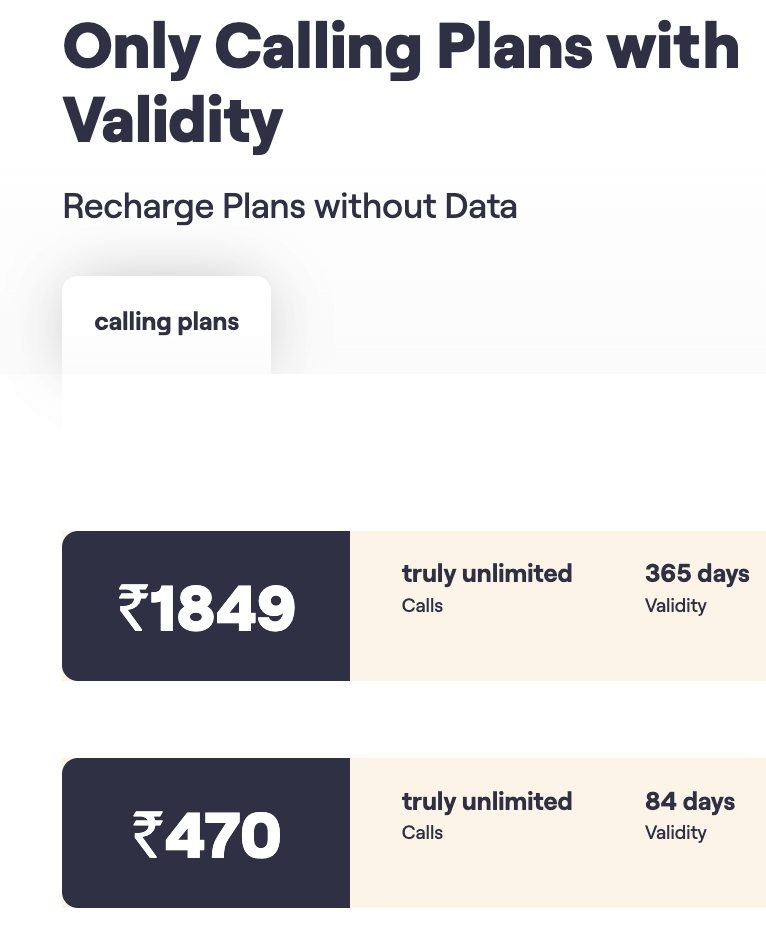
Rs 1849 plan: Unlimited voice calling for 365 days
Rs 470 plan: Unlimited calls for 84 days
These are not promotional gimmicks, nor short-term offers. These are strategically positioned plans designed for long-term usage.
Why This Strategy Makes Sense
At its core, this is a retention strategy. Vi’s subscriber base has been under pressure for years, with users porting out or dropping inactive SIMs. By offering something that directly appeals to low-ARPU but loyal customers, Vi is creating a buffer against churn.
It’s also a margin play. By removing data from the bundle, the operator cuts down on bandwidth usage costs while continuing to monetize voice services an area where it still has strong infrastructure in several circles.
For users, the math is clear. If one SIM is already taking care of data, why pay for duplicate data elsewhere? Vi’s plans allow such users to retain their secondary number without spending Rs 250 Rs 300 every month.
The Dual SIM Behaviour Factor
India remains a strong dual SIM market, especially in price sensitive segments. With competitive pricing and network specific offers, many users keep two active numbers one for data and OTT bundles, and another for reliable voice connectivity.
Also Read: Tariff Hikes Unable to Put a Dent on Dual SIM Culture in India
Many users do not want to give up that number which is linked to banks, social contacts, or family. But until now, recharging that second SIM felt like a burden.
Vi’s new plans solve this silently growing problem
This is not just about user retention or reducing churn. It’s also about user empathy. In a telecom industry that increasingly designs for the metro elite, Vi is designing for the average Indian someone who may not have a smartphone, someone who lives in a low connectivity village, someone whose idea of digital India begins and ends with a call.
Vi’s approach offers digital inclusion without force fitting data. Instead of pushing bundles users don’t need, it offers control, choice, and value.
Challenges Still Exist
That said, it’s not a silver bullet. Vi still faces challenges on several fronts from delayed fundraising and AGR dues, to limited 5G coverage in some circles. Voice-only plans won’t transform revenue overnight. But what they do offer is brand goodwill and user stickiness both critical in a crowded market.
We believe this voice first strategy is a low risk, high loyalty play. It won’t move the ARPU needle significantly, but it will help Vi protect its base.
Moreover, while Jio and Airtel are racing towards premiumization bundling Netflix, Amazon Prime Vi is playing to its strength understanding underserved segments.
Long-Term Impact: More Than Just Voice
Interestingly, Vi’s voice only users could eventually become its data adopters of tomorrow. By retaining these customers, Vi keeps the door open for future upgrades to 4G smartphones, family plans, or bundled services.
In that sense, voice only is not a step back it’s a measured pause to let customers evolve at their own pace.
This strategy also fits well with Vi’s larger ecosystem approach. The company has been investing in content partnerships (Vi Movies & TV), prepaid innovations, and local-level retail engagement. Voice only packs serve as a foundation on which deeper engagement can be built slowly, but meaningfully.
At a time when every telco is chasing high value users and urban data consumption, Vi is focusing on the other India the one that doesn’t stream but still wants to stay connected.
Not everyone needs data. Not everyone wants to pay Rs 300 a month just to stay reachable. Vi knows that. And now, Vi is acting on it.
In a business that often chases speed, flash, and volume, this quiet understanding of user behaviour might just be Vi’s smartest move yet.
Every article you read here is the result of time, research, and effort. If you feel it adds value, you can support TelecomTalk.
 Support Telecomtalk