 Support Telecomtalk







Andrew Bonwick
Vice President of Product Development at Relm Insurance

Madhav Sheth
CEO of Ai+ Smartphone

Varun Kashyap & Sridevi Reddy
Co-Founders, Zithara.ai
Transforming Indian Offline Retail and Customer Engagement Using AI


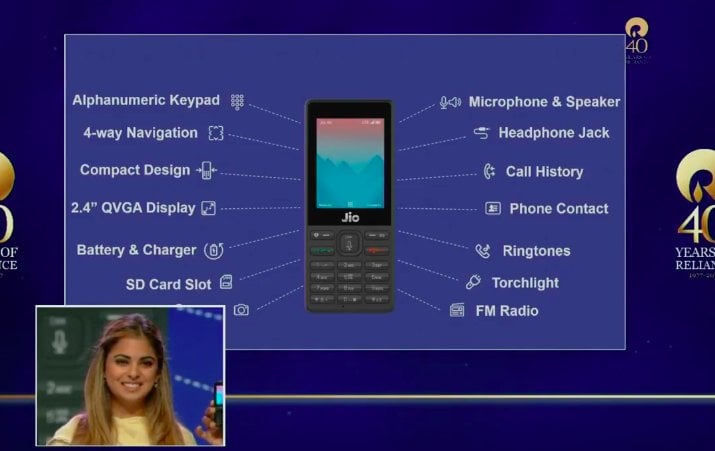
Reliance JioPhone is now up for beta testing for Reliance employees and some other people. The feature phone will be up for pre-booking from August 24, and the first sale will take place in the first week of September. Before the pre-booking itself, India’ second largest telecom player, Vodafone wrote a letter to telecom commission claiming that the ‘effective free phone’ will further dent the revenues of telecom operators.
- Make Telecom Talk My Trusted Source



“This is likely to cause further erosion in revenue for existing operators,” the company in a letter to the Telecom Commission Member (Finance) Anuradha Mitra.
“…the new operator continues to aggressively under- price its services, including announcing the launch of ‘Effective Zero Price Feature Phone’ with unlimited voice.”
For the unaware, Reliance Jio Infocomm’s Chairman, Mukesh Ambani, last month announced the JioPhone at the company’s AGM meeting. Effectively priced at Rs. 0, RJIL would collect a fully refundable amount of Rs. 1,500 per unit.
Vodafone also claimed that it has reported a constant decline in its revenues from telecom services, and has even recorded decline of 3.42% in the quarter ended June 2017. The operator also called for reducing the interest rate applied for deferred spectrum payments.
“…a reduction in the interest rate applied for deferred spectrum payments is necessary to reduce the burden on operators. Hence, we have requested a reduction from 10 per cent to G Sec rate of 6.25 per cent – 6.5 per cent on deferred payment,” said Vodafone.
Vodafone also highlighted that the revenue share with the government imposes an enormous burden on telecom operators even though companies purchase spectrum at market price.
Vodafone also “requested DoT to consider the recommendation of the Telecom Regulatory Authority of India (TRAI) for reducing Universal Service Obligation Fund from 5% to 3% as private operators have already rolled out services in rural areas and current call termination rates are very low,” says a PTI report.