NVIDIA RTX Spark Wants to Turn Your Windows PC Into a Personal AI Assistant
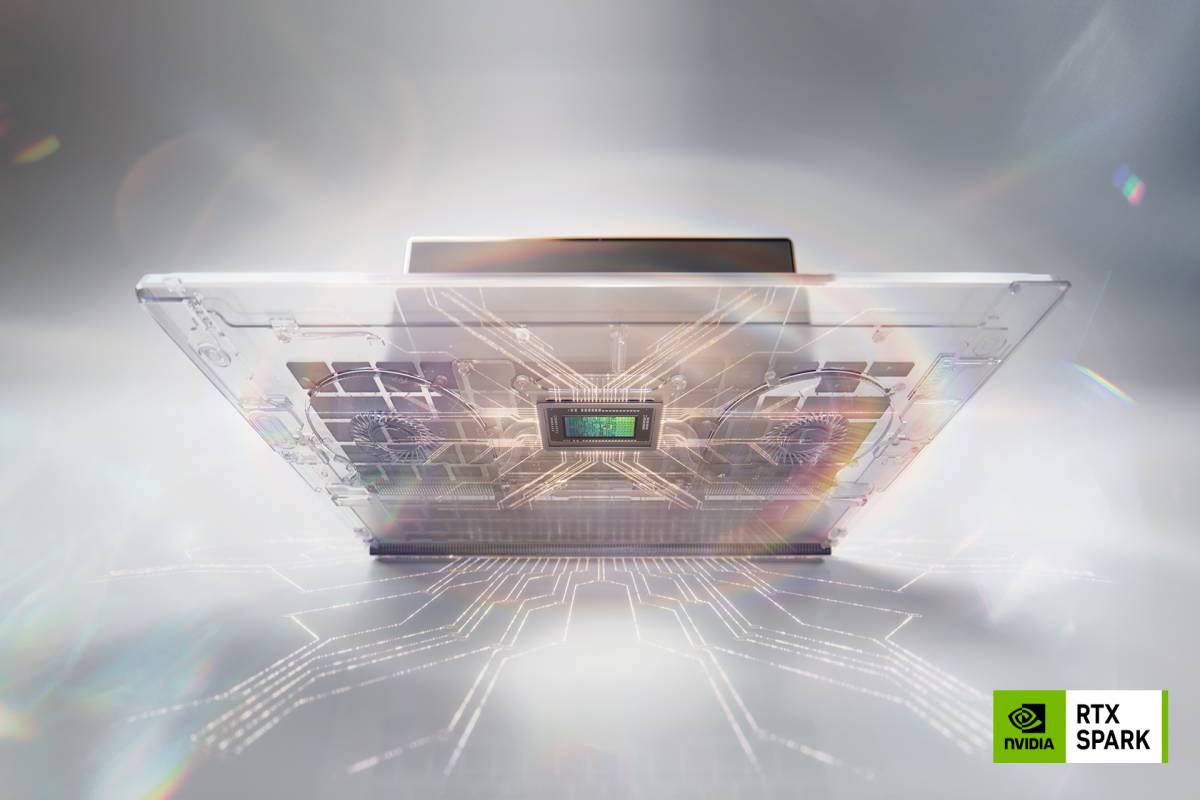
Announced at NVIDIA GTC Taipei, RTX Spark is a new superchip designed for Windows PCs that combines AI processing, graphics performance and energy efficiency in a single platform.
NVIDIA and Microsoft are betting that the next major evolution of the personal computer will be driven by AI agents rather than traditional applications.
With the introduction of RTX Spark, the companies are bringing together dedicated AI hardware, Windows-native agent capabilities and NVIDIA's broader software ecosystem.
According to NVIDIA, users will be able to run large language models with up to 120 billion parameters and context windows reaching one million tokens.
Highlights
NVIDIA and Microsoft are betting that the next major evolution of the personal computer will be driven by AI agents rather than traditional applications.
With the introduction of RTX Spark, the companies are bringing together dedicated AI hardware, Windows-native agent capabilities and NVIDIA's broader software ecosystem.
According to NVIDIA, users will be able to run large language models with up to 120 billion parameters and context windows reaching one million tokens.
NVIDIA and Microsoft are betting that the next major evolution of the personal computer will be driven by AI agents rather than traditional applications. With the introduction of RTX Spark, the companies are bringing together dedicated AI hardware, Windows-native agent capabilities and NVIDIA’s broader software ecosystem in an effort to create a new category of AI-first PCs.
Make Telecom Talk My Trusted Source
Key Highlights
NVIDIA and Microsoft have introduced RTX Spark, a new AI-focused Windows platform designed to run advanced AI agents directly on PCs.
RTX Spark combines an NVIDIA Blackwell GPU with a 20-core Grace CPU and can deliver up to one petaflop of AI computing performance.
The platform is designed to support large AI models locally, reducing dependence on cloud infrastructure while improving privacy and control.
NVIDIA and Microsoft are building a Windows-native AI agent ecosystem that can automate tasks, search files, generate content, and assist users across applications.
Major PC makers including ASUS, Dell Technologies, HP Inc., Lenovo, Microsoft, and MSI are expected to launch RTX Spark-powered devices later this year.
Announced at NVIDIA GTC Taipei, RTX Spark is a new superchip designed for Windows PCs that combines AI processing, graphics performance and energy efficiency in a single platform. NVIDIA says the technology is designed to help PCs move beyond simply launching applications and towards understanding requests, completing tasks and assisting users through AI-powered agents that can run directly on the device.
The announcement reflects a broader shift taking place across the technology industry as companies increasingly look at ways to make AI a more integrated part of everyday computing rather than something accessed solely through cloud services.
What Is NVIDIA RTX Spark?
At the heart of RTX Spark is a custom architecture that combines an NVIDIA Blackwell RTX GPU featuring 6,144 CUDA cores with a 20-core NVIDIA Grace CPU. The two chips are connected using NVIDIA’s NVLink-C2C interconnect technology, allowing them to work together more efficiently.
NVIDIA says RTX Spark can deliver up to one petaflop of AI computing performance while supporting up to 128GB of unified memory. The company believes this combination will enable demanding AI workloads to run locally on Windows devices without relying heavily on external cloud infrastructure.
According to NVIDIA, users will be able to run large language models with up to 120 billion parameters and context windows reaching one million tokens. The platform is also designed to handle professional creative workloads, including rendering massive 3D projects, generating AI-powered video and editing high-resolution content.
MediaTek collaborated with NVIDIA on the CPU design, contributing to the power efficiency and connectivity capabilities of the new platform.
Bringing AI Agents Directly to Windows
A key part of the RTX Spark vision centres around personal AI agents while AI agents have become increasingly capable, many of them currently depend on cloud-based services. NVIDIA argues that concerns around privacy, security and user control have slowed wider adoption of these tools.
To address this, NVIDIA and Microsoft are collaborating on a Windows-native environment for AI agents. The partnership includes new Windows security and containment capabilities alongside NVIDIA OpenShell, a runtime designed to help users define what agents can and cannot do on their devices.
OpenShell can also intelligently route requests between local and cloud-based AI models while helping protect sensitive personal information. The companies envision a future where AI agents can work across multiple applications, search local files, automate workflows, generate content and assist users with everyday computing tasks directly from their Windows PCs.
The platform is already attracting interest from AI developers, with projects such as OpenClaw and Hermes Agent planning support for the new Windows-based environment.
Designed for Creators, Developers and Gamers
Beyond AI agents, RTX Spark also brings NVIDIA’s wider technology stack to Windows devices this includes CUDA, RTX, DLSS, TensorRT, OptiX, Reflex and G-SYNC technologies that are already widely used across creative, AI and gaming applications.
For content creators, NVIDIA says RTX Spark can render ultra-large 3D scenes exceeding 90GB, edit 12K video and accelerate AI-assisted creative workflows. The company is also working with Adobe to optimise Photoshop and Premiere for the new platform, with claims of up to two times faster AI and graphics performance in certain workloads.
Adobe is redesigning parts of its creative software to take advantage of RTX Spark’s unified memory architecture, Blackwell GPU and TensorRT software stack. Future versions of Photoshop and Premiere are also expected to incorporate AI-agent capabilities that can assist users during creative workflows.
Gamers are another target audience. NVIDIA says RTX Spark systems will support modern gaming features such as ray tracing, DLSS and Reflex while delivering AAA gaming experiences at 1440p resolution and more than 100 frames per second.
What This Could Mean for the Future of PCs
Several major PC manufacturers have already committed to building RTX Spark-powered systems, including ASUS, Dell, HP, Lenovo, Microsoft Surface and MSI. NVIDIA says slim laptops and compact desktop PCs based on the platform will be available later this year, with Acer and GIGABYTE expected to introduce products as well.
It remains to be seen whether RTX Spark will fundamentally reshape the PC market, but the announcement provides a clear indication of where both NVIDIA and Microsoft believe personal computing is headed. Rather than focusing solely on faster processors or better graphics, the emphasis is increasingly shifting towards intelligent systems that can understand context, assist with tasks and operate more like digital teammates.
If that vision becomes reality, future Windows PCs may spend less time waiting for commands and more time helping users get work done. For NVIDIA and Microsoft, RTX Spark represents an early step towards that future.
Every article you read here is the result of time, research, and effort. If you feel it adds value, you can support TelecomTalk.
FAQs
What is NVIDIA RTX Spark?
RTX Spark is a new AI-first computing platform from NVIDIA that combines a Blackwell RTX GPU and Grace CPU to enable advanced AI workloads and AI agents on Windows PCs.
What makes RTX Spark different from traditional PCs?
Unlike traditional PCs that primarily run applications, RTX Spark is designed to support AI agents that can understand requests, automate tasks, assist with workflows, and interact across multiple applications.
How powerful is the RTX Spark platform?
According to NVIDIA, RTX Spark can deliver up to one petaflop of AI performance, support up to 128GB of unified memory, and run large language models with up to 120 billion parameters.
Why are NVIDIA and Microsoft focusing on local AI processing?
Running AI models locally can improve privacy, security, responsiveness, and user control while reducing reliance on cloud-based AI services.
Which users could benefit most from RTX Spark-powered PCs?
Content creators, developers, AI researchers, professionals, and gamers could benefit from RTX Spark thanks to its support for AI workloads, creative applications, productivity tools, and high-performance gaming features.
 Support Telecomtalk