 Support Telecomtalk







Andrew Bonwick
Vice President of Product Development at Relm Insurance

Madhav Sheth
CEO of Ai+ Smartphone

Varun Kashyap & Sridevi Reddy
Co-Founders, Zithara.ai
Transforming Indian Offline Retail and Customer Engagement Using AI


After the introduction of the new pricing framework by the Telecom Regulatory Authority of India (Trai), the DTH industry has been facing limelight as it has never seen before. The consumers started noticing details in the industry which were previously the victim of oblivious eyes. As such, the consumers also started gaining more insights about what they were paying for. Terms like pay-channels, content prices, free to air channels, network capacity fees became commonplace after the new tariff regime came into effect. Now, although almost all subscribers in the country own either a cable TV subscription or a DTH subscription, there is a tiny group of people who understands what sets a DTH connection apart from other forms of TV connection. But, look no further as this piece will tell you all about it.
- Make Telecom Talk My Trusted Source



DTH Connection Working and Advantages
Now you must be pretty aware that there are quite a few types of subscription options available in the country in case you want to watch TV. Before the digitisation rule came into place, there also used to be the analogue cable method, but now that has been converted to DAS cable subscription which depends on digital relay of signals instead of an analogue relay. To understand, why DTH differs from the other services and why it is the most popular form of connection for DTH subscribers it is imperative to know how the service operates.
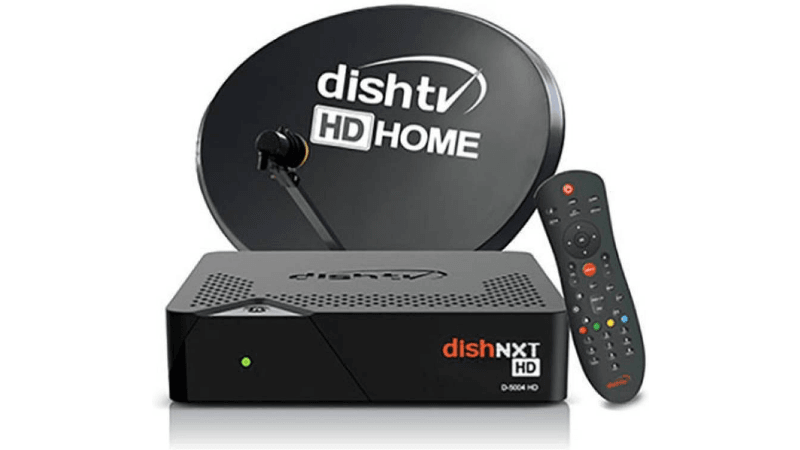
The DTH connection uses a small outdoor dish antenna that is pointed towards the satellite. The customer, in turn, is required to buy Customer Premises Equipment (CPE) from the DTH provider of their choice. The CPE usually consists of the dish antenna, remote and the set-top box. This is where the advantage of DTH factors in, since there is no wired connection from a provider source, a DTH connection can easily be availed even in the remotest areas. This is in contrast to the other TV service options like HITS, standard cable TV subscription or even the technologically powered IPTV (Internet Protocol TV) which avails a TV connection over a broadband line.