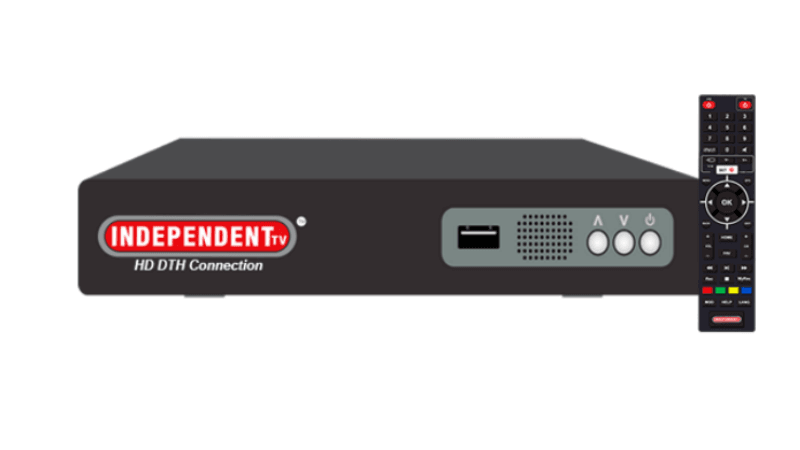
Only a few months back, the regulatory authority of India which governs the broadcasting industry flipped the sector over with the new rules. The latest pricing framework introduced by the Telecom Regulatory Authority of India (Trai) brought significant changes to the way how TV services were being priced and distributed. Although there was an apparent change in the prices and subscriptions costs, some significant changes took over on the business side as well. Even viewership numbers changed post the new Trai regime. However, there are still some fundamental questions which are floating in the minds of the customers as they decide to switch their operator from cable to DTH or vice versa amidst new pricing and service norms. One such question is of DTH service vs standard cable TV service. Read this piece to understand the differences between these services.
It is worth noting that amongst the two, the standard cable TV service was the first one to arrive and could be considered the equivalent of a landline in terms of the broadcasting. But, with that being said, the cable TV service has its own set of perks. The first difference comes in the pricing of course as the standard cable TV connection costs a lot less as compared to the installation of DTH since the latter involves the installation of set-top box (STB) and other ancillary services. Another perk which the cable TV subscribers enjoy is continued entertainment. While during heavy rains, DTH connections might be disturbed and could go through some trouble, cable TV connections don’t go through this problem, and even in bad weather, the subscribers can be assured of a continued stream of channels on their TV screen.
On the technical side of things, the difference between cable TV and DTH appears in the transmission methods of both, as the former still uses analogue transmission while the latter solely depends on digital transmission. However, courtesy of the new digitisation rules in India, even the cable operators have changed their ways to feed digital connections to the TV screens even though the fundamental transmission into the set-top box comes in the analogue form only. This also makes up for a difference in quality as DTH subscribers enjoy superior audio and video quality as compared to cable TV subscribers.
A handful of differences also exist between the two when it comes to service, as cable TV transmission sticks to broadcasting channels only, but over the years, DTH service has evolved to offer much more than that. Lately, a few DTH services also providing features like email, movies on demand and more. There is also the factor of remote availability since DTH depends on satellite as a medium to connect with the broadcaster, it can be subscribed to from even the most isolated locations, but that is not possible with cable TV as it requires the subscriber to be within the available range of the cable network. Lastly, there is the issue of service.
Now although there have been a few cases where the cable TV subscribers had to see mediocre service quality, in recent times, the availability and accessibility that the cable TV service is providing many options. For example, the cable TV service providers allowed the subscribers to fill up a physical form for channel selection, guiding them through the transition process and a lot more. These are somethings which the DTH providers have failed to do. On the other hand, over online or on call, the DTH service providers have got a robust service team which can answer questions and help you solve your queries.
If this article saved you time or helped you decide better, consider supporting our work.
 Support Telecomtalk