 Support Telecomtalk







Andrew Bonwick
Vice President of Product Development at Relm Insurance

Madhav Sheth
CEO of Ai+ Smartphone

Stephen Rose
CEO Render Networks



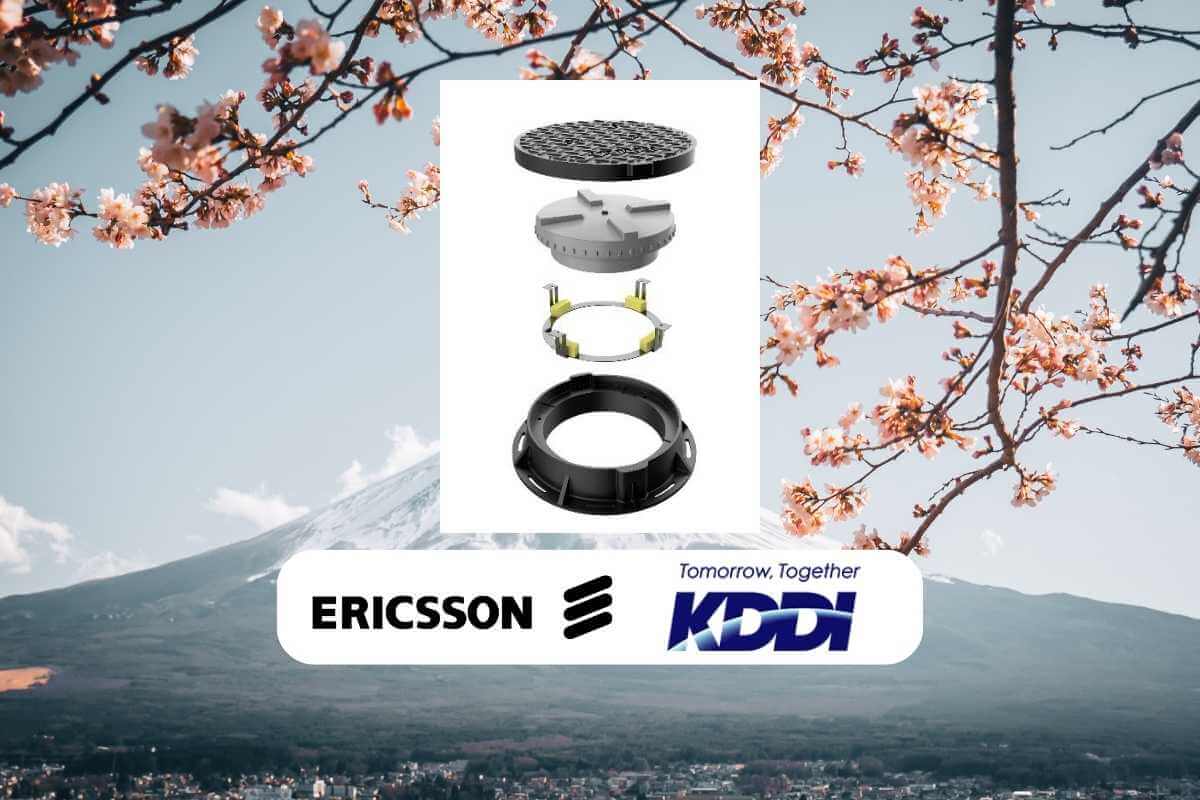
Ericsson, a global leader in telecommunications technology, has been selected by KDDI, one of Japan’s leading communication service providers, as a partner for Japan’s first-ever vault 5G base stations. This collaboration aims to revolutionise urban connectivity by deploying “manhole-shaped” base stations with sub-terrain antennas, offering an innovative solution for urban infrastructure deployment.
- Make Telecom Talk My Trusted Source
-

-


Also Read: KDDI Starts Deployment of 5G Open vRAN Sites in Japan
Addressing Infrastructure Deployment Challenges
The vault base stations developed by KDDI, in collaboration with Ericsson, offer a unique approach to address the challenges faced in the deployment of mobile communication infrastructure in Japan’s urban areas.
Traditionally, base stations have been installed on steel towers and rooftops in Japan, but limitations imposed on scenic areas have made it difficult to expand coverage while preserving the aesthetic appeal of the environment, according to Ericsson.
Regulatory Advancements for Vault Base Stations
To overcome these challenges, the Ministry of Internal Affairs and Communications (MIC) in Japan introduced radio wave protection guidelines for vault base stations in July 2021. This regulatory development paved the way for the construction and operation of underground base stations, opening up new possibilities for efficient infrastructure deployment.
Also Read: Ericsson Upgrades Its Private 5G Network Solution
Ericsson’s Sub-Terrain Antennas
Ericsson’s sub-terrain antennas play a key role in this innovative solution. The antennas are designed to be installed underground, leveraging existing assets such as optical fibre and electric power infrastructure.
This approach allows for the installation of landscape-friendly vault 5G base stations, minimizing visual impact and streamlining the permit process. By utilising confined spaces such as manholes, Ericsson’s antennas provide optimal radiating characteristics (MIMO) while being less susceptible to wind load.






























