Support Telecomtalk







Andrew Bonwick
Vice President of Product Development at Relm Insurance

Madhav Sheth
CEO of Ai+ Smartphone

Varun Kashyap & Sridevi Reddy
Co-Founders, Zithara.ai
Transforming Indian Offline Retail and Customer Engagement Using AI


We decided to test the so called Rev. B Wifi enabled data card by reliance called Pro 3. We got ourselves one for testing purpose in Mumbai circle. The sales person at the reliance gallery in south Mumbai handed us the data card after doing the first activating recharge and giving us the instructions for the tele verification. After the verification call the device was able to latch on to EvDO network and we were able to load up web pages.
- Make Telecom Talk My Trusted Source



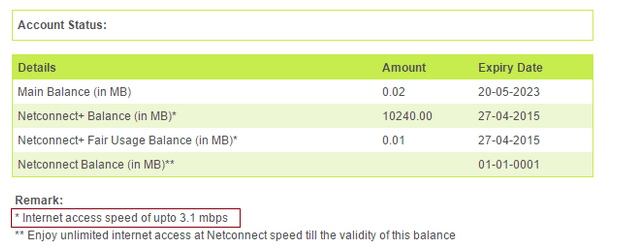
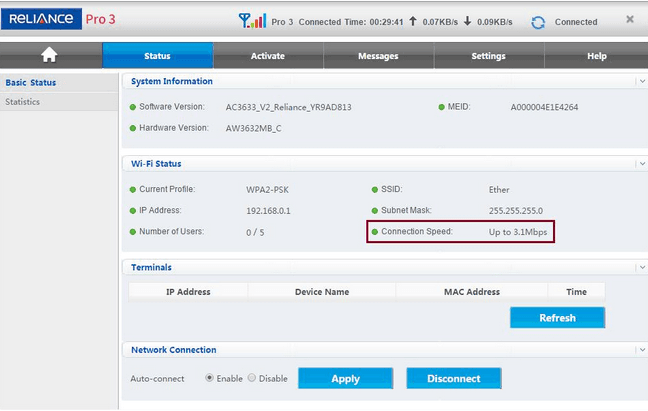
All testing was done in a prime locality in the heart of south Mumbai. When we opened the landing page of the Pro 3 data card, it showed status connected and full signal strength in Pro 3 Mode. But a closer look revealed that the Pro 3 network that the card was latched on to was the regular EvDO Rev.A network with peak download speeds of 3.1Mbps not the Rv. B network that was promised with peak speeds of up to 14.7 Mbps.
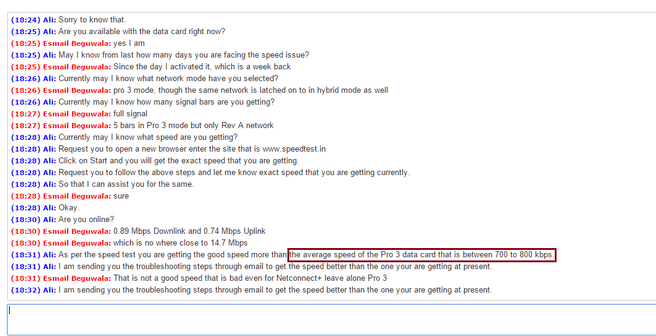
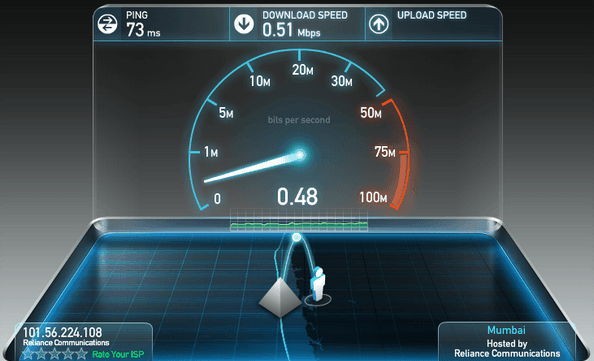
Web pages seemed to load up smoothly and browsing was not an issue, even streaming of standard definition videos on youtube seemed to work fairly well but HD videos had considerable buffering pause. We checked the speeds on speedtest.net and during peak hours we only got speeds in the range of 0.5 Mbps both downlink and uplink. During the non-peak hours the downlink speed went up to 1 Mbps and post-midnight touched around 1.5 Mbps but still only in the range of the average Rev. A network.
Rev. A networks use a single 1.25MHz carrier to carry data with peak downlink speed of 3.1 Mbps and uplink speed of 1.8 Mbps. Rev. B network uses multiple carrier aggregation to increase the data carrying speed and capacity. Phase 1 Rev. B networks simply add up Rev. A carriers to double the speed so two carriers of 1.25MHz will offer peak downlink speed of 6.2 Mbps which is offered by Tata Docomo Photon Max. Phase 2 Rev. B networks increase the speed offered by each 1.25 MHz carrier to 4.9 Mbps so two carriers will offer peak speeds of up to 9.8 Mbps which is offered by MTS Mblaze Ultra or 3 carriers will offer peak speeds of up to 14.7 Mbps as advertised by Reliance Pro 3.