 Support Telecomtalk







Andrew Bonwick
Vice President of Product Development at Relm Insurance

Madhav Sheth
CEO of Ai+ Smartphone

Varun Kashyap & Sridevi Reddy
Co-Founders, Zithara.ai
Transforming Indian Offline Retail and Customer Engagement Using AI


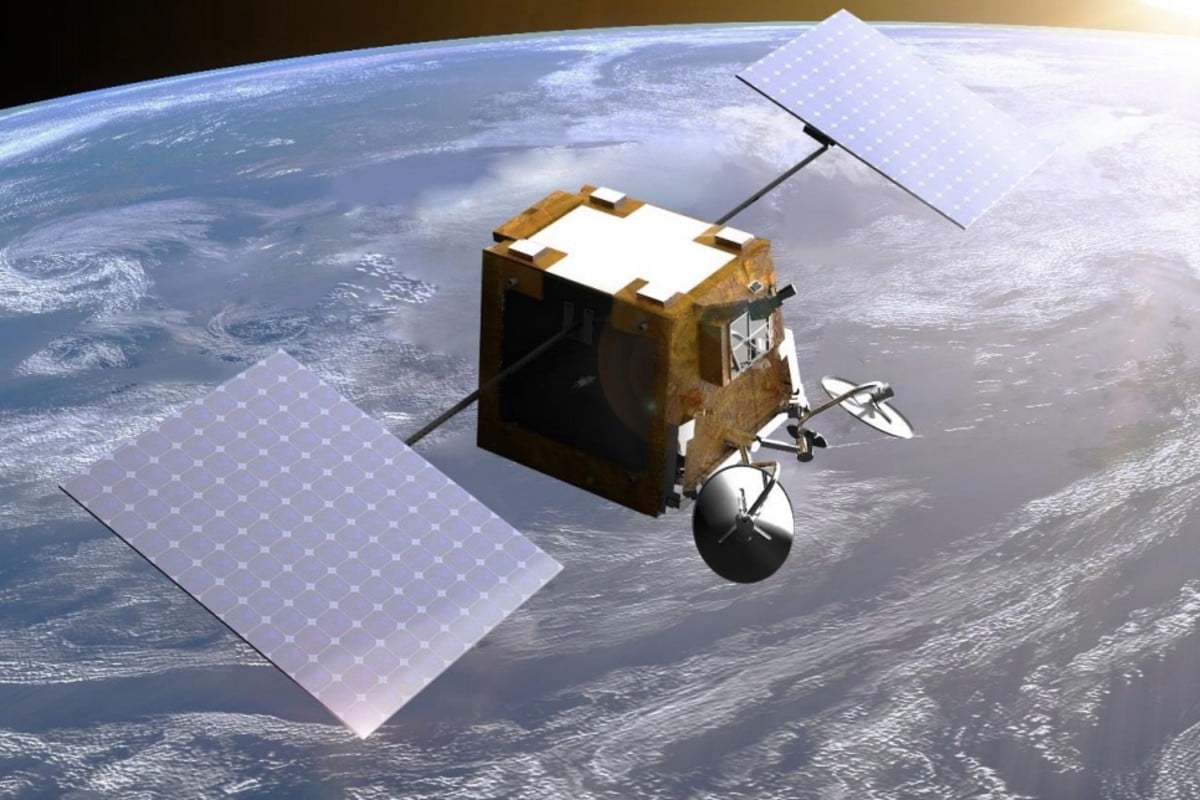
In an effort to boost its usage by the civilian sector as well as by ships and aircraft travelling far beyond the nation’s boundaries, India aims to expand its regional satellite navigation system, known as NaVIC. Seven satellites are used by the Navigation with Indian Constellation (NaVIC) to provide true locating and timings services in India and an area up to 1,500 km from the nation’s borders.
- Make Telecom Talk My Trusted Source



Currently, ISRO Intends To Replace at Least Five of These Satellites With the Enhanced L-Band
A number of the constellation’s satellites have outlived their useful lifespan, and the Indian Space Research Organisation (ISRO) now wants to replace at least five of these with the enhanced L-Band, allowing it to provide the general public with superior global locating services. Five more satellites are currently being built; they must be launched on a regular basis to replace the defunct satellites. Based on an interview with PTI with ISRO Chairman S Somanath, the new satellites will have L-1, L-5, and S-Band.
Somanath, speaking at the India Space Congress, claimed that due to problems in some of its seven satellites, the NaVIC system was not fully operational. As per Somanath, the space agency has also requested permission from the government to launch 12 more satellites in the Medium Earth Orbit (MEO) to increase the range of NaVIC.
If there’s a GEO-MEO constellation, a transition from a local to a global scale will happen very quickly. The head of ISRO stated they are speaking with the government. Three of the seven satellites currently used by NaVIC are in a geostationary orbit, and four are in a geosynchronous orbit. Moreover, the present satellite constellation uses the L-5 Band and S Band, which are employed in the transportation and aviation industries.
The new satellites being manufactured for NaVIC, according to ISRO Chairman, would also have greater features for signal safety for various uses, especially in the strategic sector. They only offer shortcodes for now. To ensure that the signal cannot be intercepted, spouted, or rendered unavailable, the shortcode must now be converted to long code for usage in the strategic sector. We are taking this action to increase the user base. It might not be user-friendly if you don’t do this, Somanath warned. ISRO is eager to establish itself as a key buyer of satellites in India in an effort to promote satellite manufacture there.
Found this useful? You can support us.






























