 Support Telecomtalk







Andrew Bonwick
Vice President of Product Development at Relm Insurance

Madhav Sheth
CEO of Ai+ Smartphone

Varun Kashyap & Sridevi Reddy
Co-Founders, Zithara.ai
Transforming Indian Offline Retail and Customer Engagement Using AI


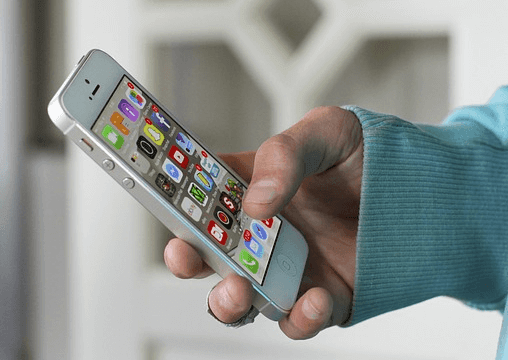
With the ever-increasing market presence of the LTE network, companies are trying to cash in the opportunity in an effective way. In this series, Huawei, China Mobile, and Qualcomm Technologies announced that they have commercially verified TDD+ uplink data compression technology on LTE-TDD network. UDC states that this initiative has enabled different operators to enhance the LTE-TDD uplink resources, which is expected to improve the uplink users and touch upon compression efficiency for different applications like web browsing and messaging service.
- Make Telecom Talk My Trusted Source



In a recent statement, Huawei clarified that there’s no hardware upgrade requirement for deploying UDC. On the terminal side, the company has implemented the latest technology in the LTE modem, while on the network side, users just need to upgrade the ENodeB software of Huawei. Due to this easy-to-use advanced system, UDS doesn’t depend on the smartphone or tablet’s operating system. Huawei, with the help of SoftBank and China Mobile, floated its new TDD+ solution in July 2015. Reports claim that it will be available for commercial users sometime in 2016.
Advantages of using TDD+ Technology
According to Huawei, TDD+ technology is capable of providing multi-gigabit-per-second speed, something that hardly any other technology in this range offers. Apart from this amazing speed, it can also help carriers unearth different business opportunities, which often leads to maximise the return on investments. TDD+ technology uses cloud-baseband chips that not only ensure high-performance, but also improve system capacity as well as spectral efficiency. Some of the other well-known features of this technology include massive carrier aggregation, multiple input/multiple output, high-order MIMO, and modulation as well as multi-user 3D beam-forming.
Also read: Airtel join hands with China Mobile; eyes growth of 4G LTE ecosystem and affordable LTE devices






























