 Support Telecomtalk







Andrew Bonwick
Vice President of Product Development at Relm Insurance

Madhav Sheth
CEO of Ai+ Smartphone

Varun Kashyap & Sridevi Reddy
Co-Founders, Zithara.ai
Transforming Indian Offline Retail and Customer Engagement Using AI


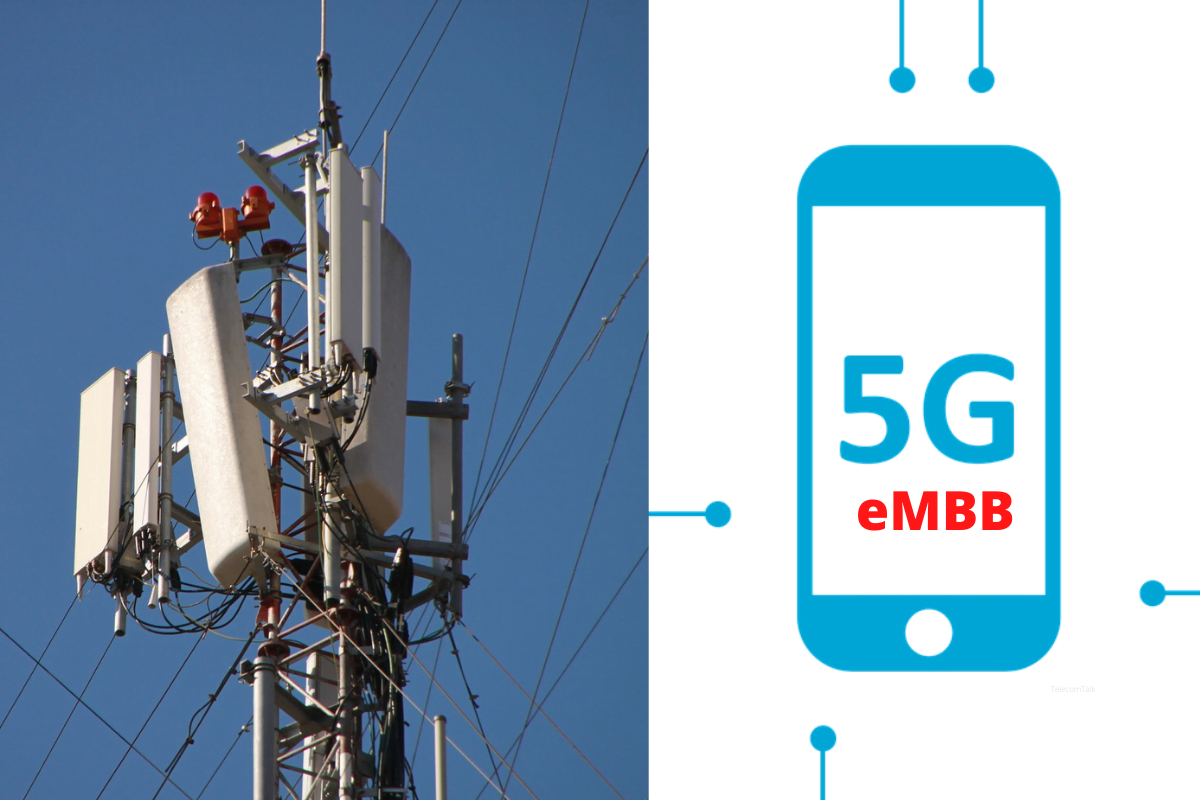
If you are familiar with the key terms associated with 5G, you would have heard of Enhanced Mobile Broadband (eMBB). It is one of the use cases that was defined for 5G long-back. The role of eMBB was to simply enhance the 4G broadband services so that users could experience a faster network with lower latency. But how did it come into existence, and what role does it play in the development of 5G networks? Let’s find out!
- Make Telecom Talk My Trusted Source



What is Enhanced Mobile Broadband (eMBB)?
Before jumping to what eMBB is, let’s think about 5G for a second. Remember the time when the world considered 4G/LTE as the next big thing? Well, at that point in time, the engineers at the 3GPP were thinking about what should come next. The 3GPP engineers were trying to find out how 5G should look like so that it overtakes 4G as the next big thing.
The 3GPP came to a conclusion that 5G should pave the way to enable virtual connectivity for everyone and everything, including Internet-of-Things (IoT), Artificial Intelligence (AI), and more. 5G was divided into three main use case scenarios.
- Enhanced Mobile Broadband (eMBB)
- Mission-critical use cases with a requirement for low-latency connections. For example, remote surgery, vehicle-to-vehicle communication in real-time, and more.

-































