 Support Telecomtalk







Andrew Bonwick
Vice President of Product Development at Relm Insurance

Madhav Sheth
CEO of Ai+ Smartphone

Stephen Rose
CEO Render Networks



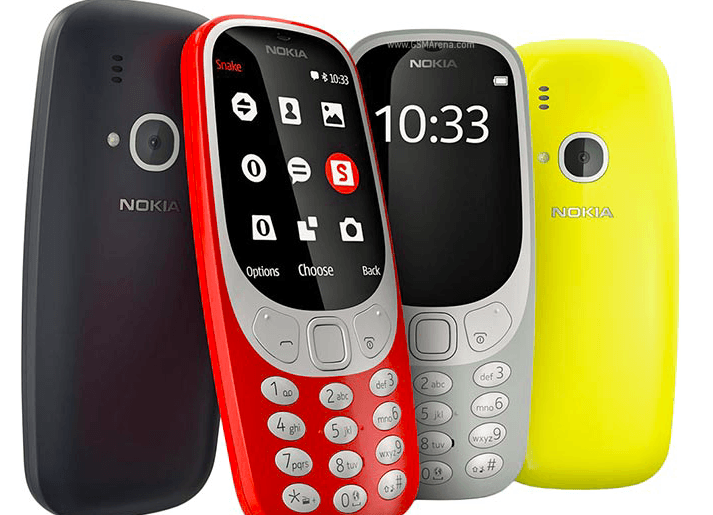
Nokia 3310’s return caused a stir in the world of technology. Many tech enthusiasts couldn’t hold their excitement back and went into a praising mode, solely because of nostalgia. Yes, we get it that Nokia 3310 was an iconic phone and its revival certainly deserved full coverage. However, now that the buzz cloud is subsiding, we can see things clearly, and that brings us to an opinion that Nokia 3310 cannot be your secondary phone.
- Make Telecom Talk My Trusted Source
-

-


In today’s world, we heavily rely on the internet. Especially the urban crowd, where even middle age population is seen tinkering on social media via smartphones. A secondary phone with 4G and Wi-Fi hotspot is a must for those who want to stay connected but do not want their primary device to give up battery percentage due to the hotspot. That’s where the idea of having a secondary phone makes sense; it could be a big help when you are on the move and have to do some official work on the laptop.
Taking all the points into account, we have come up with reasons to prove that the new Nokia 3310 does not deserve even to be a secondary phone. Of course, you can keep it for other purposes but that won’t suffice.
Limited Network support
Taking a cue from its old version, the new Nokia 3310 also sticks to 900MHz and 1800MHz bands. And these frequencies are only compatible with “2G” only. Also, it is worth mentioning that 900MHz and 1800MHz bands have almost vanished in developed countries like the US and India is also slowly moving towards the same fate. We wonder why Nokia planned to stick to these old network frequencies? Even the gimmicky Freedom 251 had better connectivity as reported by the people who actually did a hands-on review of it. A handset must support at least four frequencies to operate around the world – 850MHz, 900MHz, 1800MHz, and 1900MHz.






























